When we hear the word “minimalism,” our imagination often conjures up sterile white interiors, looking more like modern art galleries or operating rooms. However, this style has a much friendlier, “living” offshoot—Warm Minimalism (Warm Minimalist). This approach doesn’t force you to get rid of every sentimental item for the sake of empty tables. Its main goal is to eliminate visual chaos, leaving only what brings joy, while warming the space through soft natural shades, deep textures, and the correct geometry of wood.
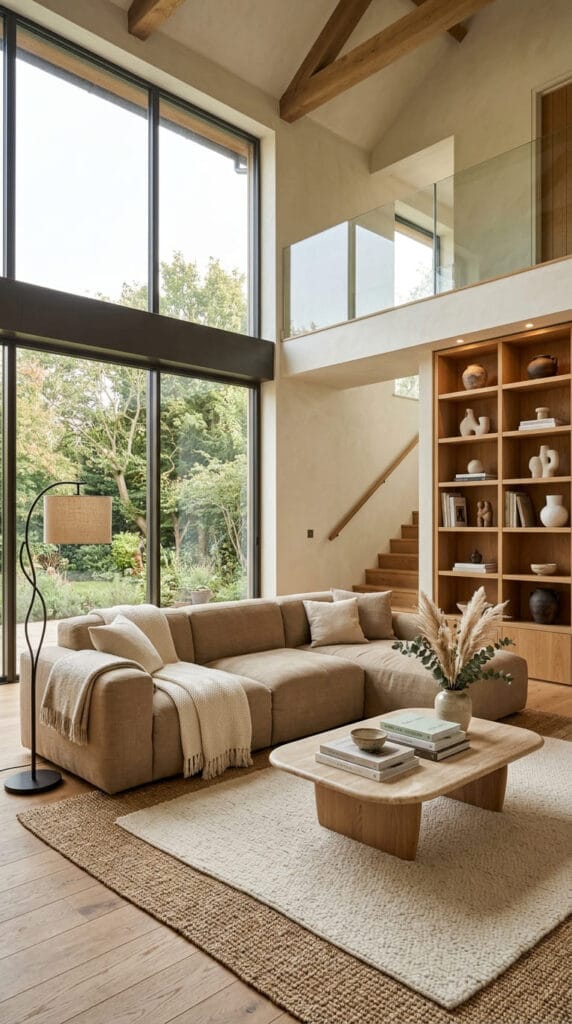
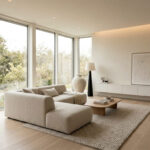
The foundation of warm minimalism in common areas is the rejection of loud accents in favor of a monochrome yet layered palette. Instead of crisp, stark whites, shades of baked milk, almond, oatmeal, and natural linen are used here. Scale-defining panoramic windows let nature inside the house, making the trees outside part of the interior storyline. The furniture chosen is low-profile and voluminous, so its very presence creates a sense of stability and security.
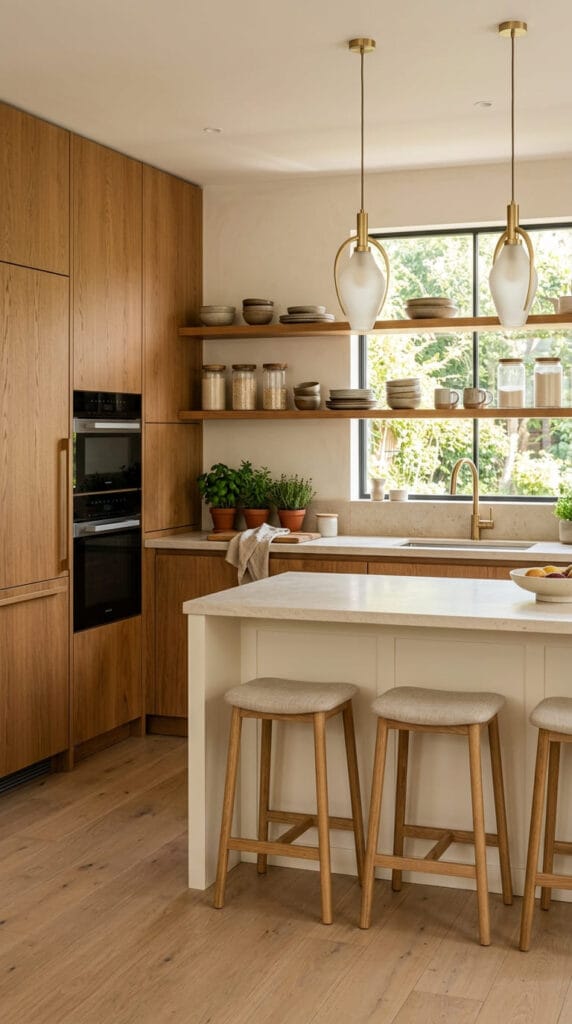
A kitchen in this style clearly demonstrates how all household appliances can be hidden behind solid wooden panels from floor to ceiling, completely liquidating the usual kitchen clutter. At the same time, the space does not look lifeless thanks to the open shelves by the window: even rows of ceramic bowls, mortars, and identical glass containers create a feeling of a calm, measured lifestyle. Air and light are valued much higher here than an abundance of small decor.
Lighting Tips from Me: How to Make Warm Minimalism “Work”
Light is the most important building material in the Warm Minimalist aesthetic. If you make a mistake with its spectrum, the entire cozy interior will instantly turn into a dull gray box. Here are a few of my rules to help avoid this:
- Forget about cold light: Eliminate bulbs with a spectrum above 3000K forever. Your standard is 2700K (warm white light). It is this light that makes the wood on the facades glow from within like gold, and makes the creamy walls look even softer.
- Use matte diffusers: Direct, sharp spotlights create harsh shadows that break the purity of lines. Choose fixtures made of frosted glass or with textile lampshades, as seen in our examples—they create a soft, misty aura around themselves.
- The multi-tiered rule: There should be at least three lighting scenarios in a room instead of just one central chandelier. Lower lighting (floor lamps on long legs), middle lighting (table lamps on nightstands and sconces), and hidden LED shelf lighting that softly accentuates the depth of niches in the evening.
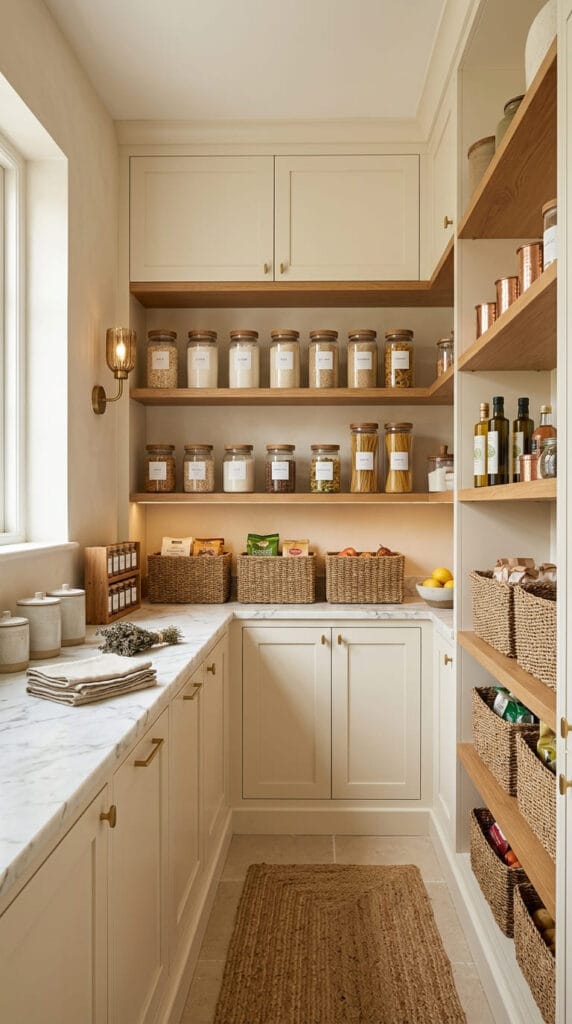
Even purely utilitarian spaces, like a home pantry or a laundry room, obey the same rules of visual clarity. There is no room for colorful cardboard boxes from supermarkets here—all grains, pasta, and spices are transferred into identical containers with wooden lids. The lower line of cabinets in a noble cream or deep shade pulls the interior together, while woven baskets made of natural sisal add the necessary organic roughness to the space.
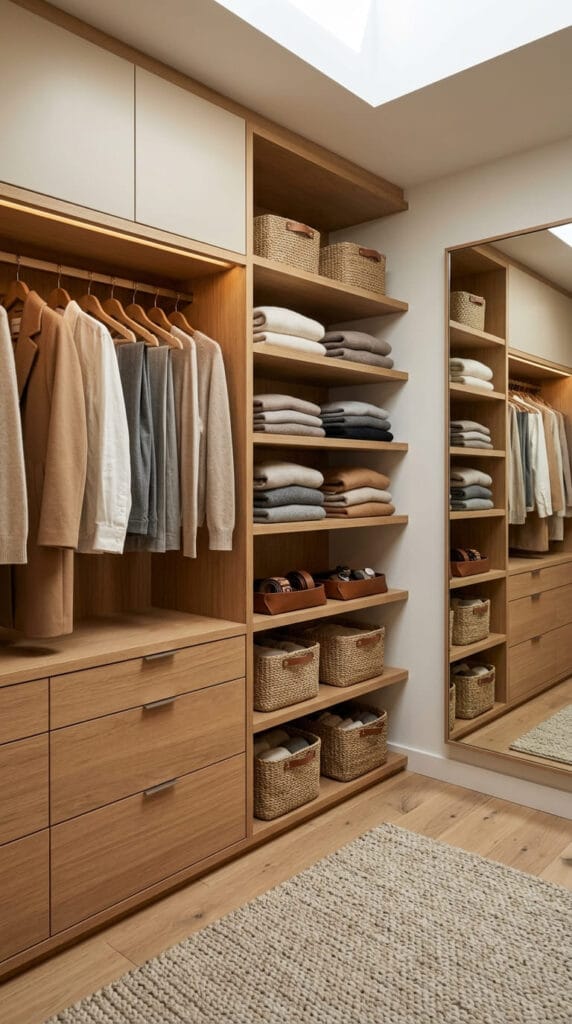
In the clothes storage area, warm minimalism helps create the atmosphere of a premium boutique. Opting for open clothing racks instead of solid doors is justified when you stick to a calm, capsule wardrobe: cashmere coats, wool sweaters, and linen shirts act as the color blocks of the interior themselves. Built-in hidden lighting above the rods softly illuminates the fabrics, while a long, coarsely woven carpet runner ties the zones together.
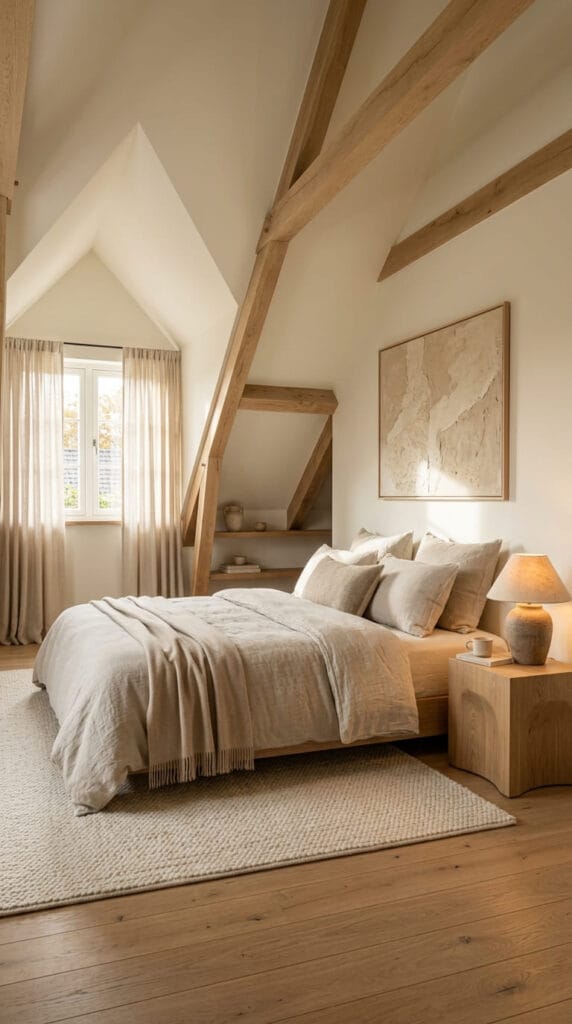
The bedroom becomes the final point where the idea of tranquility reaches its maximum. Architectural elements—such as the rough wooden beams beneath the ceiling—are intentionally left exposed to emphasize the home’s connection with nature. There is practically no decor on the walls, except for one large abstract painting with a complex, textured plaster finish. In such a space, the eye rests from the visual noise accumulated throughout the day, allowing thoughts to settle into complete order.
- Transitional Coastal: How to Combine Elegant Classics and Seaside Freshness Throughout the Whole House
- Sleek Scandi: How to Create a Light, Clean, and Cozy Scandinavian Interior Throughout the Whole House
- Equestrian Chic: How to Create an Atmosphere of Noble Estate Elegance and Aristocratic Comfort Throughout the House
- Cabin Chic: How to Create an Alpine Chalet Atmosphere and Secluded Comfort Throughout the Whole House
- Soft Industrial: How to Create an Aesthetic, Warm, and Modern Loft Throughout the Whole House
- Bright Boho: How to Create a Light, Cozy, and Vibrant Interior Throughout the Whole House