There are interiors that are instantly read as expensive, yet they don’t possess a single drop of pathos, rigidity, or museum-like sterility. This is the phenomenon of California Cool—a style that originated on the Pacific coast and won the hearts of comfort lovers worldwide. Its main magic lies in its ability to marry contemporary simplicity with a spirit of absolute freedom, effortless boho, and laid-back beach living. Here, no one is afraid of rumpled linen, coarse artisanal rugs, or an abundance of live greenery, because a home is created for relaxation, not for a picture-perfect look.
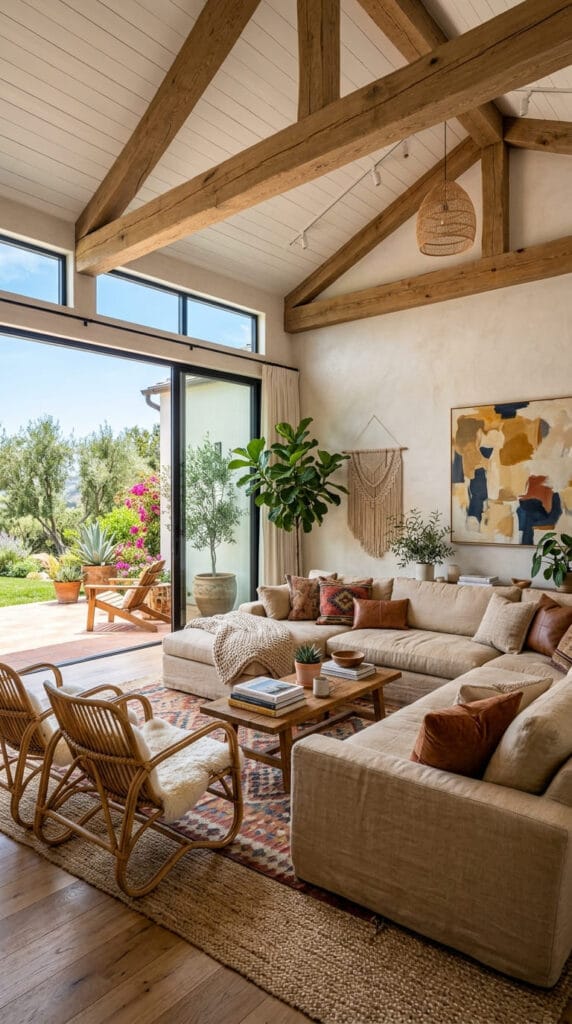
The foundation of Californian chic in a living room is the blurring of boundaries between the indoor space of the house and the garden outside. Panoramic glazing literally lets nature inside, so the palette is dominated by complex, earthy, and warm tones: sand, terracotta, muted olive, and the color of sun-baked clay. Textures are selected to be as contrasting as possible—soft, fluffy sheepskin on woven chairs coexists perfectly with the clean lines of a modern sofa, while a handmade macramé wall hanging adds that exact relaxed boho note to the space.
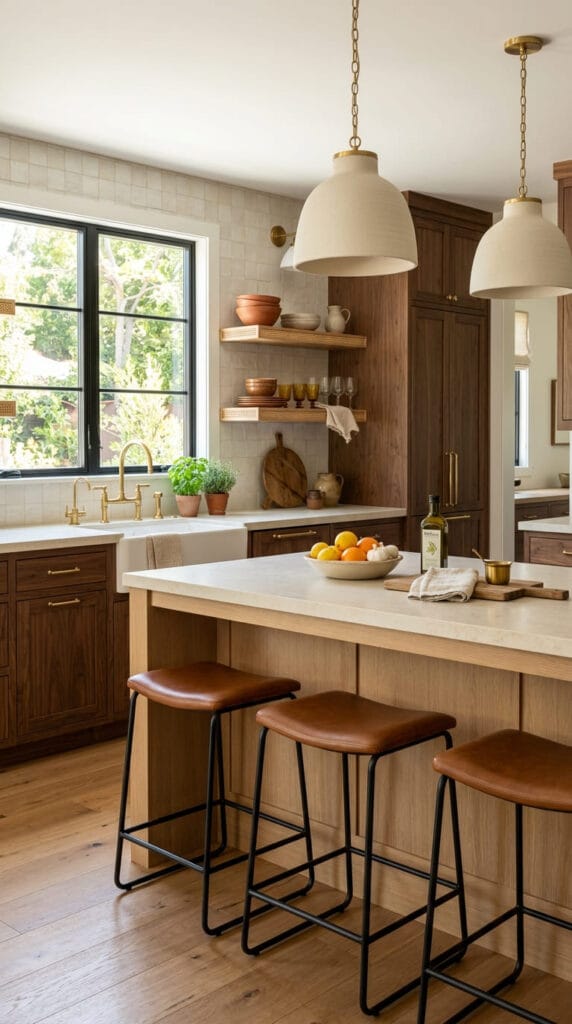
A kitchen area in the California Cool style rejects cold gloss and plastic. Designers bet on the expressive texture of dark and light wood, emphasizing it with noble brass hardware. Instead of a solid upper row of cabinets, light wooden shelves with a woven trim are used to display everyday clay and wooden utensils. Massive counter stools with leather seats and soft, textured dome pendants over the island turn the kitchen from a mere cooking space into the hub of domestic gatherings with friends.
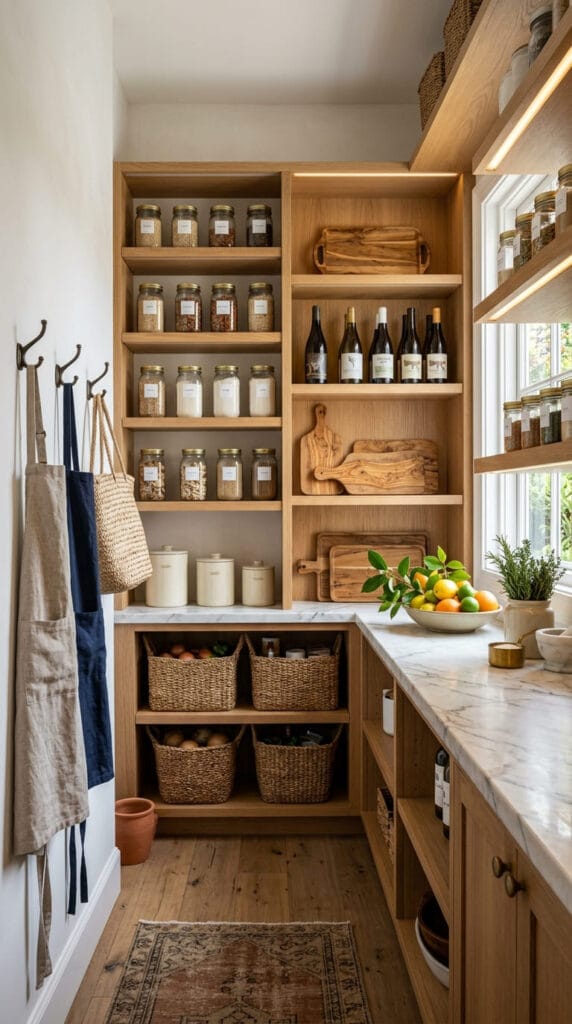
In a Californian home, even utilitarian zones look like an extension of the general relaxation concept. The pantry room is designed using the same materials as the main kitchen: light oak, noble veined marble, and textile elements like a jute rug or linen aprons hanging on hooks. Identical glass jars for grains and woven baskets made of natural willow help organize storage in a way that completely eliminates visual noise, leaving only aesthetic wooden cutting boards and fresh green fruit on display.
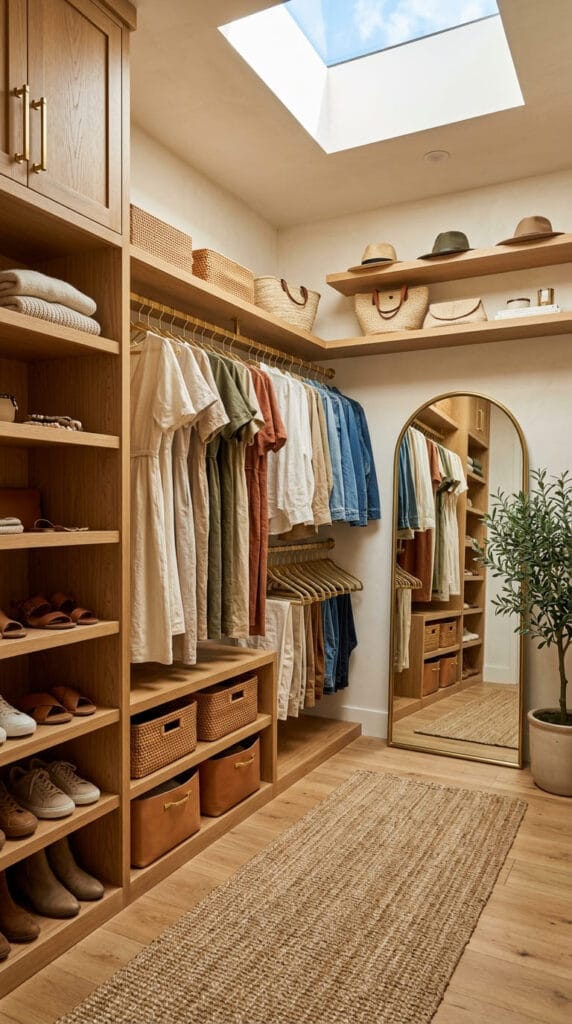
A dressing room in this aesthetic resembles a concept boutique somewhere on the coast of Malibu. Thanks to the overhead skylight, the space fills with soft, natural light. Open shelves made of natural wood are filled with neat stacks of knitwear, leather sandals, and straw hats, which serve as elements of summer decor all on their own. A long, textured sisal runner underfoot and a large arched full-length mirror visually elongate the room, adding depth and coziness to it.
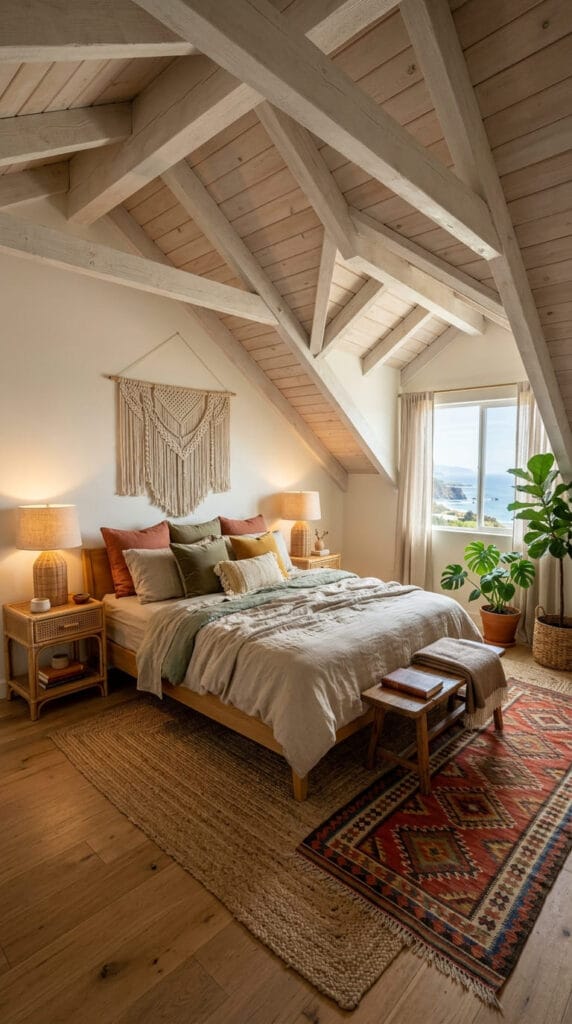
A bedroom in the California Cool style is an absolute synonym for the word “siesta.” The complex geometry of the ceiling with whitewashed wooden beams creates a feeling of air and the spaciousness of a cliffside villa. The central place is occupied by a bed with distinct layered textiles, where thick, textured linen is paired with a calm, ethnic rug on the floor. A large macramé panel above the headboard replaces traditional paintings, while split-leaf philodendrons and fiddle-leaf figs placed in clay pots finally complete the image of an oasis sheltered from the midday heat.
Furniture Selection Tips from Me: How to Catch the California Cool Wave
To prevent your interior from turning into a cliché country style or a rigid contemporary minimalism, furniture needs to be chosen according to a specific philosophy. Here are a few of my rules to help you find your bearings:
- Look for a low silhouette and deep seating: Sofas and lounge chairs should literally invite you to sit back and recline. Choose models without rigid high legs, featuring wide armrests and soft, slightly casual cushions. Stiff, “office-like” furniture will break the entire atmosphere here.
- Mix different wood species: Do not try to match all the furniture to one exact color. California Cool loves eclecticism: light, whitewashed oak on the ceiling beams can easily coexist with deep walnut on kitchen cabinets or a vintage bench at the foot of the bed. This creates a feeling that the interior evolved over years, rather than being bought out of a single store catalog.
- Add woven furniture (but in moderation): Rattan, jute, and wicker are mandatory attributes of the style. However, do not turn the room into an outdoor terrace. A couple of woven chairs in the living room or light wicker paneling on the bedside tables are enough to ground the interior and add the necessary tactile appeal.
- Bet on artisanal elements (Craftsmanship): Instead of perfect, factory-stamped items, look for things with slight imperfections. A coffee table made from a solid wood slab, a roughly treated log stool, or a ceramic lamp with a coarse, textured base will add individuality and human warmth to your home.
- Transitional Coastal: How to Combine Elegant Classics and Seaside Freshness Throughout the Whole House
- Sleek Scandi: How to Create a Light, Clean, and Cozy Scandinavian Interior Throughout the Whole House
- Equestrian Chic: How to Create an Atmosphere of Noble Estate Elegance and Aristocratic Comfort Throughout the House
- Cabin Chic: How to Create an Alpine Chalet Atmosphere and Secluded Comfort Throughout the Whole House
- Soft Industrial: How to Create an Aesthetic, Warm, and Modern Loft Throughout the Whole House
- Bright Boho: How to Create a Light, Cozy, and Vibrant Interior Throughout the Whole House