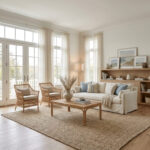
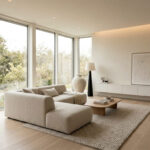
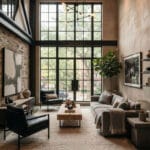
Modern design has long strived for perfect glossy surfaces and strict order, but at some point, we simply began to miss tactility and the feeling of pristine nature. It was at the intersection of minimalism and naturalness that the Organic Modern style was born. Its concept is not just about placing live plants in corners, but a deep philosophy dominated by smooth, bionic shapes, soft textures like bouclé wool, and unpolished solid wood. Such a home does not look like an exhibition pavilion; it envelops you, grants peace, and restores a sense of connection with the earth.
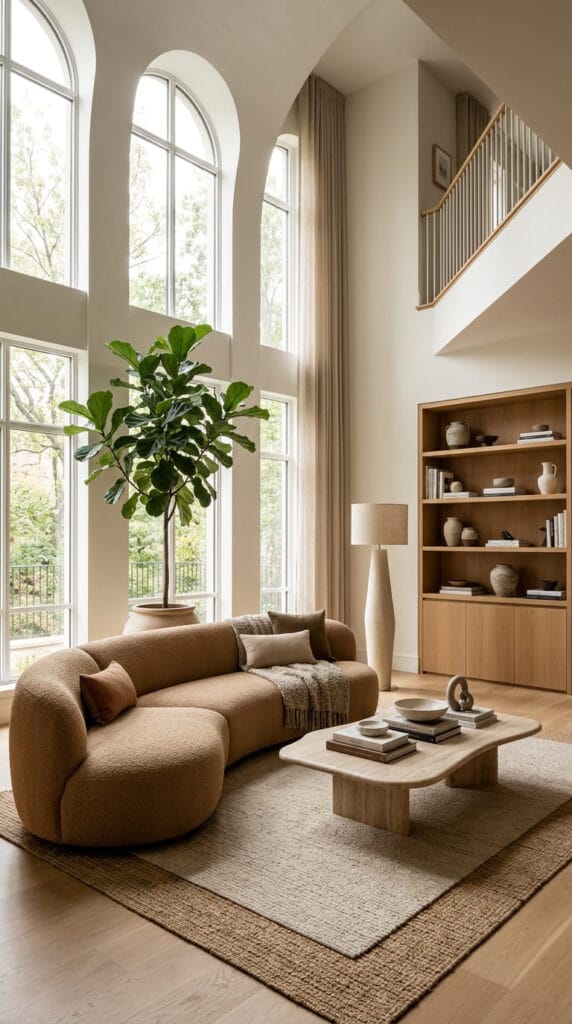
In the living room, organic modern reveals its scale through work with volumes and height. Instead of standard rectangular structures, rounded, “fluid” lines dominate here, as if repeating the curves of river stones or hills. The textured textile of the sofa enters into a dialogue with the smooth surface of travertine or marble on the low coffee table, while huge windows let in maximum natural light, causing shadows to play softly on matte walls of an ivory shade.
My advice on arranging the living room: When choosing upholstered furniture for this zone, abandon sharp corners. Look for island-style sofas with smooth, natural silhouettes and be sure to combine them with rugs of different densities: for example, lay a smooth lint-free jute rug, and on top of it, a soft woolen rug of a smaller size. This will instantly create the necessary layered look.
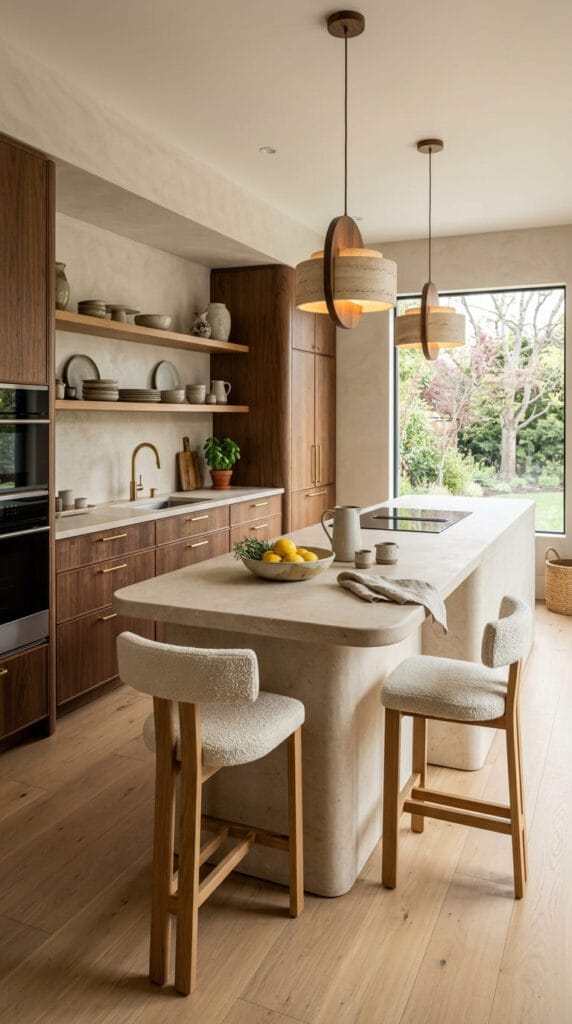
The kitchen area in this style proves that functionality can be incredibly aesthetic and warm. The main role here is played by wood with an expressive natural pattern—such as American walnut, whose deep veins contrast with light matte walls and stone countertops. A kitchen island with a massive base and rounded edges becomes the visual center, while open wooden shelves instead of heavy upper cabinets add air to the space and allow for a beautiful display of artisanal ceramics.
My advice on arranging the kitchen: To replicate this look, bet on tactile natural materials for work surfaces. Limestone, travertine, or matte quartzite with a rounded edge profile will make the interior look more expensive and softer. And do not forget about the details: replace a standard chrome faucet with a model made of matte aged brass.
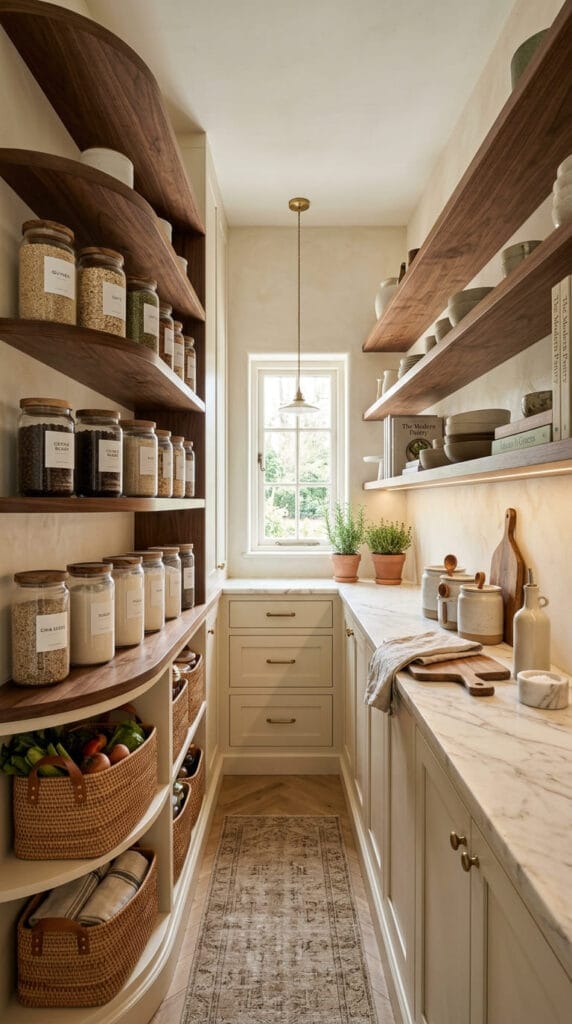
Even secondary spaces, such as a home pantry, turn into an object of art in the Organic Modern aesthetic. The highlight of this area is the radial, smoothly curving solid wood shelves that break up the usual geometry of a narrow corridor. The use of natural stone on the countertop and woven baskets for vegetables on the lower tiers supports the overall theme of closeness to nature, turning routine food storage into an aesthetic ritual.
My advice on arranging the pantry: If you have a narrow storage system, give up sharp shelf edges—order them with a rounded finish (radial elements). Use identical glass containers with wooden lids for bulk products and add a small vintage runner with a worn oriental pattern to the floor—this will warm up the interior.
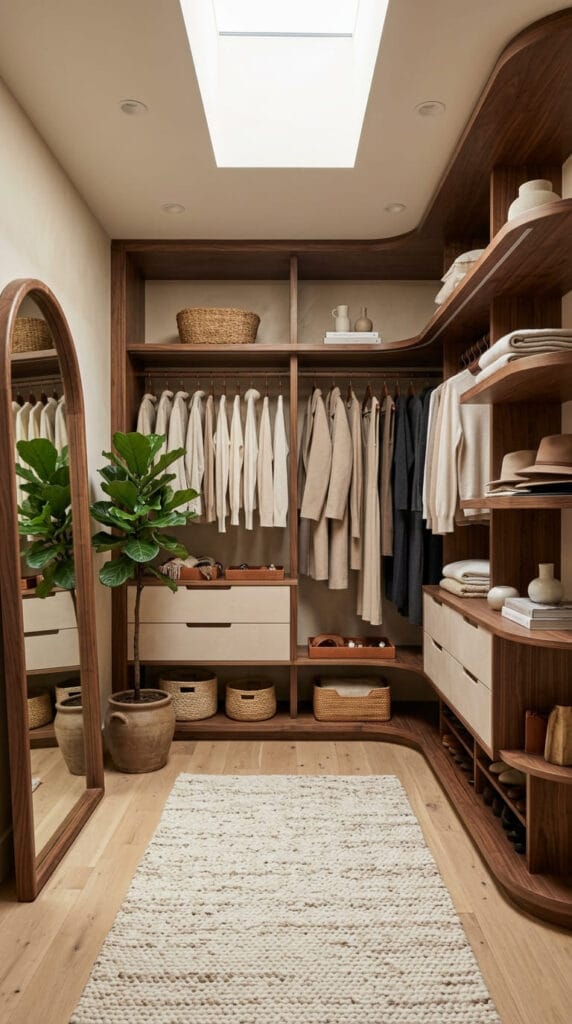
In the dressing room, warm woody tones create an atmosphere of privacy and comfort reminiscent of a spa resort. An architectural detail in the form of a skylight on the ceiling allows daylight to scatter softly throughout the room, emphasizing the texture of linen and woolen clothes on hangers. A large arched mirror in a solid frame echoes the smooth curves of the furniture, while live greenery in a clay pot refreshes the monochrome palette.
My advice on arranging the dressing room: To get away from the feeling of a conventional closet, combine closed sections with open radial shelving units. Use drawer fronts in a contrasting light matte finish against a dark frame and be sure to place a large plant in the corner—such as a fiddle-leaf fig or an olive tree in an authentic handmade pot.
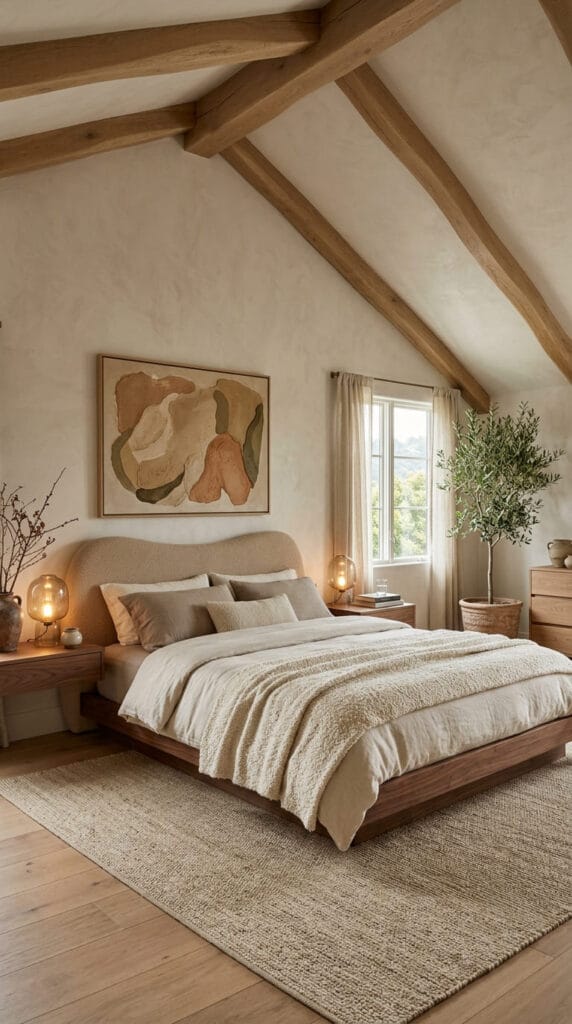
A bedroom in the concept of organic modern is a space of absolute mental rest. The broken lines of the vaulted ceiling are smoothed out by powerful wooden beams that set the correct natural rhythm for the space. The headboard of the bed has a soft, wavy shape, inviting relaxation. The texture of unironed linen, the coarse weave of the rug underfoot, and the dimmed warm light from glass table lamps create the perfect conditions for a deep sleep.
My advice on arranging the bedroom: Bet on the layered look of textiles on the bed—combine a cotton bedspread, linen bedding, and a fluffy throw blanket within the same natural color palette (ochre, sand, khaki). Choose light fixtures with shades made of tinted or frosted glass that provide a diffused, intimate light, and be sure to hang one large textured painting without a frame above the bed.
- Transitional Coastal: How to Combine Elegant Classics and Seaside Freshness Throughout the Whole House
- Sleek Scandi: How to Create a Light, Clean, and Cozy Scandinavian Interior Throughout the Whole House
- Equestrian Chic: How to Create an Atmosphere of Noble Estate Elegance and Aristocratic Comfort Throughout the House
- Cabin Chic: How to Create an Alpine Chalet Atmosphere and Secluded Comfort Throughout the Whole House
- Soft Industrial: How to Create an Aesthetic, Warm, and Modern Loft Throughout the Whole House
- Bright Boho: How to Create a Light, Cozy, and Vibrant Interior Throughout the Whole House