Hallways and long corridors are often unfairly left on the sidelines of interior design. They are usually treated as strictly utilitarian transit zones—just a place to take off your shoes or move from one room to another. But if you look at these spaces through the lens of refined French romanticism and light nostalgia, a simple passageway can transform into an aesthetic Hallway Decor that sets the mood for the entire home. With its love for weathered surfaces, antique furniture, and pastel tones, the Shabby Chic style is the perfect blueprint for this.
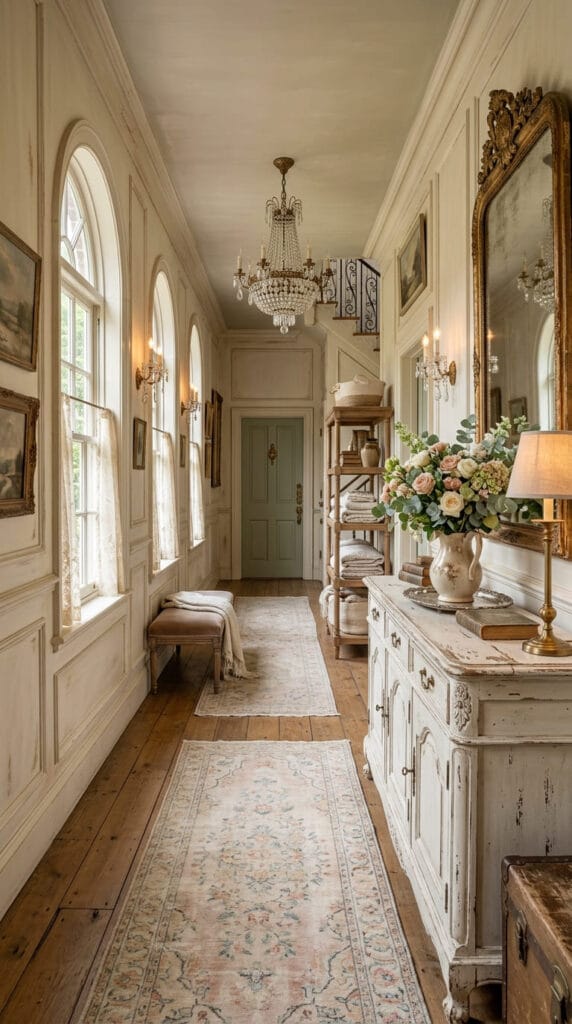
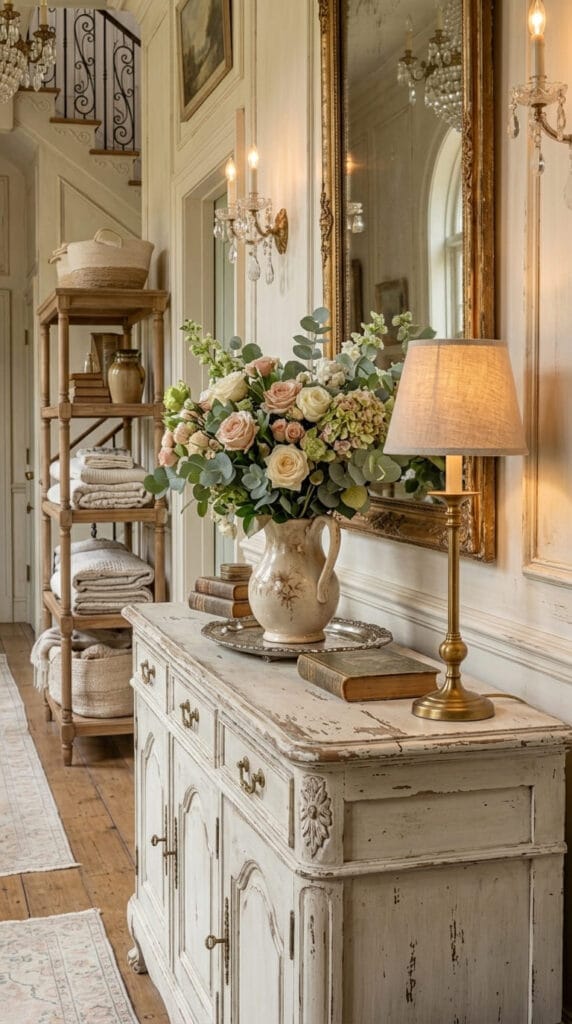
The secret of this design direction lies in the balance between aristocracy and deliberate nonchalance. Walls adorned with classic wooden paneling featuring a crackled, time-worn paint effect instantly strip the space of modern sterility. When light softly hits the molded trim, it reveals layers of history, even if they were created artificially.
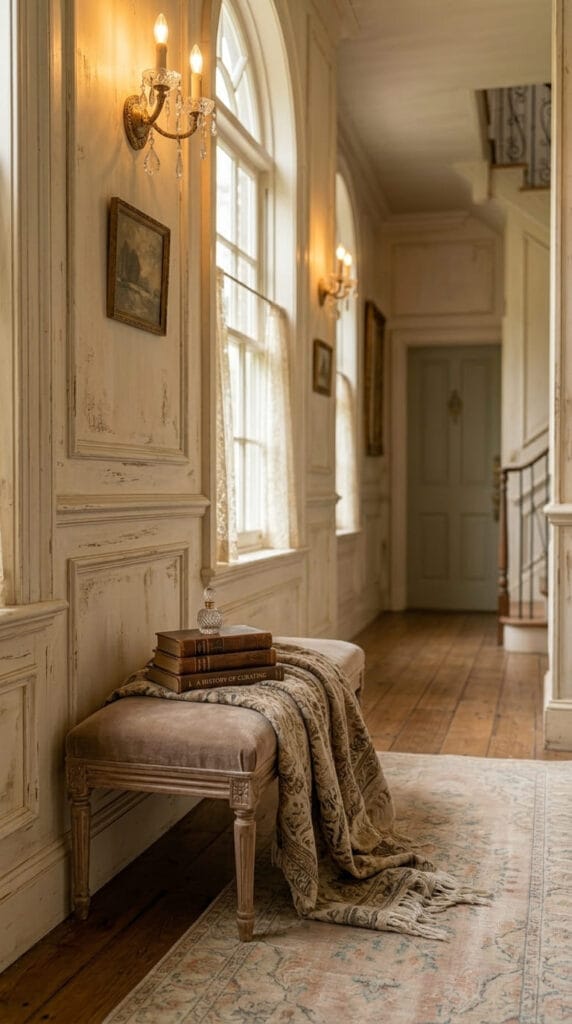
To keep a transitional zone from feeling overcrowded, bulky wardrobes are best replaced with light, open shelving and elegant benches. A small sofa or a tufted stool on carved legs wrapped in rich velvet creates a lived-in feel, making you want to slow your pace. A fringed throw casually draped over it or an antique rug with a barely visible pattern that looks beautifully worn down by footsteps only enhances this relaxed atmosphere.
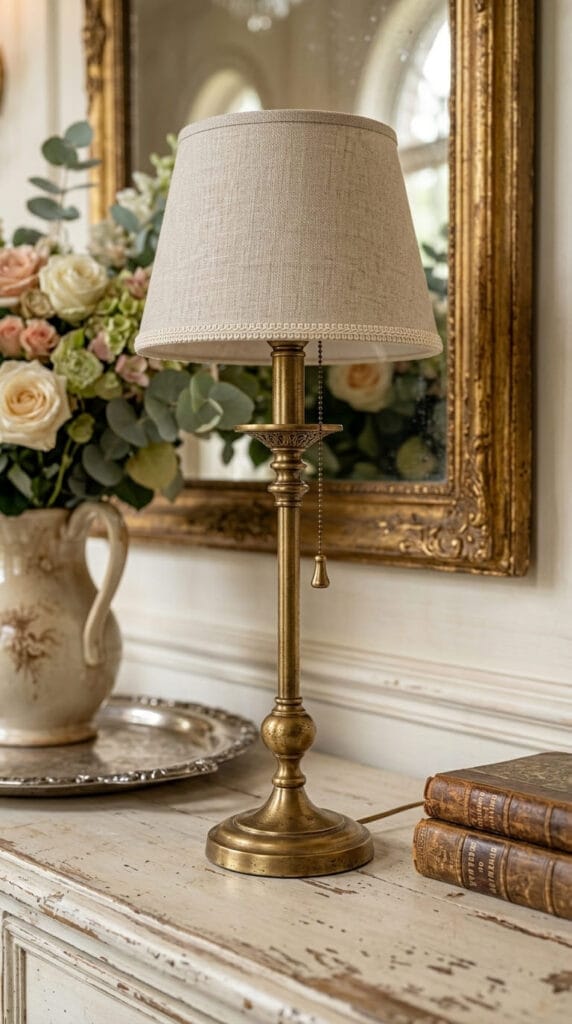
Special attention in such interiors is paid to details that you can stare at for hours. Antique leather-bound books, metal trays darkened by time, and brass lamps casting a soft, warm glow create that coveted cinematographic depth. Every single piece should carry a sense of human touch and a bygone era.
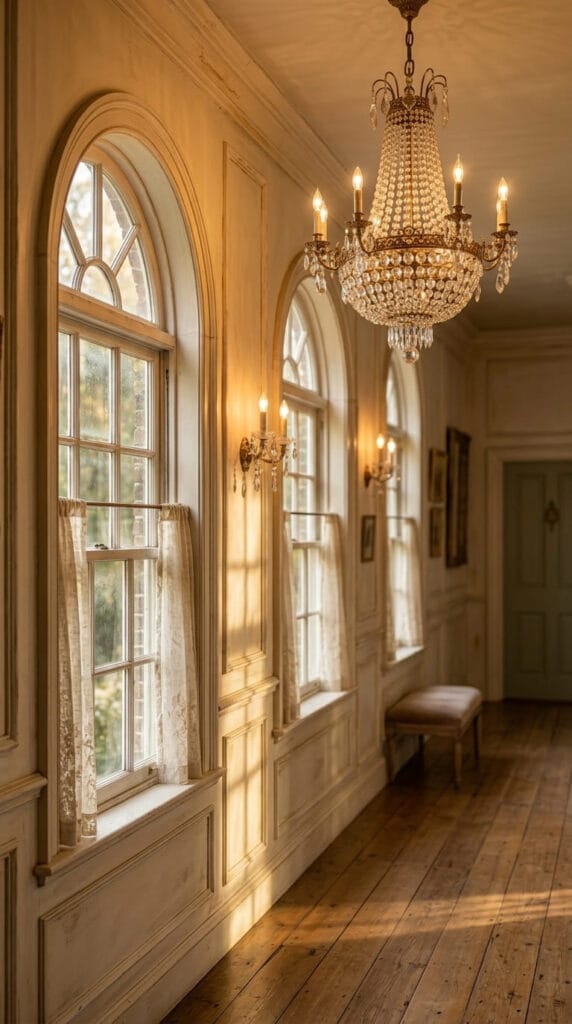
Lighting plays a crucial role in how a narrow space is perceived. Large arched windows framed by weightless lace curtains provide an abundance of natural daylight. In the evening, the space transforms thanks to a multi-layered lighting scheme: a majestic crystal chandelier under the ceiling softly scatters highlights, while wall sconces maintain an intimate, slightly mysterious ambiance.
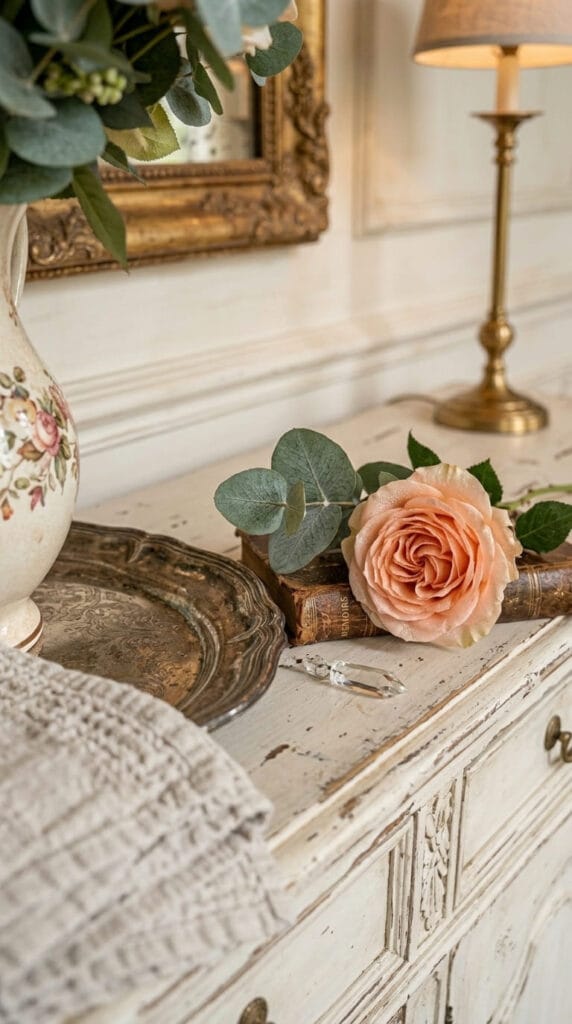
Fresh florals are the final, yet mandatory chord. Lush garden roses, eucalyptus branches, or hydrangeas in ceramic pitchers break up the antique strictness of the interior with freshness and color. Even a single bud, carelessly left on a dresser next to vintage accessories, can breathe life into a still life of old things.
Ultimately, decorating a transitional zone is not a story about functionality, but about the first impression and the comfort that greets you right from the doorstep. We often think that beauty should be hidden behind the closed doors of a living room or bedroom, but it is the hallway that ties the entire architecture of the house together.
In my view, you shouldn’t be afraid to use things in transitional zones that are traditionally saved for the “main” rooms—paintings in heavy frames, crystal, fine textiles, and fresh flowers. It is from these bold, seemingly impractical details that a truly living, atmospheric, and unforgettable interior is born.
- Transitional Coastal: How to Combine Elegant Classics and Seaside Freshness Throughout the Whole House
- Sleek Scandi: How to Create a Light, Clean, and Cozy Scandinavian Interior Throughout the Whole House
- Equestrian Chic: How to Create an Atmosphere of Noble Estate Elegance and Aristocratic Comfort Throughout the House
- Cabin Chic: How to Create an Alpine Chalet Atmosphere and Secluded Comfort Throughout the Whole House
- Soft Industrial: How to Create an Aesthetic, Warm, and Modern Loft Throughout the Whole House
- Bright Boho: How to Create a Light, Cozy, and Vibrant Interior Throughout the Whole House