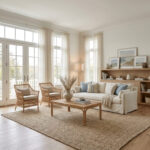
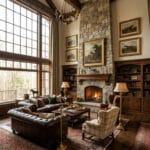
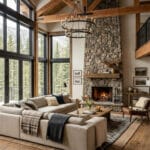
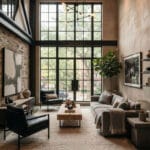
The classic farmhouse style has always won hearts with its soulfulness, but in its pure form, it can sometimes feel too rustic and cluttered with details. That is precisely why designers found the perfect compromise—Transitional Farmhouse. This direction takes the very best of traditional comfort (an abundance of wood, natural stone, lived-in textures) and transfers it onto the clean, sleek canvas of modern minimalism. There is no room for museum-like rigidity here, nor is there room for chaos—every detail breathes balance, light, and authentic comfort.
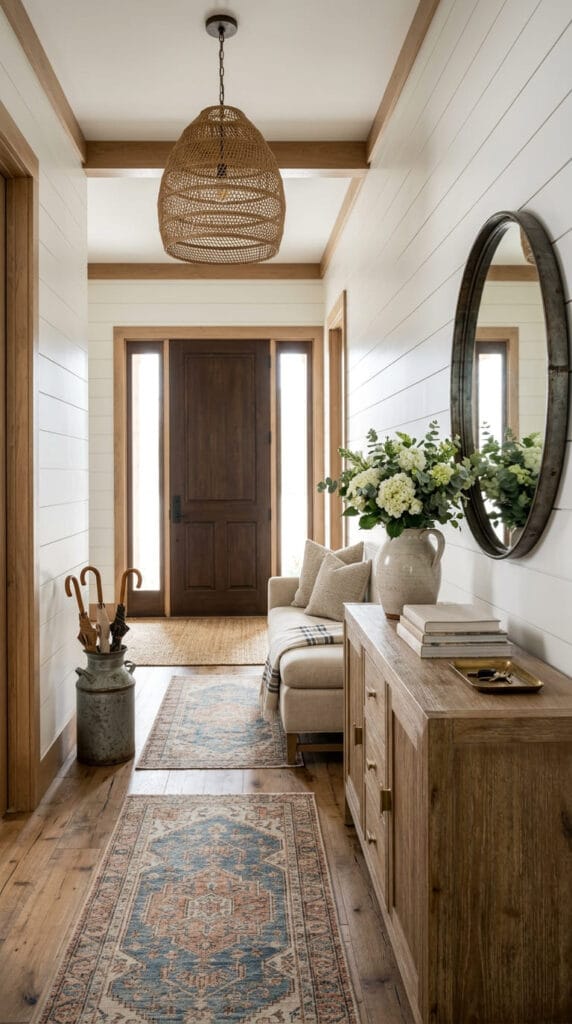
An introduction to a home in this style always begins with a sense of spaciousness and soft light. Walls lined with horizontal shiplap panels set a gentle rhythm, but thanks to the clean white color, they do not overwhelm the space. The transitional character of the style is emphasized here through details: a classic, massive front door made of deep dark oak stands alongside a sleek modern console, while a woven lampshade and wrought-iron elements add a subtle, barely perceptible historical subtext to the interior.
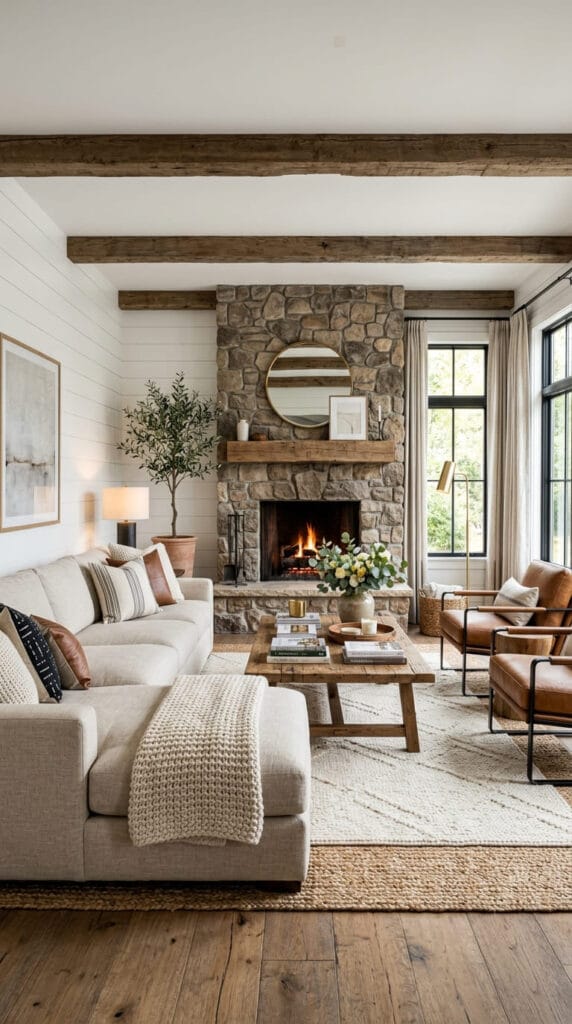
In the very heart of the home—the living room—this style unfolds through monumental yet incredibly cozy textures. The main anchor of the space is a fireplace clad in large natural stone, which balances the lightness of the pale walls. Furniture is chosen based on the principle of maximum comfort: a deep sectional sofa in a textured slub or linen upholstery, sleek armchairs in caramel leather, and warm, layered textiles. Thanks to the exposed ceiling beams, the room acquires the character of an old barn while remaining completely modern.
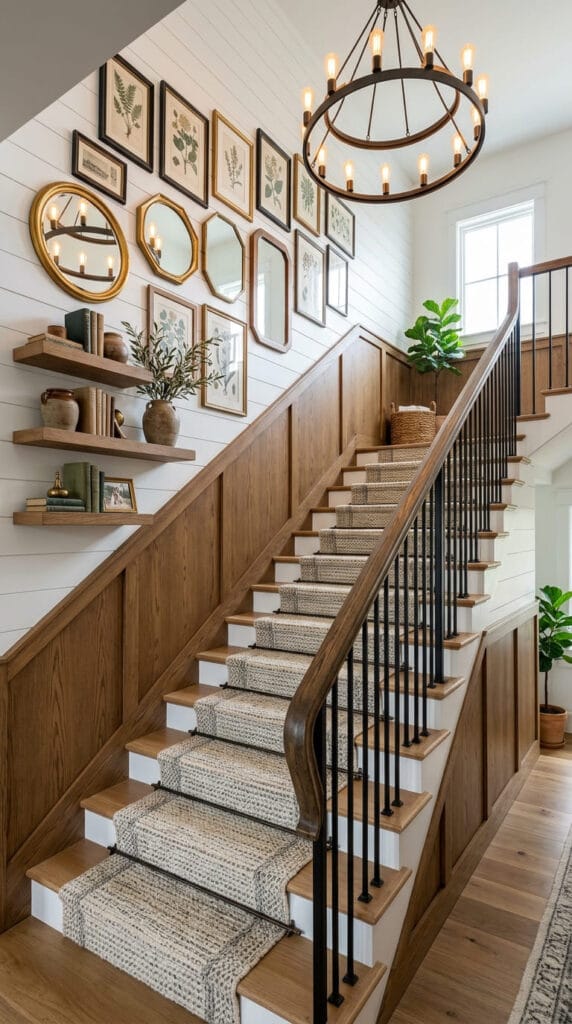
Transitional zones and staircases in a Transitional Farmhouse style are never left featureless. Wooden wainscoting panels on the lower section of the walls protect the surface and add architectural structure. To avoid excessive monotony, the vertical space is transformed into a family gallery. A seemingly haphazard yet finely calibrated arrangement of vintage mirrors in wooden and gilded frames, botanical illustrations, and graphic art makes the interior feel alive, telling its own unique story.
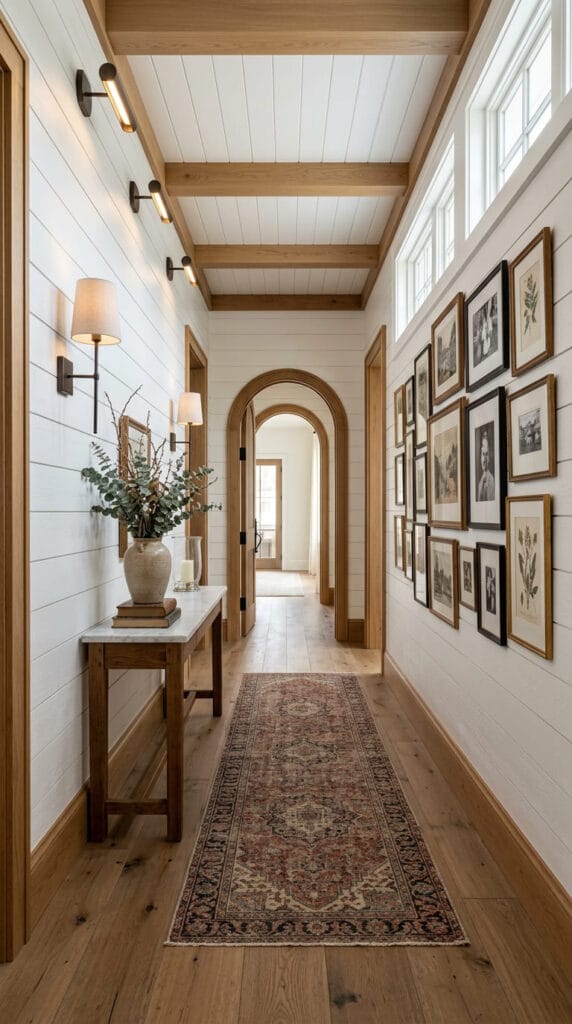
Architectural depth is another crucial marker of this design direction. Long hallways are transformed using rhythmic, arched passageways finished in natural wood. This technique visually stretches the space and creates a beautiful perspective. Balancing the abundance of white on the walls are warm accents: a long runner with a muted traditional pattern, strict wrought-iron sconces, and slim wooden frames for the artwork, arranged in orderly rows.
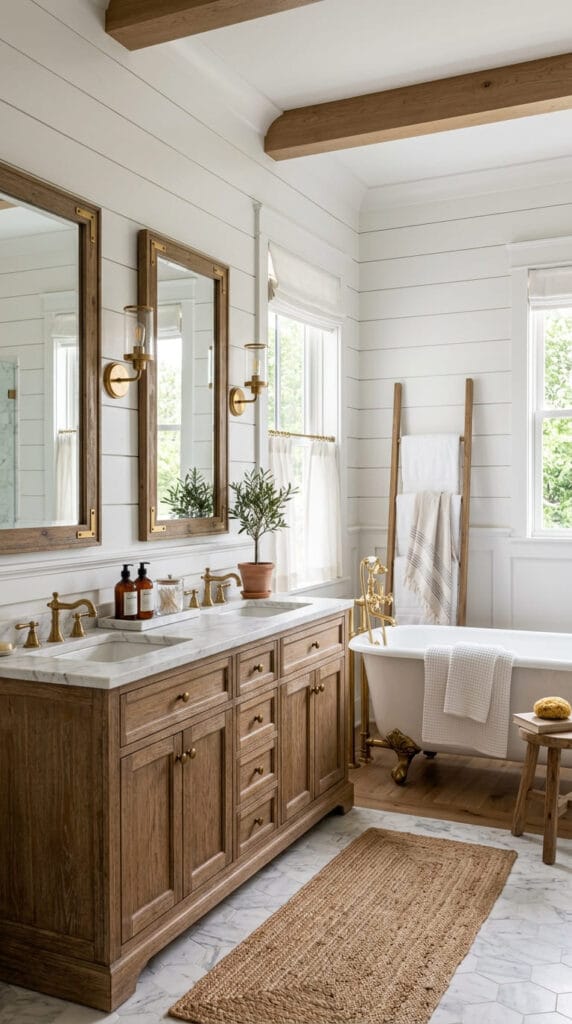
(На изображении 4_6.jpeg изобраена просторная ванная комната с большой деревянной тумбой под две раковины с мраморной столешницей, над которыми висят два зеркала в деревянных рамах, а у окна на фоне белой вагонки расположилась отдельно стоящая ванна на лапах)
A bathroom in the transitional farmhouse concept resembles a secluded sanctuary in a high-end spa resort. Here, any sense of sterility is completely absent, thanks to a massive wooden vanity with a highly expressive grain texture and a noble marble top. A freestanding clawfoot tub by the large window provides that exact touch of “countryside” romance, while modern brass hardware and the crisp geometry of the mirrors bring us right back to the cutting edge of contemporary, comfortable 21st-century design.
Advice from Me: How to Properly Use Wood and Wood-Textured Materials in a Transitional Farmhouse Style
Wood is the foundational building block and the very soul of this style. It is solely responsible for making the interior feel warm and homelike rather than cold. However, to ensure the space looks harmonious and contemporary, I recommend adhering to a few rules when working with wood textures:
- Maintain a balance of tones (the rule of contrasts). Do not try to match every single wooden element in the house tone-for-tone—this makes the interior look dull, flat, and overly matchy-matchy like a showroom set. Mix different species. If you have light floors and beams made of natural oak, add a contrasting front door or a console table in a deep dark walnut. Just make sure the wood shares a similar undertone (either predominantly warm or neutral).
- Opt for matte and highly tactile finishes. Forget about high-gloss varnish. In a Transitional Farmhouse style, wood should look natural, as if it has been touched by generations. Choose materials treated with matte oil, wax, or light wire-brushing techniques (which bring out the relief of the grain). A matte surface absorbs light and makes the space look visually softer.
- Limit your accent pieces. Exposed ceiling beams, barn doors, or wooden archways look spectacular only when they have a neutral backdrop. Surround massive wooden elements with smooth white walls, matte marble, glass, or simple textiles. Wood should be the main protagonist, not a filler that consumes every single surface from floor to ceiling.
- Transitional Coastal: How to Combine Elegant Classics and Seaside Freshness Throughout the Whole House
- Sleek Scandi: How to Create a Light, Clean, and Cozy Scandinavian Interior Throughout the Whole House
- Equestrian Chic: How to Create an Atmosphere of Noble Estate Elegance and Aristocratic Comfort Throughout the House
- Cabin Chic: How to Create an Alpine Chalet Atmosphere and Secluded Comfort Throughout the Whole House
- Soft Industrial: How to Create an Aesthetic, Warm, and Modern Loft Throughout the Whole House
- Bright Boho: How to Create a Light, Cozy, and Vibrant Interior Throughout the Whole House