In a world that is constantly rushing somewhere, the bedroom should remain the one place where the noise of the city completely fades away. We all need a deep reset from time to time, and the Japanese Zen style handles this task better than any other interior design direction. At its core lies not just an austere minimalism, but a philosophy of mindfulness, contemplation, and closeness to nature. It is a space where the mind relaxes thanks to clean lines, soft diffused light, and a complete absence of visual clutter.
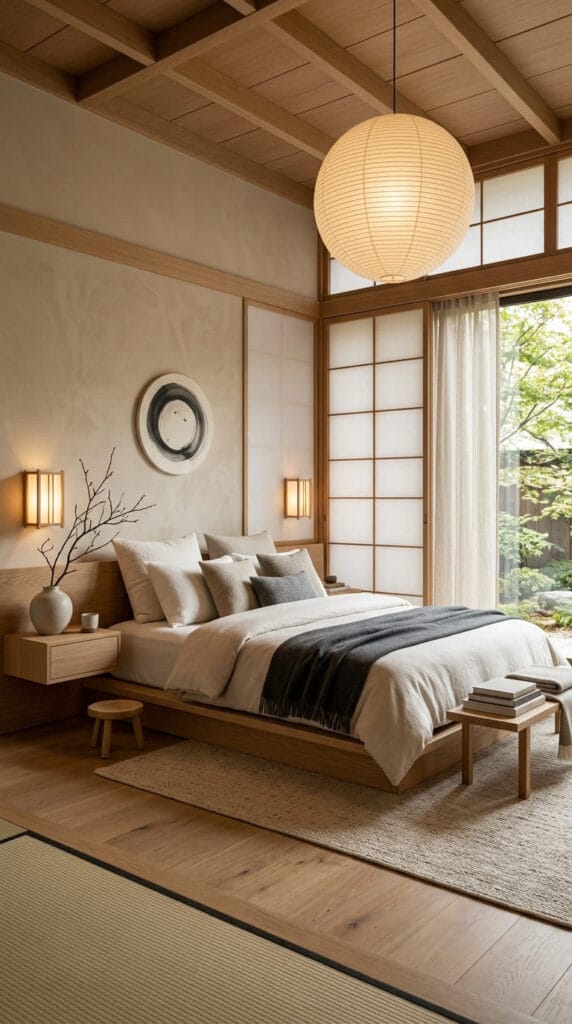
Creating an authentic Zen atmosphere begins with the choice of furniture. There is an unwritten rule here: the closer to the ground, the better. A low platform bed made of natural light oak or ash visually lightens the room, leaving plenty of open air above your head. Instead of classic bulky bedside tables, sleek floating shelves are used, seemingly extending the headboard of the bed. This layout instantly changes the perception of space, turning it into a light, light-filled Bedroom Inspo gallery.
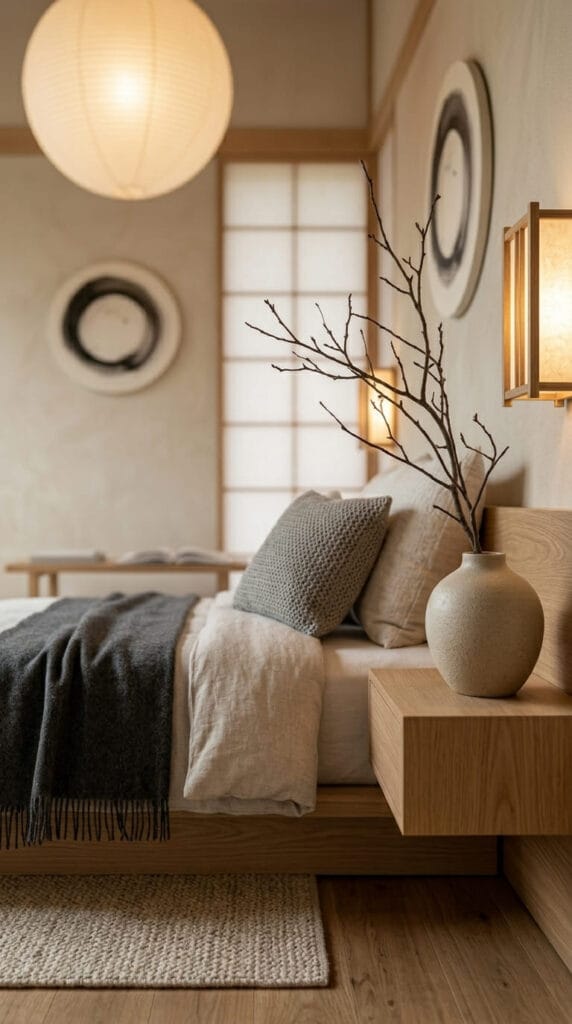
The color palette of the Zen style is borrowed entirely from nature. There are no screaming accents or harsh contrasts here. The foundation is made up of soft shades of unbleached linen, river sand, warm wood, and soft gray stone. Textiles play a key role in creating comfort: slightly rough linen bedding, textured coverlets, and an abundance of pillows create a pleasant tactile contrast with smooth wooden surfaces. Every detail calls on you to slow down and listen to the moment.
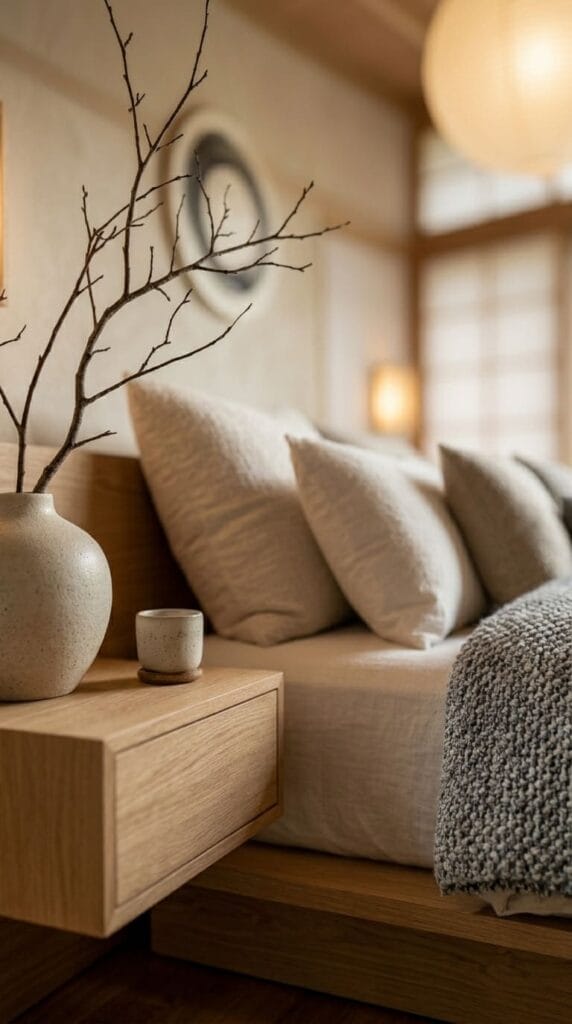
Great attention in the Japanese tradition is paid to details that carry the spirit of tranquility and the aesthetic of wabi-sabi—the beauty in imperfection. A solitary dry branch in a handmade clay vase, or a sleek enso circle on the wall symbolizing absolute harmony and emptiness—these elements do not overload the interior, but they set the correct meditative mood.
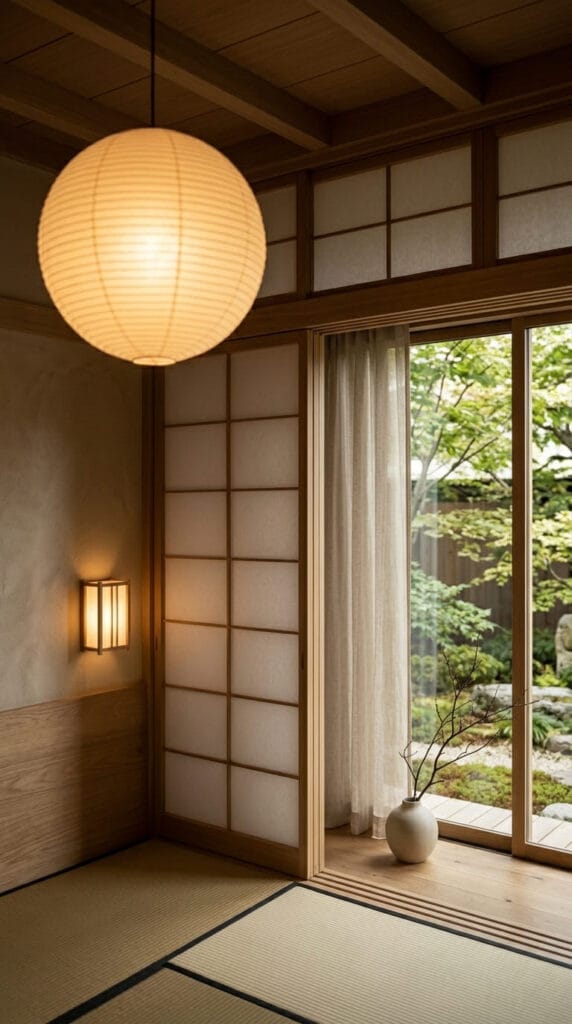
The most critical part of a Japanese home is its connection to the outside world. Sliding wooden screens with matte inserts that mimic traditional washi paper allow you to gently zone the space without blocking the path of light. If there is even a small green corner or indoor plants outside the window, the interior literally merges with nature, erasing the boundaries between the home and the surrounding world.
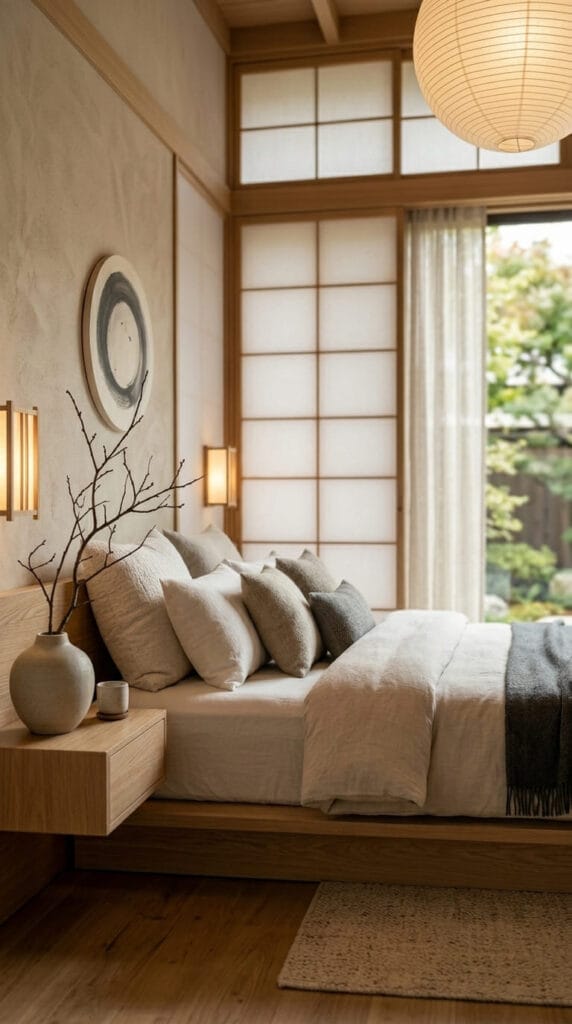
Light in such a bedroom should never be harsh. Huge pendant lamps made of rice paper scatter the rays so that practically no hard shadows are left in the room. In the evening, when this lighting is turned on, the space around the bed is enveloped in warmth, preparing you for a deep and peaceful sleep.
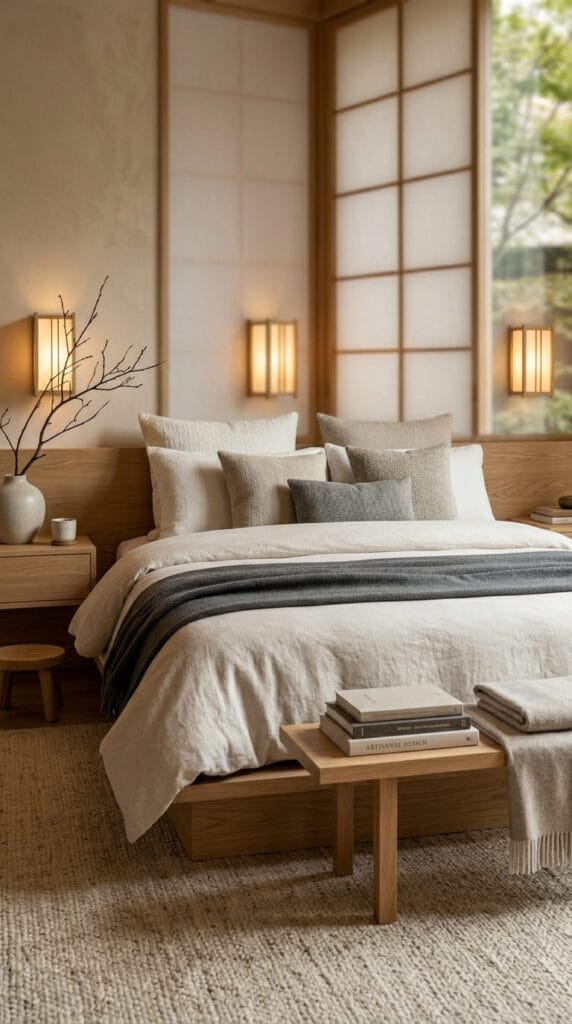
The final touch to the relaxation area is a low wooden bench at the foot of the bed. This is a convenient place to put down evening art books or an extra throw blanket. A minimal amount of decor in plain sight helps keep the focus on what matters most—inner peace and silence.
Tips from Me: How to Adapt Japanese Zen in a Small Apartment
Setting up an authentic Zen bedroom in a large area with garden access is easy, but the principles of this style can and should be transferred to ordinary, small city apartments. Here are a few of my personal recommendations on how to make this style work in a modest square footage:
- Ditch the bulky wardrobe in favor of hidden storage: In a small room, a massive wardrobe will instantly destroy the whole aesthetic of lightness. Move your clothes storage to a hallway dressing room, or use a built-in wardrobe across the entire wall with completely flat fronts that match the wall color (no handles, with push-to-open latching). The wardrobe should “dissolve” into the space.
- Use a mattress on a low platform with drawers: If space is tight but you still need to store things somewhere, a platform under the mattress is your salvation. Order a low wooden platform with pull-out drawers hidden inside for bed linen. Visually, the bed will remain low and “Japanese,” but functionally, it will replace a chest of drawers.
- Replace curtains with sleek roller or Roman shades: Heavy curtains with folds collect dust and visually eat up space. Use solid-color Roman or roller shades made of semi-transparent linen or bamboo. They take up space exactly along the outline of the window and provide a soft diffused light, similar to the light passing through shoji screens.
- No more than three items of decor: In a small room, Zen is ruined by any extra item. Leave exactly three decorative elements in plain sight: for example, one floor vase with a dry branch, one sleek poster on the wall, and one beautiful light fixture. Put everything else (creams, chargers, small items) inside the drawers immediately after use.
- Wood of a single shade: In a small space, a mismatch in wood textures creates visual chaos. If your floor is made of light laminate or parquet, then the platform bed, floating shelves, and picture frames should all be made of wood of exactly the same tone and texture. This ties the room together into a single monolithic space.
- Transitional Coastal: How to Combine Elegant Classics and Seaside Freshness Throughout the Whole House
- Sleek Scandi: How to Create a Light, Clean, and Cozy Scandinavian Interior Throughout the Whole House
- Equestrian Chic: How to Create an Atmosphere of Noble Estate Elegance and Aristocratic Comfort Throughout the House
- Cabin Chic: How to Create an Alpine Chalet Atmosphere and Secluded Comfort Throughout the Whole House
- Soft Industrial: How to Create an Aesthetic, Warm, and Modern Loft Throughout the Whole House
- Bright Boho: How to Create a Light, Cozy, and Vibrant Interior Throughout the Whole House