For a long time, the classical style in interior design was associated with heavy ornamentation, museum-like rigidity, and excessive gilding. However, times change, and palace-like monumentality has given way to a fresh perspective adapted to the realities of modern life—New Traditional. This style inherited a love for symmetry, noble architectural forms, and high-quality materials from its predecessor, but completely shed the pretentious pathos. Instead, it bets on spaciousness, an abundance of natural light, soft natural shades, and pure comfort. The New Traditional style is the perfect balance between respecting family heritage and meeting the demands of a dynamic 21st century.
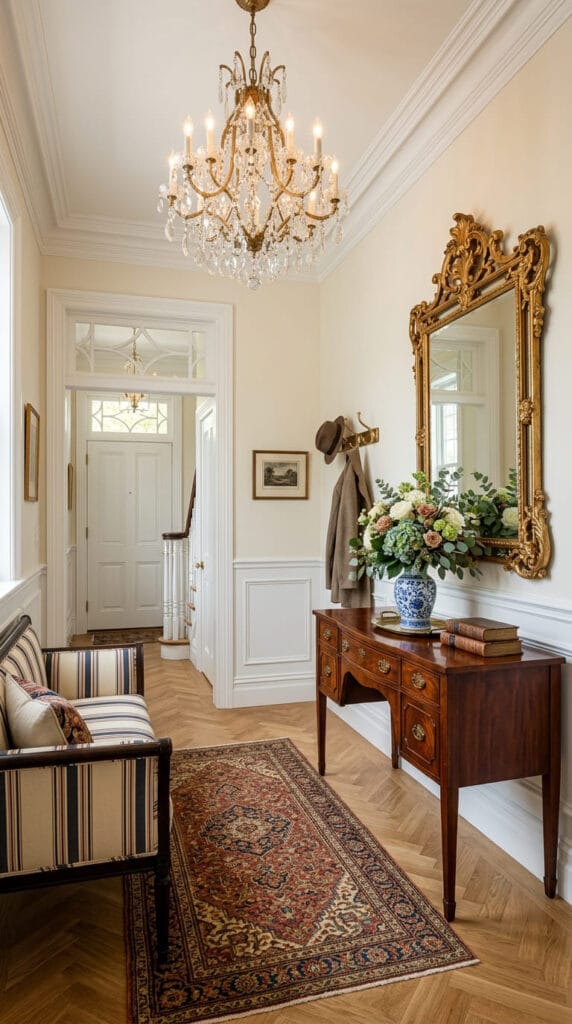
An introduction to the New Traditional concept traditionally begins with the entryway, which immediately sets the tone for the entire house. The space here breathes nobility thanks to high ceilings with neat cornices and light-colored walls that visually expand the room. Using dark wood furniture, such as an elegant console table, combined with refined elements like a classic crystal chandelier and a mirror in a carved frame, creates a sense of generational continuity without overwhelming the interior with unnecessary pomposity.
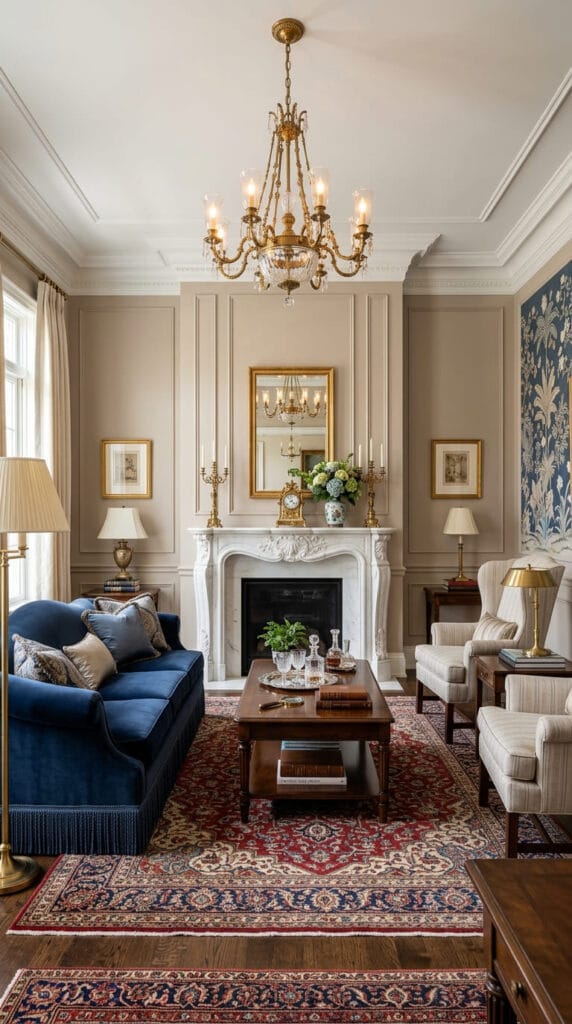
The main space of the house—the living room—demonstrates a textbook manifestation of symmetry inherent to the New Traditional style. The compositional center of the room is a majestic white marble fireplace around which the seating area is arranged. A luxurious velvet sofa in a deep blue shade acts as the main color accent, contrasting effectively with the neutral beige walls adorned with crisp moldings. A classic rug with a soft oriental pattern ties all the elements together, creating the atmosphere of a private country club.
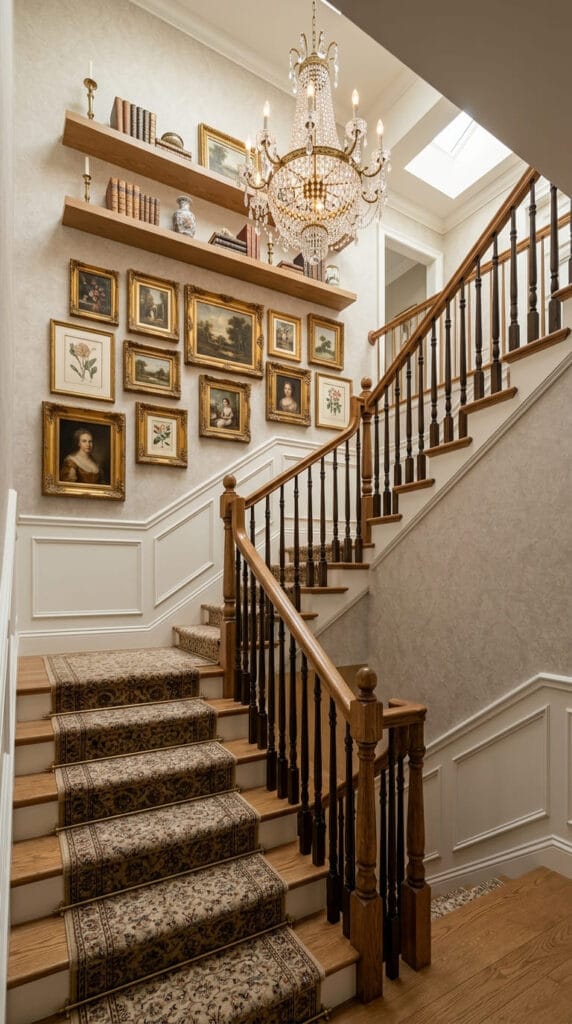
Staircases and transitional zones in the New Traditional style turn into standalone architectural statements. Instead of empty walls, a tapestry-style hanging technique is used here, but in a much more restrained, orderly manner than in eclectic styles. Paintings and portraits in noble frames are structured into a clear composition, which is complemented by open wooden shelves for books. A soft carpet runner on the steps not only absorbs the sound of footsteps but also emphasizes the overall status of the interior.
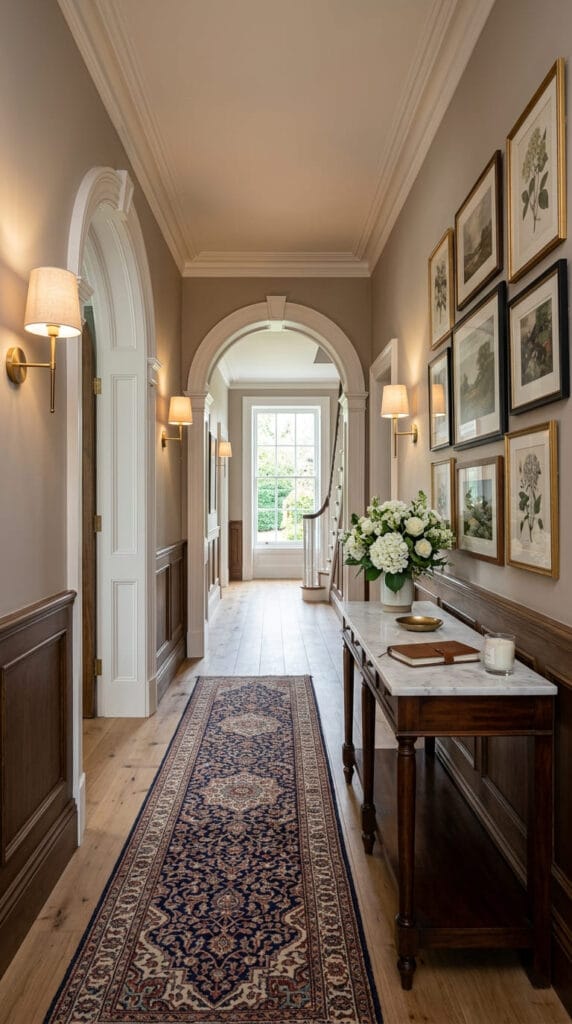
The depth and rhythm of the interior unfold through the design of the hallways. Complex semicircular arches with keystones divide the space into functional zones, creating a beautiful visual perspective. The lower part of the walls, finished with wooden wainscoting panels in a rich walnut shade, protects the surfaces and emphasizes the geometry of the corridor. A slim console with a noble marble top and symmetrically placed wall sconces with fabric shades fill the space with a soft, diffused glow.
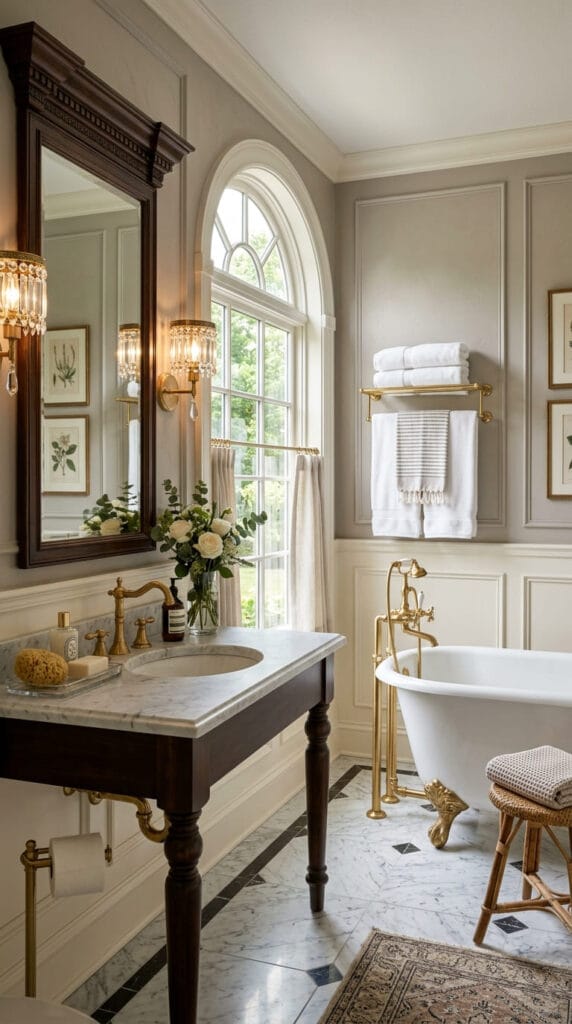
The bathroom in the New Traditional concept is a fully fledged room for relaxation, where utility yields to aesthetics. A huge arched window lets in a maximum amount of daylight, beautifully highlighting the whiteness of the freestanding clawfoot tub on its delicate gold legs. The combination of a dark natural wood vanity base, a marble countertop, and the gleam of brass hardware creates a sense of timeless comfort, transforming daily rituals into a true pleasure.
Advice from Me: How to Correctly Choose Wall Colors for a New Traditional Style
The wall color in New Traditional is the very foundation upon which the entire interior is built. Unlike radical minimalism or vibrant maximalism, it is vital to strike a balance between lightness and depth here. Here are a few of my practical recommendations:
- Steer clear of pure, stark white. True white in large volumes can look too sterile, overly modern, and cold. Instead, use intricate, “complex” shades: cream, ivory, soft buttery tones, or an barely-there off-white. They gently reflect light and create an enveloping sense of coziness.
- Embrace the noble gray-beige palette (Greige). This shade has become a signature calling card of the style. It beautifully combines the elegance of gray with the warmth of beige. Against such a backdrop, furniture made of dark mahogany or walnut looks stunning, as do textiles in deep, rich tones like sophisticated blue or emerald.
- Do not fear dark accents, but use them selectively. If you want to add a sense of intimacy to a space, you can paint a specific zone (like a study or a small library room) in a deep, complex color—slate gray, a muted English green, or a rich burgundy. The main thing is to balance such walls with crisp white crown moldings, tall baseboards, and wall paneling so the room does not feel visually cramped.
- Transitional Coastal: How to Combine Elegant Classics and Seaside Freshness Throughout the Whole House
- Sleek Scandi: How to Create a Light, Clean, and Cozy Scandinavian Interior Throughout the Whole House
- Equestrian Chic: How to Create an Atmosphere of Noble Estate Elegance and Aristocratic Comfort Throughout the House
- Cabin Chic: How to Create an Alpine Chalet Atmosphere and Secluded Comfort Throughout the Whole House
- Soft Industrial: How to Create an Aesthetic, Warm, and Modern Loft Throughout the Whole House
- Bright Boho: How to Create a Light, Cozy, and Vibrant Interior Throughout the Whole House