The Minimalist style is far more than just purging unnecessary items—it is a fine art of keeping only what is essential, creating space for thoughts, rest, and living. In its modern interpretation, the style has long moved away from cold sterility and strict visual asceticism. Today, minimalism revolves around the concept of warm minimalism: a seamless union of ultra-clean architectural lines, hidden storage systems, the soft glow of integrated lighting, and deep organic textures. Natural pale oak, tactile plaster, linen textiles, and soft matte surfaces cultivate a visual serenity that is an absolute joy to return to after a busy day. It is an impeccable choice for those who value open volume, ergonomics, and harmony.
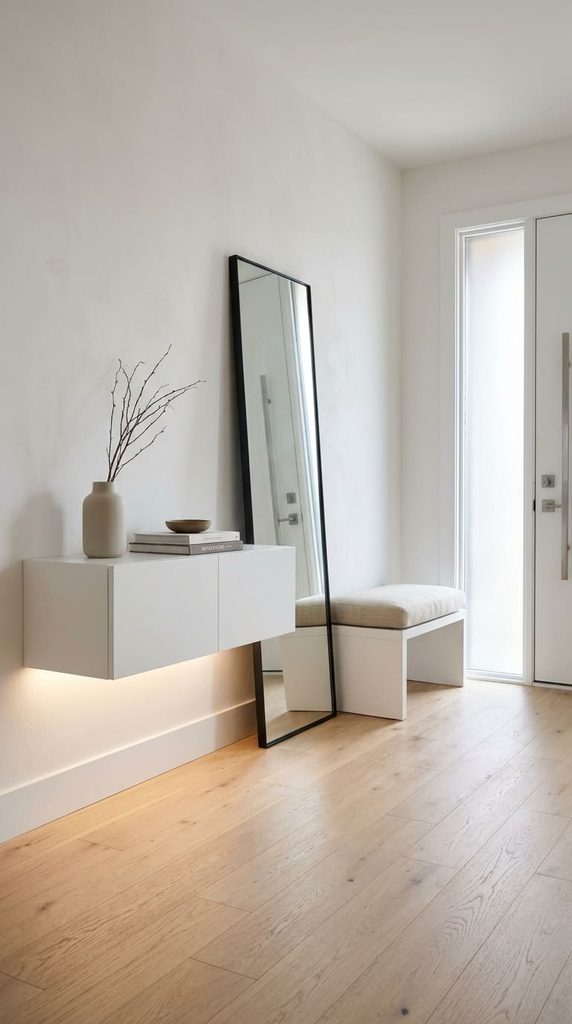
The initial introduction to the home begins in a sleek entryway, where the spirit of minimalism is felt right from the doorway. Crisp white walls with delicate plaster texturing blend harmoniously with pale oak flooring. A floating console with soft under-cabinet lighting creates a weightless effect, while a full-length mirror in a thin black metal frame and a neat bench with a cushioned pad bring functional completion to the space.
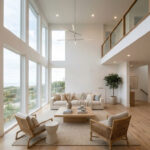
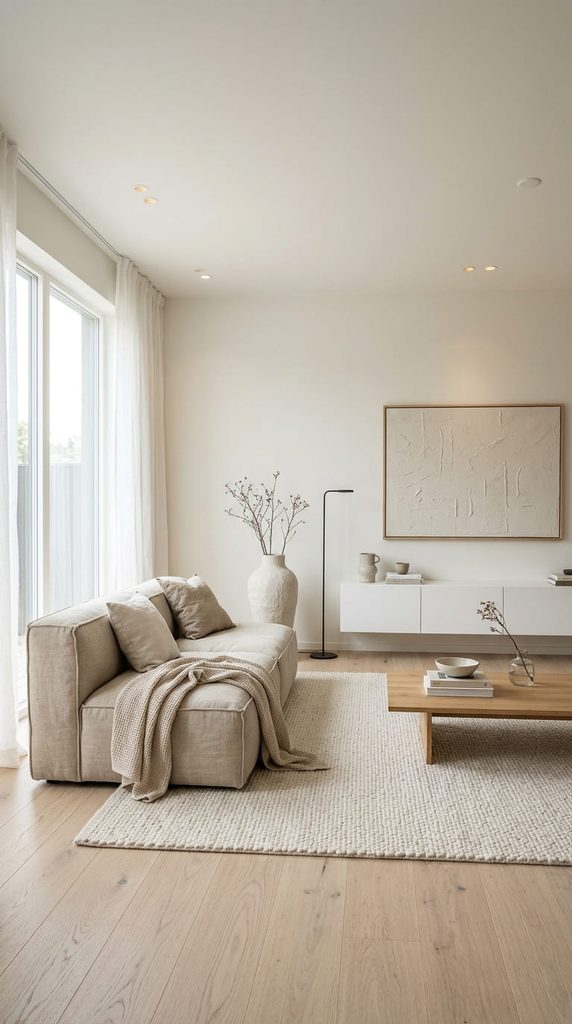
The spacious living room serves as the primary oasis of tranquility and natural light. Sweeping floor-to-ceiling panoramic windows are dressed in flowing sheer drapery that fills the room with soft, diffused illumination. A low beige sofa styled with a textured knit throw, a thick chunky-woven wool rug, a minimalist white media console, and a textured wall art piece form a flawless lounge arrangement.
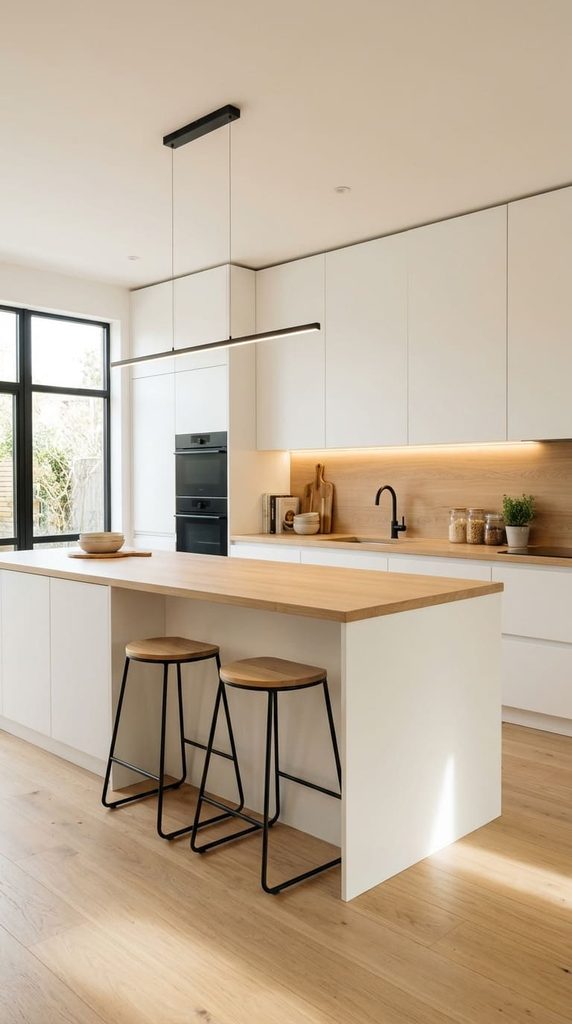
The kitchen area demonstrates absolute purity of form and effortless ergonomics. Flat-panel white handleless cabinetry conceals all appliances, leaving only a neat backsplash and pale oak countertop on display. A central kitchen island with minimalist counter stools set on black metal frames, paired with a slender linear pendant fixture, keeps the space airy and practical.
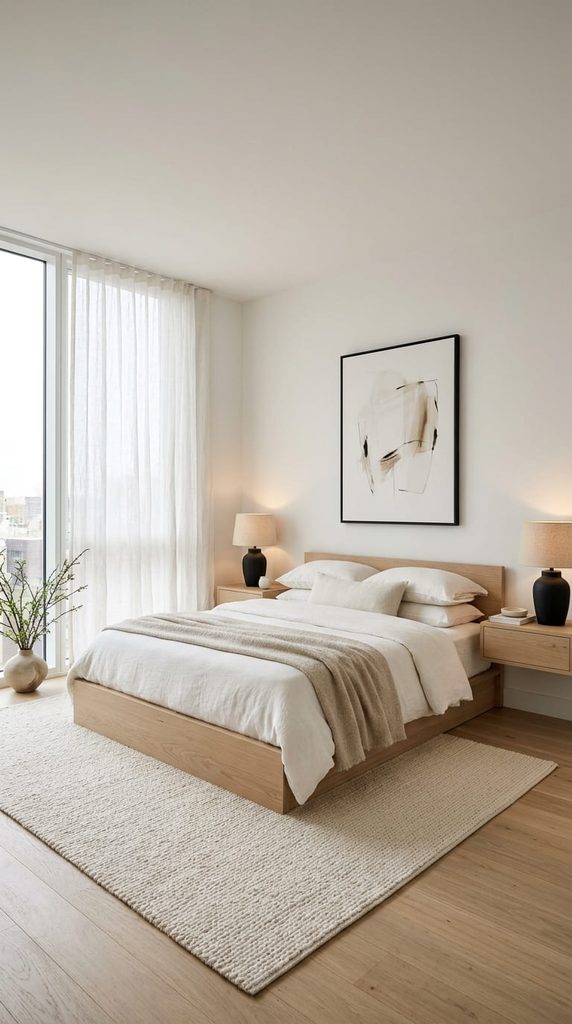
In the primary bedroom, the minimalist style fosters a deeply restorative atmosphere of complete peace. A solid oak platform bed is dressed in crisp white linen bedding layered with a soft beige throw. Floating nightstands, black table lamps featuring sculptural bases, and abstract artwork in a slender frame round out this balanced composition.
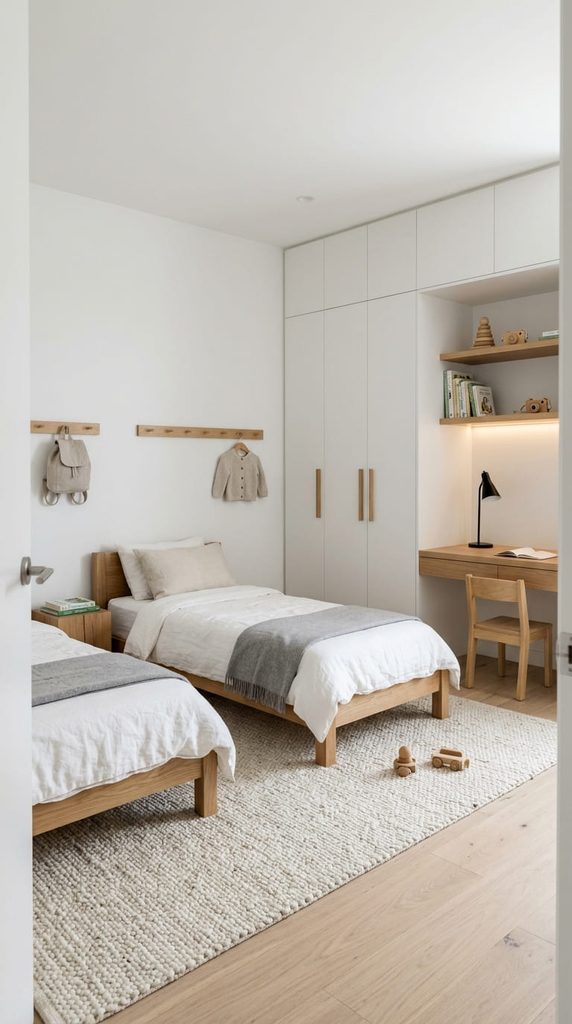
The children’s room illustrates how minimalism easily adapts to young living spaces while maintaining pristine order. Two matching wooden twin beds are dressed in white linens topped with gray accent blankets. A full-wall built-in white wardrobe integrates a functional study desk with floating shelves enhanced by contour LED lighting, while a textured rug adds warmth for playtime on the floor.
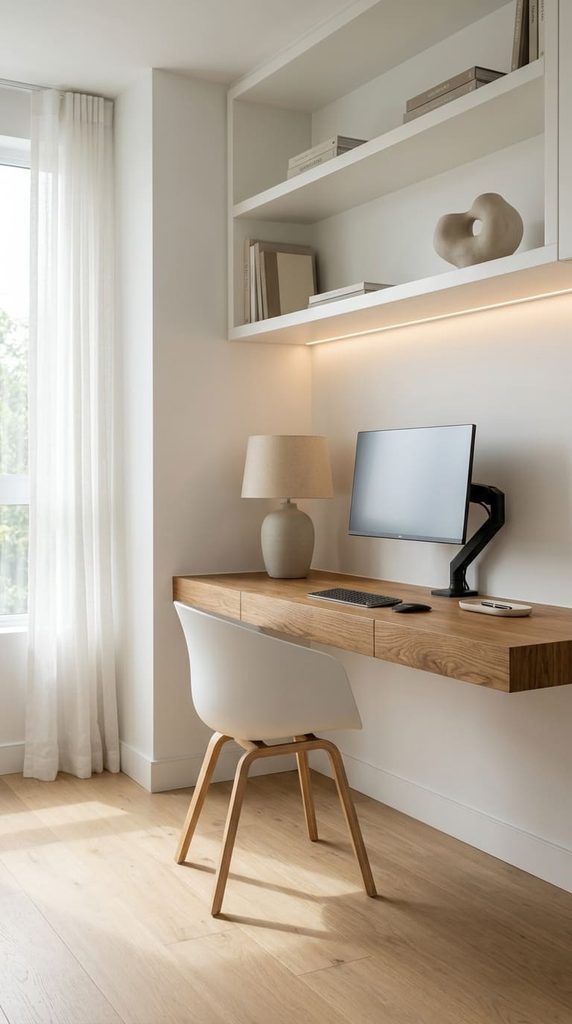
The home office is designed in the spirit of pure functionalism, eliminating distractions for focused work. A streamlined floating oak desk seamlessly transitions into sleek open shelves above. A white ergonomic chair, illuminated bookcase storage, and a large window flooding the room with daylight render the workspace both stylish and comfortable.
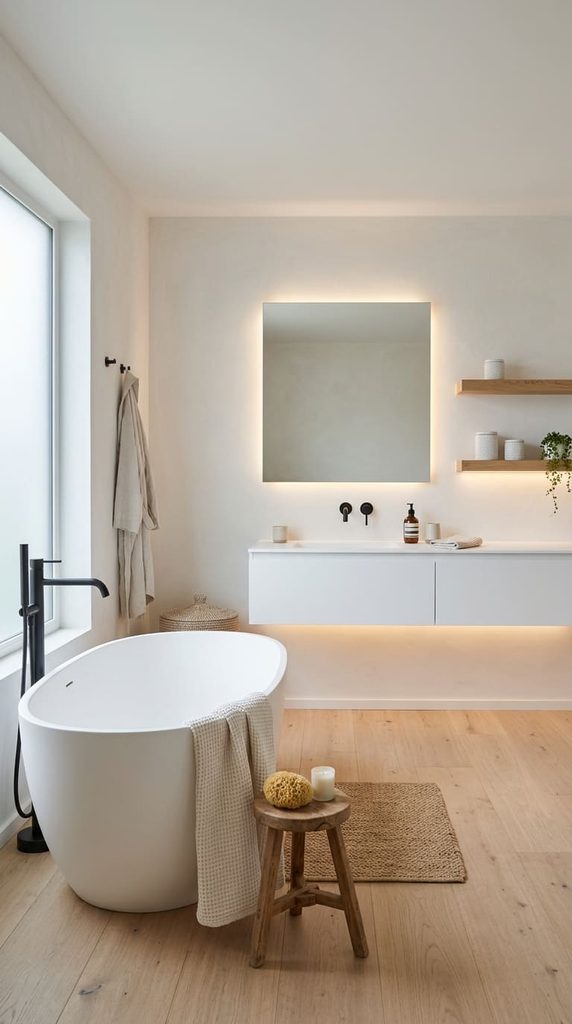
Completing the home tour is a bathroom reminiscent of a private wabi-sabi spa sanctuary. A white oval freestanding soaking tub is situated by a tall window, while a floating white vanity is illuminated from below with soft ambient light. A square mirror featuring concealed backlighting, matte black fixtures, and a solid wood stool emphasize the purity and harmony of natural finishes.
3 tips from me on creating the Minimalist style
- Invest in concealed storage and handleless fronts. The cardinal rule of minimalism is the total elimination of visual clutter. Design built-in floor-to-ceiling cabinetry with handleless push-to-open doors so everyday items remain neatly hidden away while keeping your walls completely seamless.
- Utilize warm hidden accent lighting (2700K). Light functions as an independent architectural element in minimalist design. Hide LED strips under floating vanities, behind mirrors, within shelf niches, and along baseboards. Warm indirect illumination softens clean geometry and adds cozy depth.
- Build your design around tactile textures and pale hardwoods. To ensure a monochromatic white or beige interior never feels flat or sterile, layer varied physical textures: matte plaster walls, natural pale oak, thick chunky-knit wool rugs, linen window drapery, and soft bouclé fabrics.
- Sun, Air, and Effortless Chic: How to Design an Interior in the California Cool Style
- The Magic of Old Libraries: How to Recreate the Mysterious and Cozy Dark Academia Style in Your Interior
- The Warmth of Minimalism: How to Create a Harmonious and Cozy Space in the Warm Minimalist Style
- The Breath of the Ocean and Modern Trends: How to Transform Your Home in the Modern Coastal Style
- The Charm of Coastal Grandmother: How to Create an Atmosphere of Serene Coastal Coziness and Elegance in Your Home
- The Cozy World of Cottagecore: How to Turn a Country House into a Romantic Sanctuary filled with Soul and History