The Eclectic style is a masterful conversation between different historical eras, cultural traditions, and design philosophies within a single home. Contrary to common misconceptions, true eclecticism has nothing to do with a chaotic clutter of random objects. It is a deliberate and deeply considered approach to interior design that relies on a refined color palette, balanced proportions, and a rich interplay of tactile textures. Classic wall paneling, vintage oriental rugs, modern abstract art, mid-century walnut furniture, and vibrant color accents bring together a space with a story to tell. It is the perfect choice for individuals with sophisticated taste who curate meaningful pieces and wish to express their individuality without the constraints of a single aesthetic style.
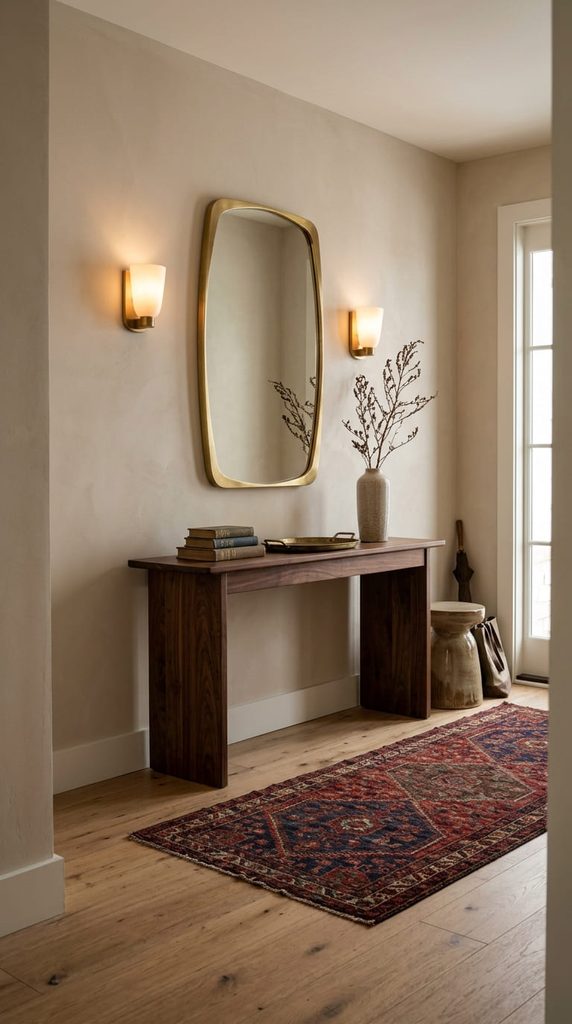
The introduction to the home begins in an atmospheric entryway, where the delicate boundary between past and present is felt immediately. Soft-textured plaster walls are illuminated by paired wall sconces with frosted glass shades. A walnut console table boasting clean geometric lines is styled with a brass tray and dried botanicals in a ceramic vase. A soft-cornered mirror in a brass frame and a classic vintage rug in rich wine tones set a noble retro atmosphere right from the doorway.
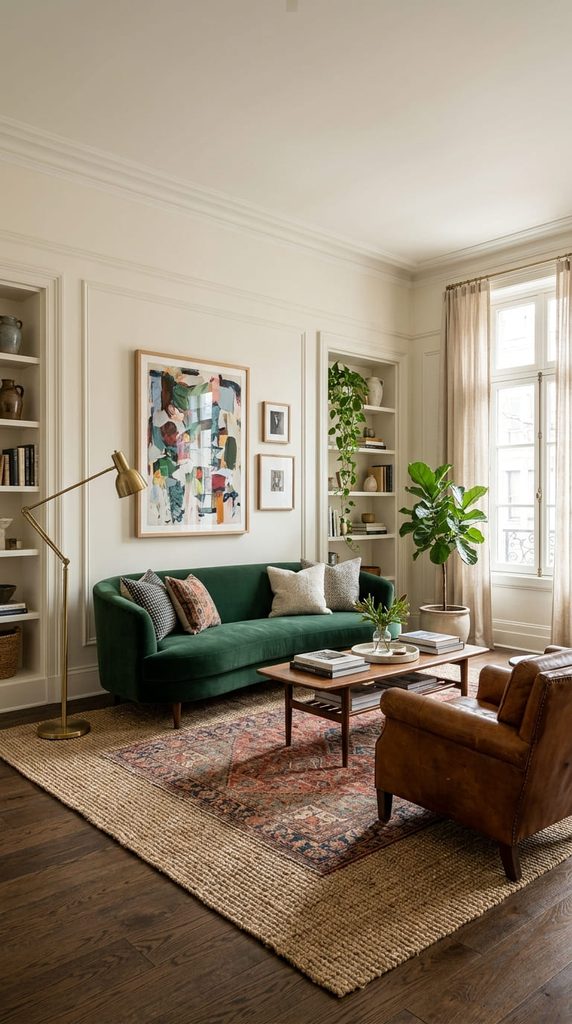
A spacious living room serves as a prime example of how eclecticism seamlessly bridges mid-century design with timeless classics. Wall paneling with crown molding and tall windows flood the room with soft natural daylight. The focal point is a plush emerald-green velvet sofa layered with accent pillows, complemented by a 1960s-style leather armchair, a two-tiered walnut coffee table, and an oriental rug layered over a jute mat. An abstract canvas in a thin wooden frame and a polished brass floor lamp lend the room the creative spirit of an artist’s studio.
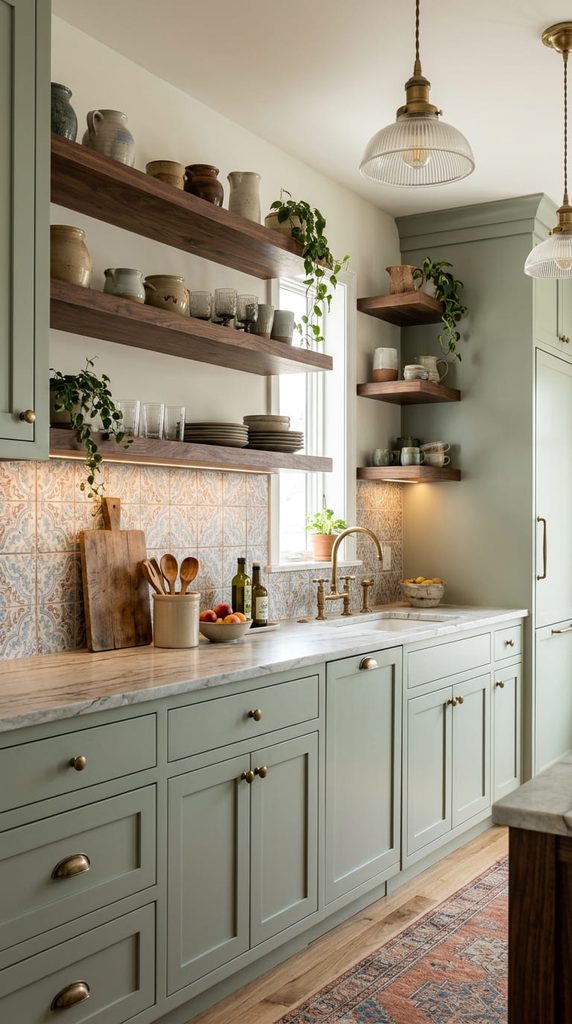
An eclectic kitchen brings cozy warmth and character to everyday culinary routines. Lower cabinets in a soothing sage-green hue pair with marble countertops and open floating shelves crafted from dark walnut. A ceramic tile backsplash featuring a delicate oriental motif, vintage-style brass faucets, and clear glass pendant lights with fluted details turn cooking into an aesthetic pleasure.
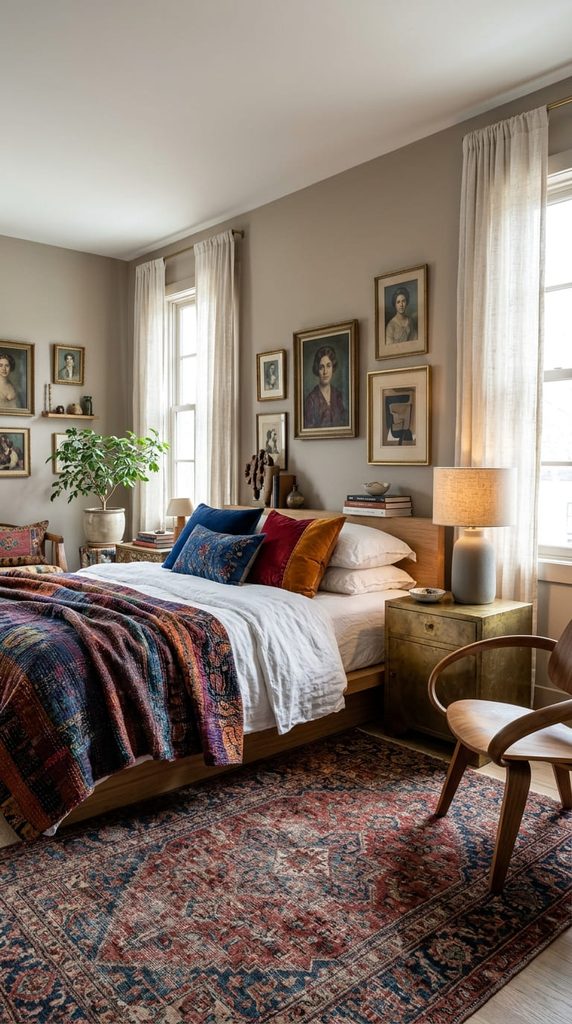
In the primary bedroom, eclecticism fosters an intimate and tranquil sanctuary for rest. A wooden platform bed is layered with a patchwork-patterned quilt and dark blue and mustard velvet accent pillows. A patinated metal nightstand with a ceramic lamp, a curved wooden armchair, and a gallery wall of vintage portraits in gilded frames above the headboard build the unique character of a family retreat.
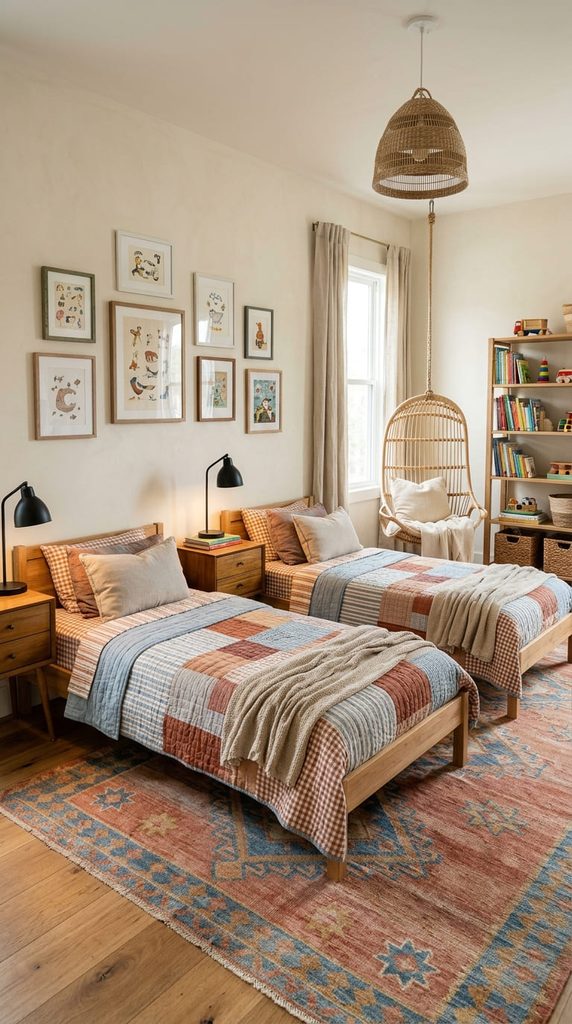
The children’s room demonstrates a playful yet sophisticated approach to the aesthetic. Two wooden twin beds are dressed in patchwork quilts featuring plaid and striped patterns. A hanging rattan teardrop chair, a wooden bookshelf filled with books and toys, a curated gallery wall of framed children’s artwork, and a warm oriental rug in terracotta and blue tones create a creative environment for sleep and play.
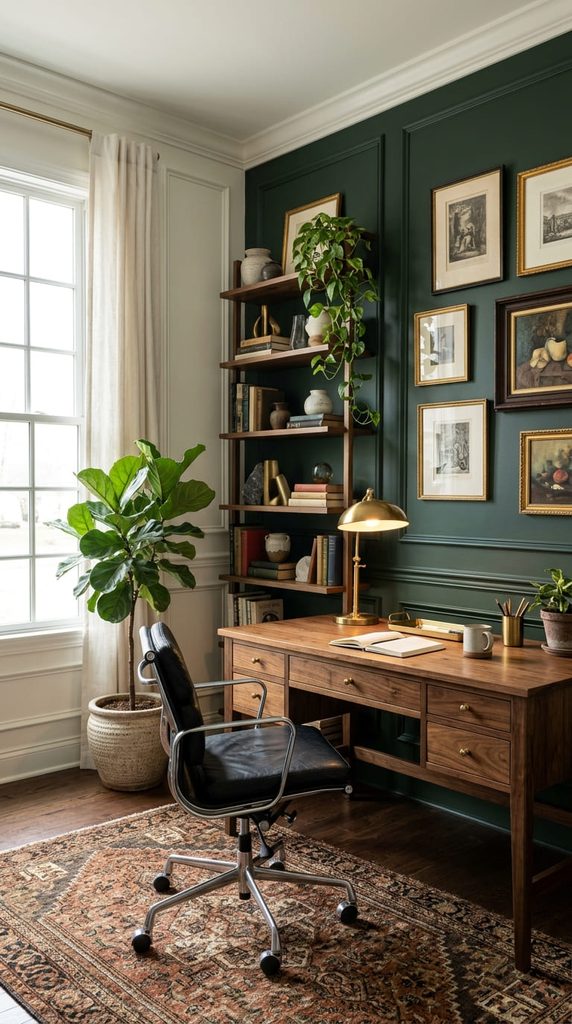
The home office immerses you in an atmosphere of intellectual focus. An accent wall painted in a deep dark green is adorned with classic wall moldings and traditional picture frames. A solid walnut writing desk set on slender legs, a leather swivel executive chair, a brass banker’s lamp, and an open bookcase filled with literature and indoor greenery create an environment suited for deep work.
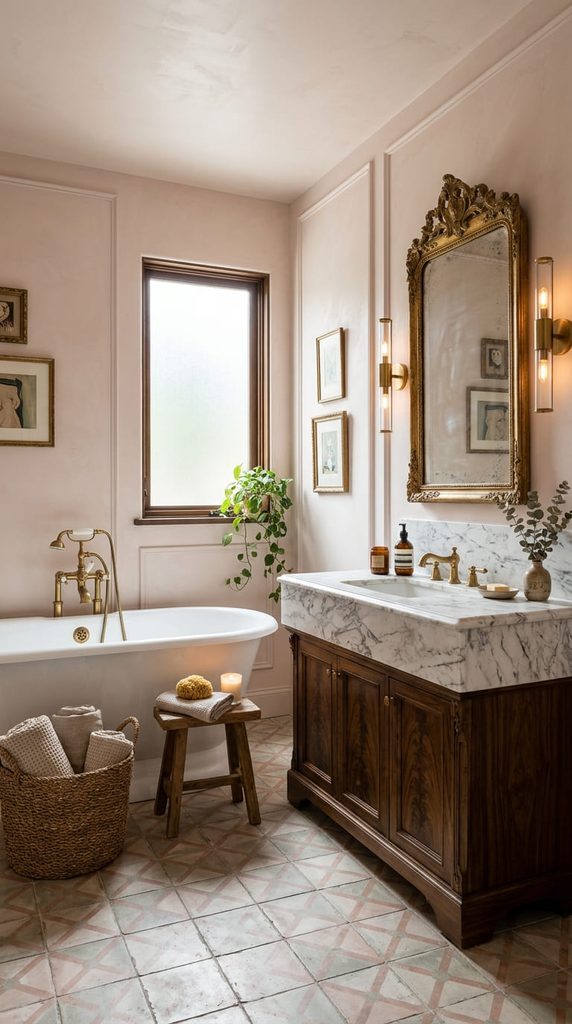
Completing the home tour is a bathroom reminiscent of a serene retreat in an aristocratic country home. A clawfoot soaking bathtub is paired with a floor-mounted brass faucet. A dark cherry wood vanity topped with marble, a carved gilded mirror spanning the wall, wall sconces, and geometric encaustic floor tiles create an ensemble of luxury and countryside peace.
3 tips from me on creating the Eclectic style
- Establish a cohesive unifying element. When blending furniture and decor from different eras (such as classic wall moldings and mid-century armchairs), maintain visual balance using a unified color palette or repeating materials. Accents of emerald green, sage, or deep wine will tie together furniture pieces from varying periods.
- Layer textiles and physical textures. Eclecticism thrives on deep tactile experiences. Do not hesitate to layer vintage patterned rugs over simple woven jute mats, pair smooth leather with velvet and velour, or combine patchwork quilts with linen drapery.
- Curate personal art galleries and wall displays. Decorate your walls with paintings, sketches, and mirrors in contrasting frames. Whether arranged symmetrically or in a gallery layout, displaying family portraits, botanical illustrations, and abstract art against plastered or painted walls is the best way to give your home a distinct personality.
- Sun, Air, and Effortless Chic: How to Design an Interior in the California Cool Style
- The Magic of Old Libraries: How to Recreate the Mysterious and Cozy Dark Academia Style in Your Interior
- The Warmth of Minimalism: How to Create a Harmonious and Cozy Space in the Warm Minimalist Style
- The Breath of the Ocean and Modern Trends: How to Transform Your Home in the Modern Coastal Style
- The Charm of Coastal Grandmother: How to Create an Atmosphere of Serene Coastal Coziness and Elegance in Your Home
- The Cozy World of Cottagecore: How to Turn a Country House into a Romantic Sanctuary filled with Soul and History