When we think of a country house in the mountains, the image of a traditional Alpine chalet often comes to mind — with massive timber, dark heavy walls, and a secluded, intimate atmosphere. However, the modern rhythm of life demands more light, space, and clean lines. This is exactly how the Mountain Modern style emerged. It is a harmonious union of the natural roughness of wild stone, the warmth of natural wood, and architectural minimalism with panoramic glazing.
Every journey through such a home begins with the entrance area, where the balance between the harsh landscape outside and domestic comfort is immediately felt.
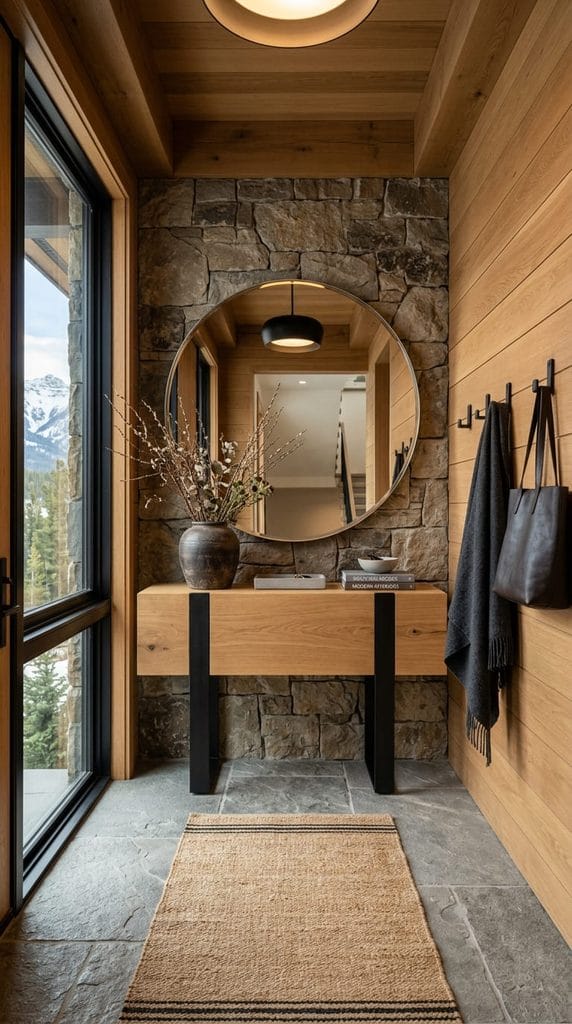
The entryway sets the mood for the entire interior through contrasting textures: the textured wild stone masonry is juxtaposed with smooth light wood panels. A minimalist solid wood console on a black metal frame and a round mirror without a bulky frame visually lighten the space. A jute rug and a panoramic window overlooking the snow-capped peaks turn an ordinary transit zone into a stylish welcome.
From the cozy entrance space, we move into the main gathering place for the whole family — the spacious living room.
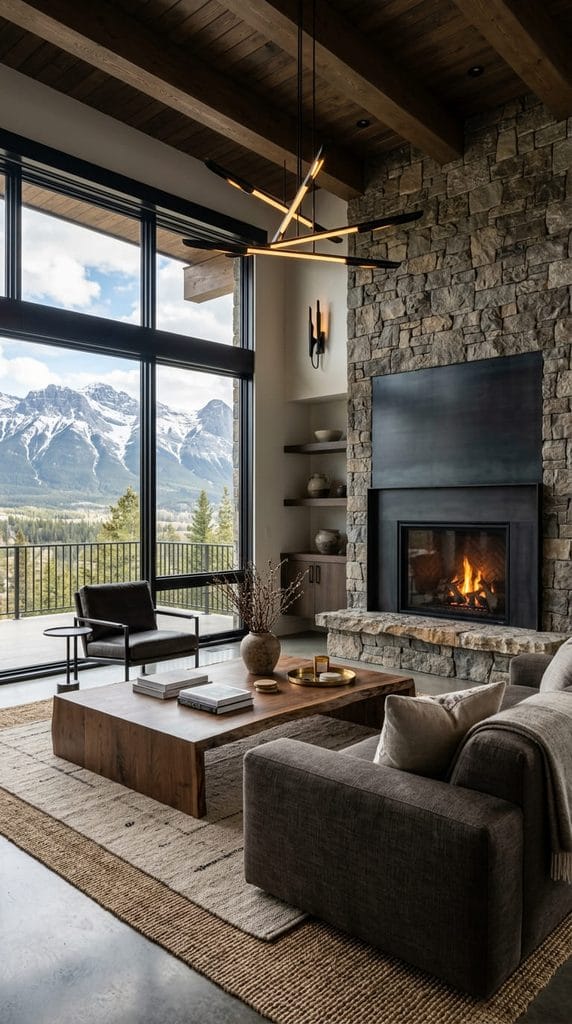
The living room is built around two key elements: a fireplace built into a grand stone wall, and large-scale panoramic glazing. A designer pendant chandelier with thin black lines accentuates the high ceilings with exposed wooden beams. A low coffee table made from a solid log and a soft, deep sofa warm up the atmosphere, inviting you to enjoy the view outside in warmth.
A logical continuation of the living room is the kitchen area, where natural aesthetics meet modern functionality.
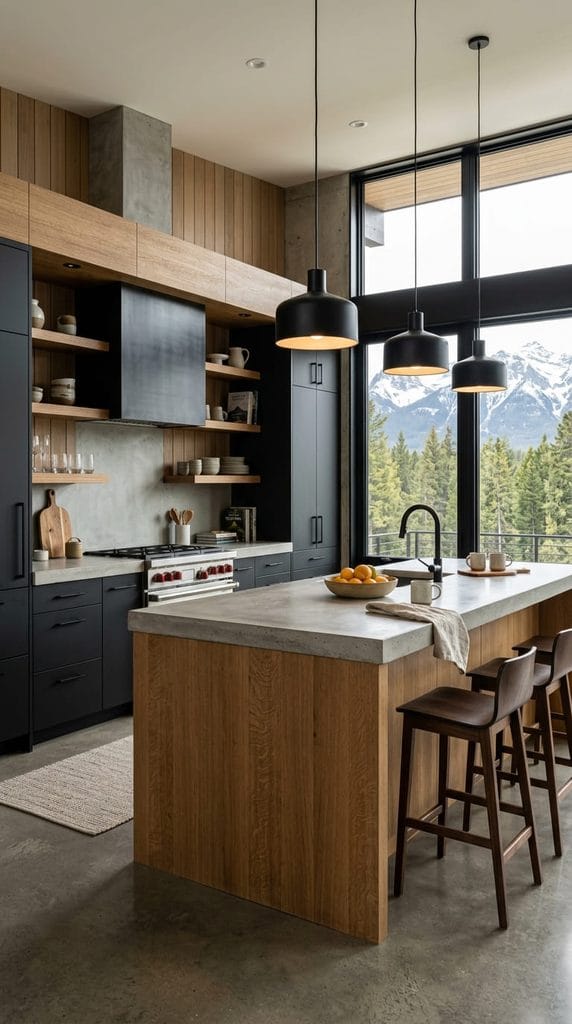
The kitchen combines strict dark cabinetry with the warmth of wooden textures. A kitchen island with a textured wooden base and a massive concrete countertop serves as the central workspace. The absence of a bulky upper row of cabinets is compensated by open shelves, while sleek black pendant lights above the island highlight the interior’s graphic quality against the backdrop of mountain peaks.
The home’s private zone reveals the concept of quiet relaxation and unity with nature.
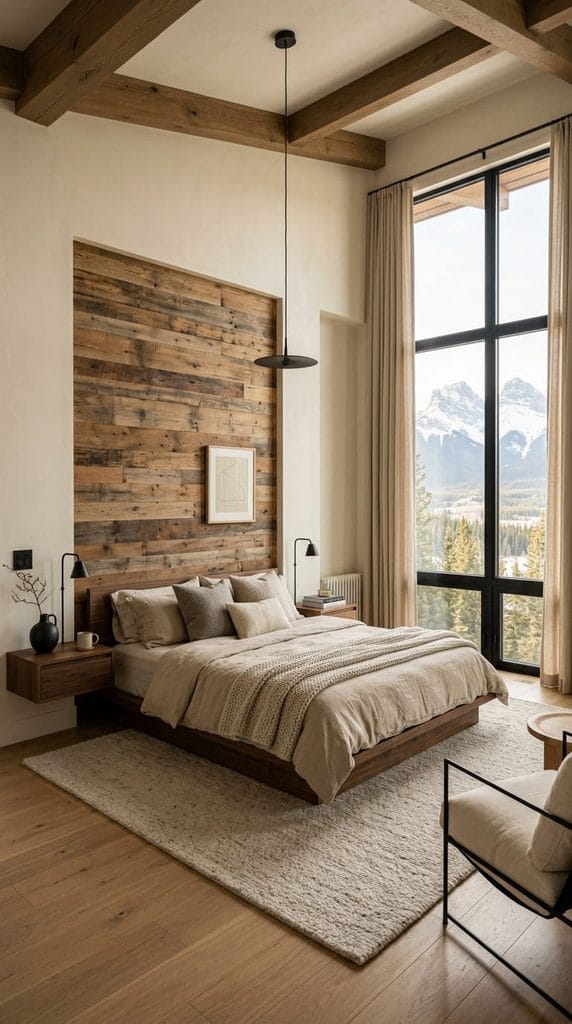
In the bedroom, the focus is on tactile sensations and calm shades. The wall behind the headboard is clad in boards with a pronounced aged wood texture, creating a warming effect. A low platform bed dressed in sand-colored linen bedding and a minimalist pendant light form a space where it is easy to recharge after an active day.
The interior of the children’s room proves that the Mountain Modern style can be not only strict but also highly functional.
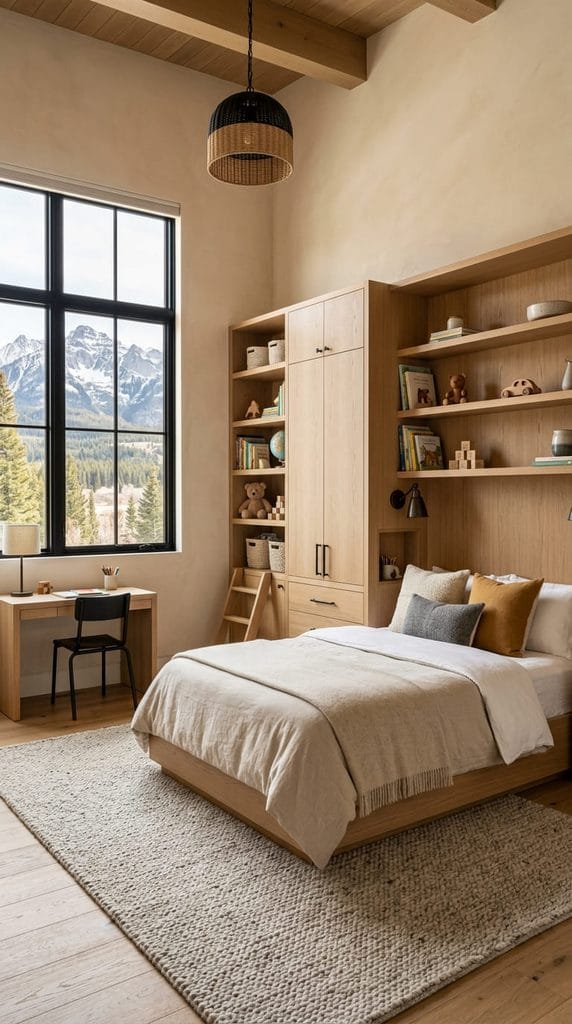
The nursery is executed in a light natural color palette, maximizing the use of solid wood. Built-in storage with open shelves allows for the convenient placement of books and decor without overloading the room. A compact study desk is positioned right by the window so the child can study in natural light with an inspiring view of the forest.
A home office in such an interior transforms into an ideal place for deep work without unnecessary noise.
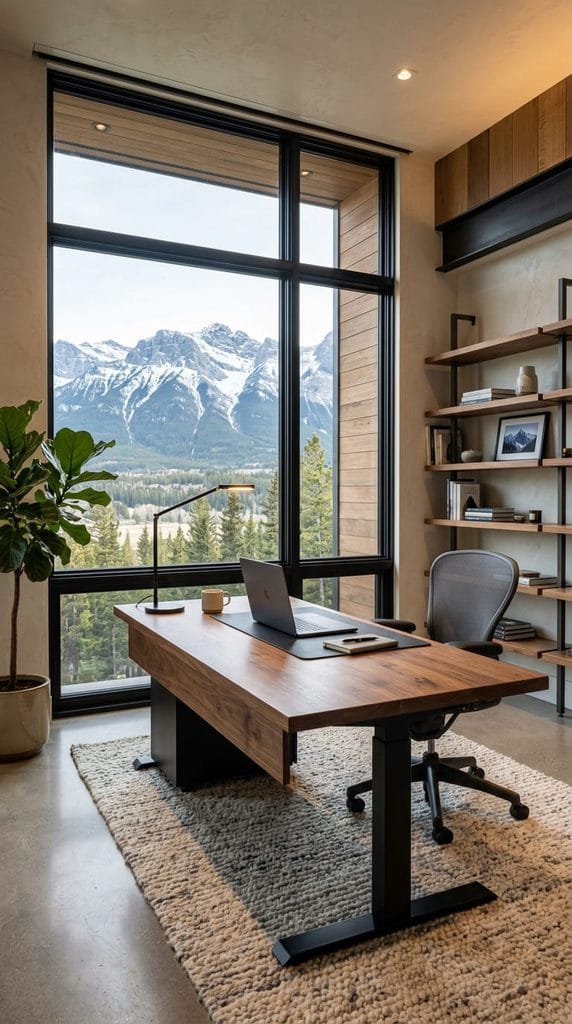
The workspace is designed with a focus on ergonomics and the view from the window. A massive writing desk with a natural live wood edge is complemented by a modern chair and a sleek desk lamp. An open shelving unit on a metal frame underscores the industrial undertones of the style, while a textured soft rug adds the necessary domestic coziness.
The home tour concludes with the bathroom, designed according to the principles of a premium spa complex.
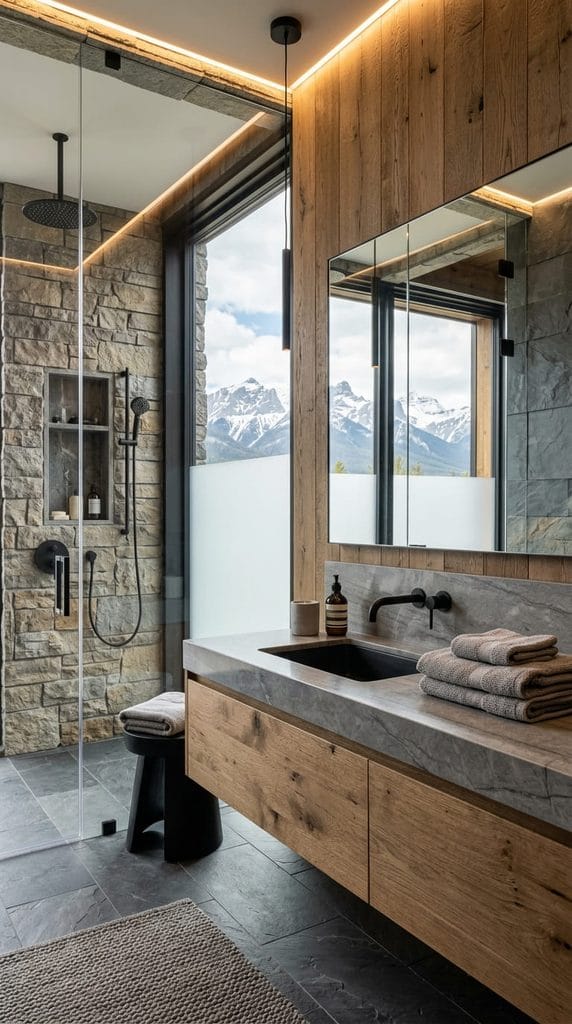
The bathroom offers an immersion into an atmosphere of relaxation through a well-thought-out combination of stone, wood, and soft built-in lighting. The shower area, finished with rough stone, is separated by clear glass to maintain visual lightness. A floating wooden vanity with a gray stone countertop and matte black fixtures give the space a modern, graphic edge.
3 tips from me on creating the Mountain Modern style:
- Combine contrasting textures. The main trick of the style is the balance between warm, imperfect materials (rough stone, aged wood, jute) and cold, smooth surfaces (black metal, concrete, clear glass).
- Focus on architectural graphics and lighting. Use matte black elements — window frames, furniture frames, lighting fixtures, and faucets. They give the interior a rhythm and prevent it from turning into a typical rustic cabin.
- Open up the view to nature and maintain a neutral palette. Windows should be as open as possible, and the color scheme should echo the landscape outside: shades of gray stone, pine needles, warm wood, sand, and freshly fallen snow.
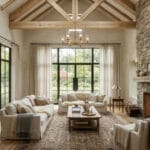
- Rustic Chic: How to Fill Your Home with Country Comfort and Modern Elegance
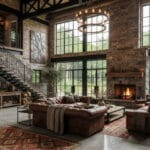
- Country Industrial: How to Combine Rustic Comfort and Industrial Character in Your Home
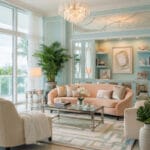
- South Beach Glam: How to Bring Miami Vibes and Tropical Chic into Your Home
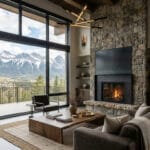
- Mountain Modern Style: How to Combine Rugged Nature, Mountain Comfort, and Modern Architecture
- Organic Minimalism: How to Create an Aesthetic, Warm, and Living Interior
- Whimsical Glam: Fairytale Luxury and Refined Elegance in Interior Design