In a world overwhelmed by visual noise, the home becomes our primary sanctuary for restoration. Traditional minimalism, with its strict straight lines and glossy white surfaces, often feels too cold and sterile. That is precisely why organic minimalism has taken center stage. This design direction preserves the freedom from unnecessary clutter while filling the home with intuitive natural warmth, imperfect textures, and soft light.
The journey into the aesthetic of organic minimalism begins right at the entrance of the home.
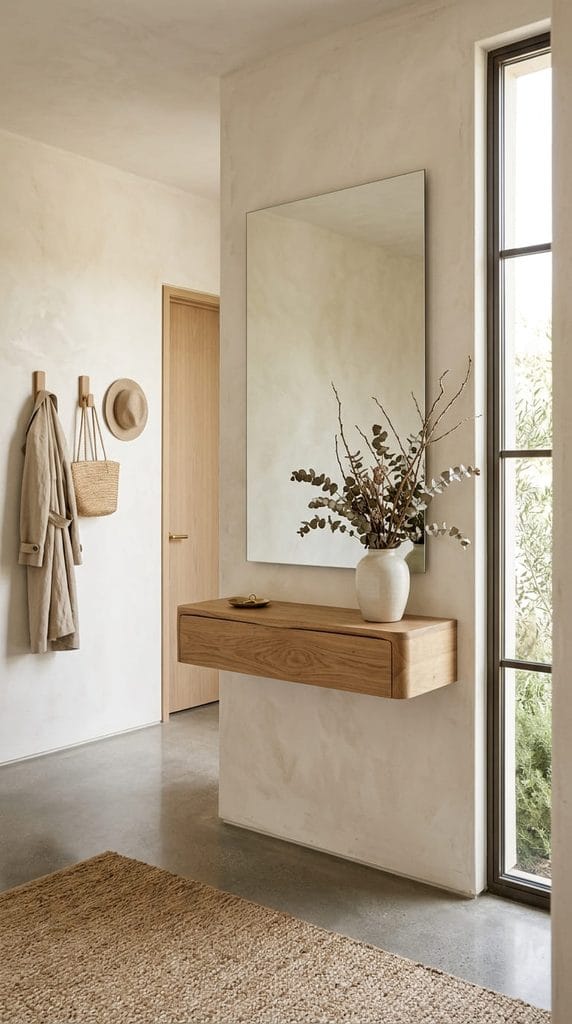
The entryway sets the tone for the entire space with textured plaster walls and light poured flooring. A floating solid oak console with rounded edges appears weightless, while a sleek mirror reflects natural light streaming from a narrow window. A natural jute rug, a vase filled with dried branches, and minimalist wooden hooks highlight practical simplicity and a nature-inspired design language.
A seamless transition from the foyer leads us into the main relaxation hub — the spacious living room.
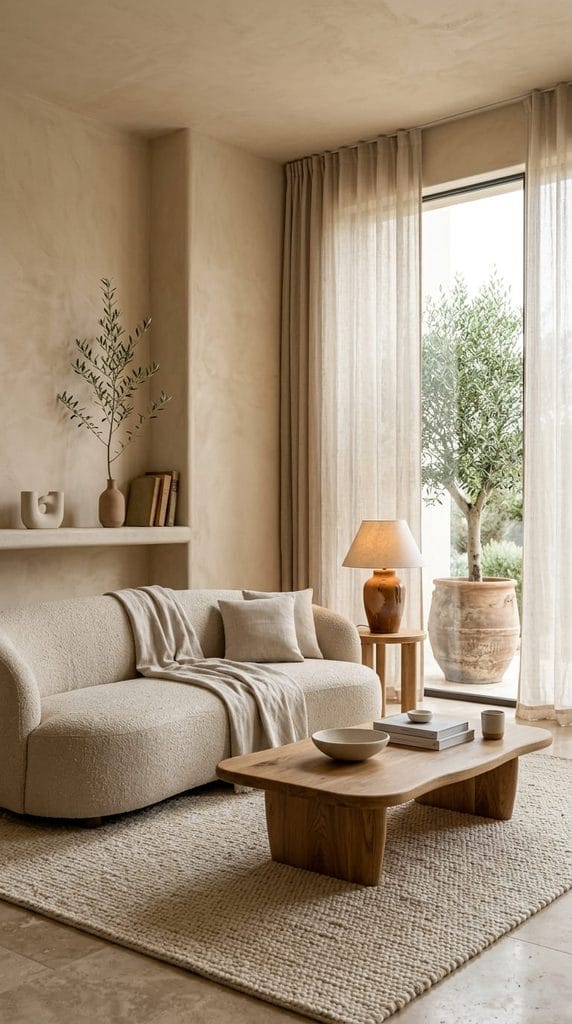
The centerpiece of the living room is a soft, enveloping sofa upholstered in tactile bouclé fabric. Placed in front is a low coffee table crafted from solid wood showcasing a rich, natural grain pattern. Warm sand-toned walls with organic imperfections, floor-length linen drapes, and a mature olive tree in a terracotta planter foster a deep connection with the outdoors.
Next, we move into the kitchen area, where functionality subtly dissolves into the overall design aesthetic.
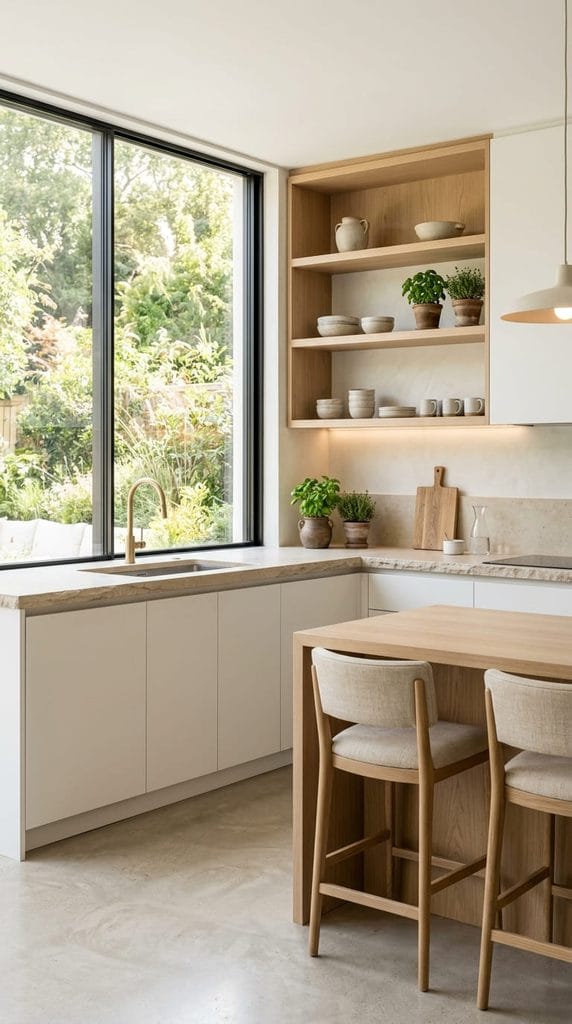
The kitchen space feels remarkably airy by foregoing a heavy top tier of closed cabinets in favor of open oak shelves. Handcrafted ceramic tableware, pots of fresh herbs, and a stone countertop with a raw edge give the room a lived-in feel. A kitchen island paired with textured wooden bar stools sits directly across from a panoramic window offering views of the lush garden.
The home’s private quarters continue the theme of seclusion, quietude, and deep relaxation.
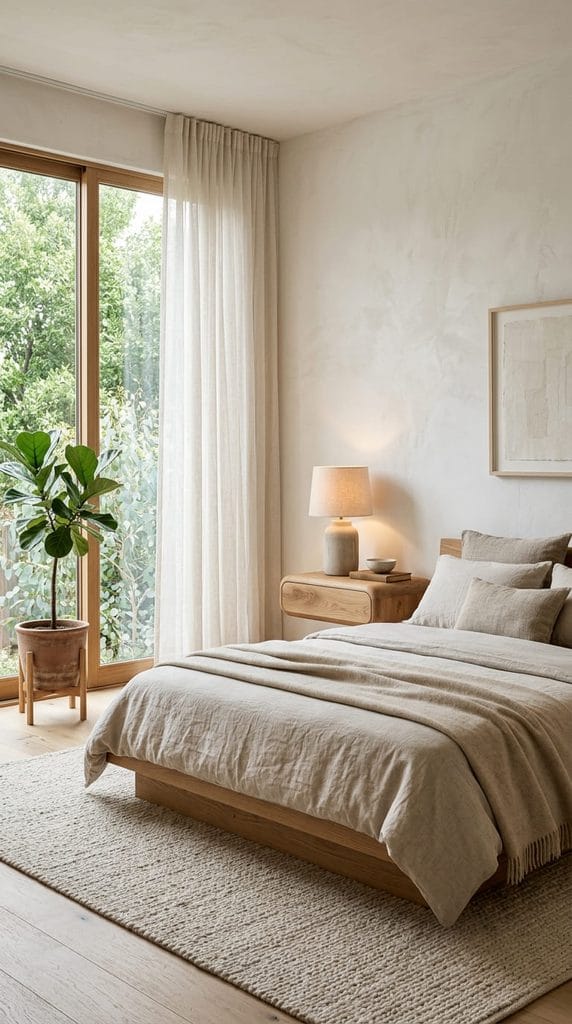
Minimalism reigns in the bedroom: a low wooden bed frame stripped of unnecessary ornament is dressed in relaxed linen bedding in organic beige tones. A floating nightstand, a ceramic table lamp casting a soft glow, and a potted fiddle-leaf fig tree create a completely restful environment for quality sleep.
The theme of natural comfort is delicately adapted for the children’s room as well.
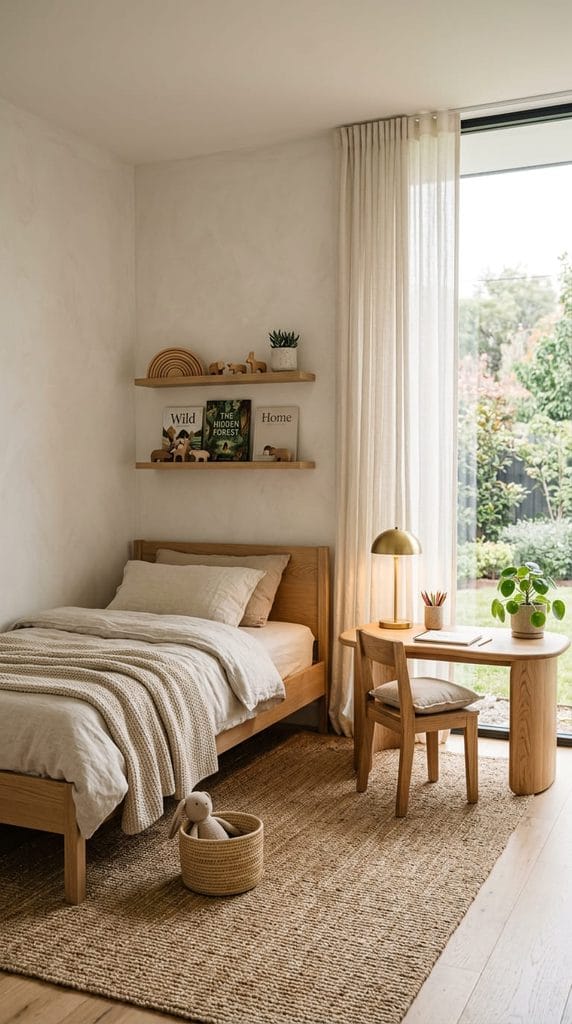
The nursery is designed without harsh, aggressive colors, helping the child maintain focus and feel calm. A simple wooden bed frame pairs with a woven toy basket and a durable jute rug. A compact study desk with rounded legs by the window and open shelves displaying wooden toys and books keep the room functional while remaining exceptionally gentle on the eyes.
The home office in such a space fosters a calm, focused, and productive atmosphere.
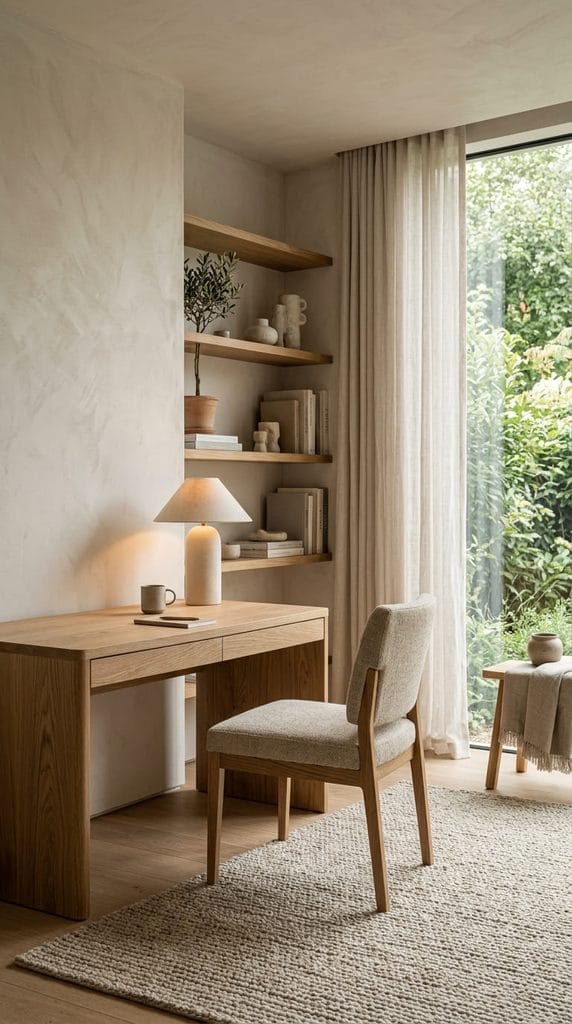
The study is designed so that nothing distracts from creative thought. A writing desk made of solid oak sits adjacent to a floor-to-ceiling window. A comfortable desk chair upholstered in textured fabric, built-in shelving filled with books and minimalist ceramics, and a plush rug achieve a thoughtful balance between office utility and residential warmth.
The bathroom completes our walk through the home, transforming into a true private spa sanctuary.
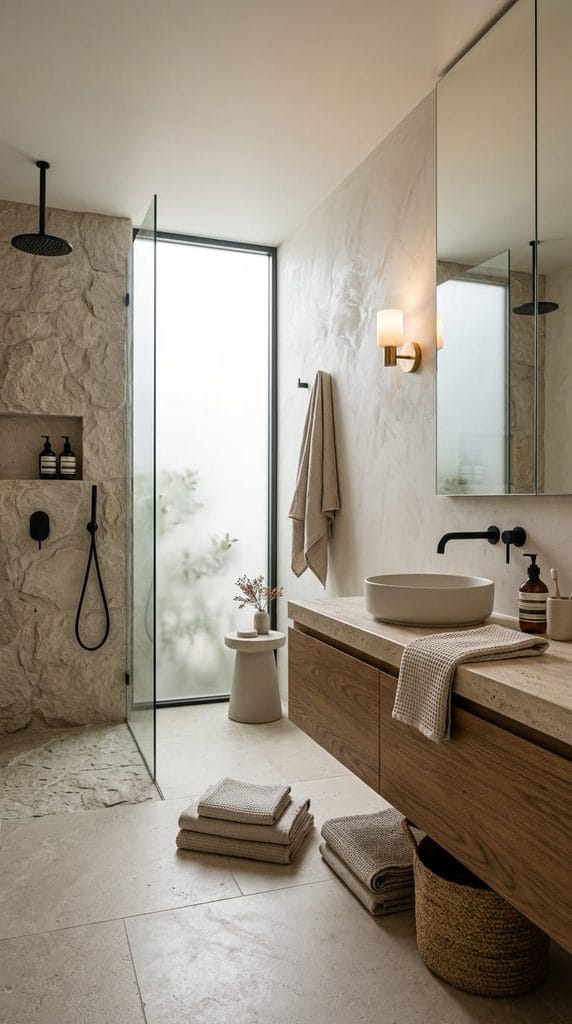
The standout feature of the bathroom is a feature wall in the shower enclosure clad in raw, rugged natural stone. A floating wooden vanity topped with a vessel sink, matte black fixtures, and waffle-knit towels in organic neutrals give the space the elevated feel of a luxury boutique hotel.
3 tips from me on creating the Organic Minimalist style:
- Choose tactile natural materials over high-gloss finishes. Incorporate raw wood, matte stone, artisanal ceramics with subtle imperfections, jute, cotton, and linen. It is the rich mix of textures, rather than decor items, that gives this style its visual depth.
- Stick to a natural color palette with warm undertones. Move away from stark, sterile whites or cold grays. Opt instead for ivory, warm sand, beige, terracotta, sage green, and soft earth tones.
- Allow space to breathe and bring in large-scale greenery. Avoid cluttering furniture surfaces and shelves with small trinkets. Keep fewer objects in the room, but ensure each piece carries a strong presence. Statement indoor plants in clay planters or vases with dried branches serve as ideal visual accents.
- Country Industrial: How to Combine Rustic Comfort and Industrial Character in Your Home
- South Beach Glam: How to Bring Miami Vibes and Tropical Chic into Your Home
- Mountain Modern Style: How to Combine Rugged Nature, Mountain Comfort, and Modern Architecture
- Organic Minimalism: How to Create an Aesthetic, Warm, and Living Interior
- Whimsical Glam: Fairytale Luxury and Refined Elegance in Interior Design
- Vintage Eclectic: How to Blend History, Comfort, and Character in Your Interior