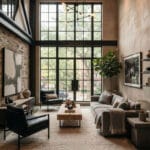
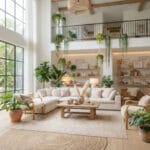
Have you ever felt like modern interiors have become a bit too pristine and… quiet? Perfectly aligned gray walls, minimalist kitchens where every cup is hidden out of sight, and a complete absence of accidental items. The ultimate antidote to this sterile approach is the daring, lush, and incredibly vibrant Jungalow style (a playful blend of jungle and bungalow). Pioneered by designer Justina Blakeney, this style is built on the belief that a home should feel less like a furniture catalog and more like a wild, life-rich oasis. The golden rule of Jungalow is simple: you can never have too many plants, and your colors and textures should speak at full volume. Deep emerald tones, natural rattan, ethnic patterns, and a sense of nature gently reclaiming the space reign supreme here.
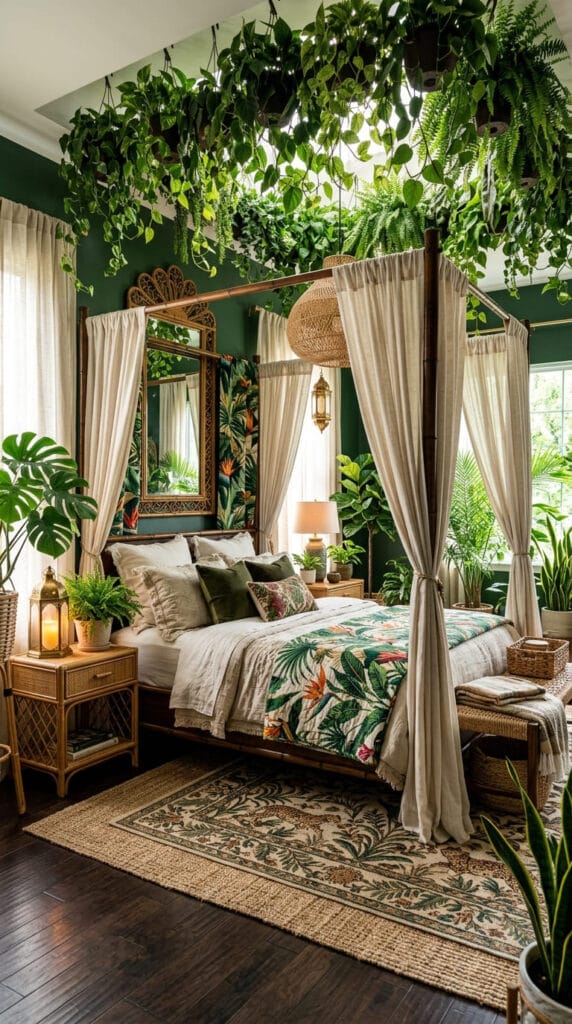
The heart of this design concept is, of course, the bedroom. In Jungalow, it transforms into a true sanctuary nestled deep within a tropical forest, where the boundary between the room and the wild outdoors practically dissolves. The main focus here is on vertical greenery and heavy, organic materials. A ceiling overflowing with hanging planters combined with a bed framed in natural bamboo creates the feeling of sleeping under the open sky somewhere in Bali.
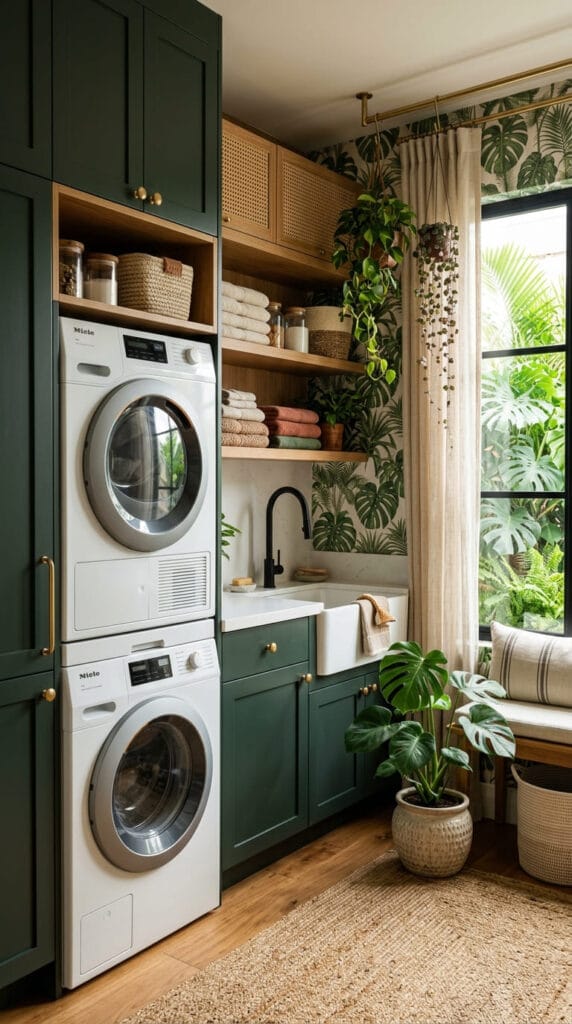
Even the most utilitarian, practical spaces—where we are normally used to seeing only cold plastic and tile—blossom beautifully under the Jungalow treatment. A laundry room or utility corner can easily be reimagined as an extension of your indoor garden. Pairing deep forest-green cabinets with rich wallpaper featuring monsteras and palms, accented by warm woven decor, turns routine chores into an aesthetic ritual rather than a boring task.
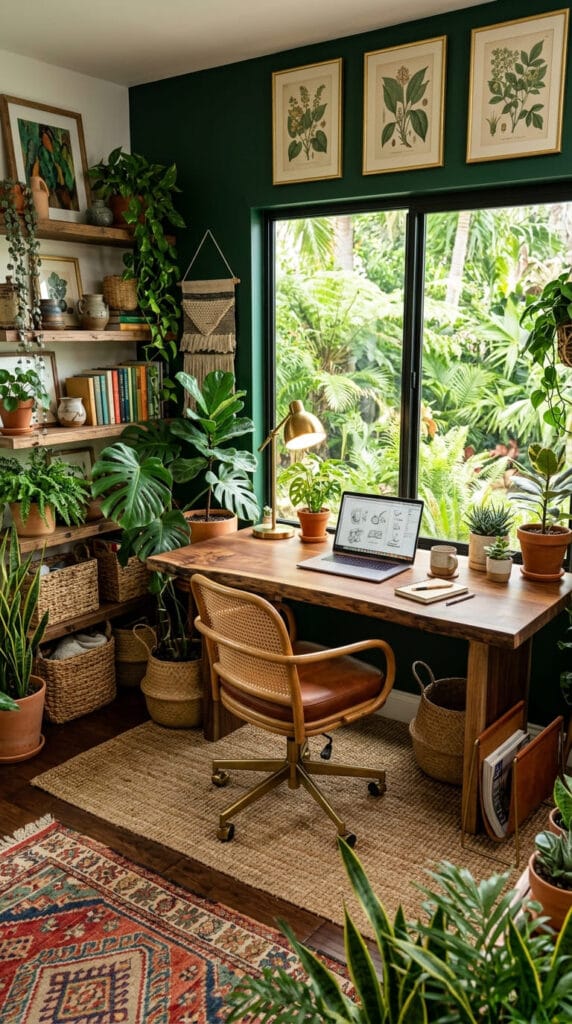
A Jungalow home office feels like the workspace of a globetrotting naturalist. When a lush garden thrives right outside the window and your desk is crafted from a solid slab of live-edge wood, complete with all its natural cracks and organic curves, work takes on a completely different energy. Surrounding the desk with potted greenery in earthy clay jars easily replaces any plastic organizers and visually ties the indoor working area directly to the vibrant wilderness outside.
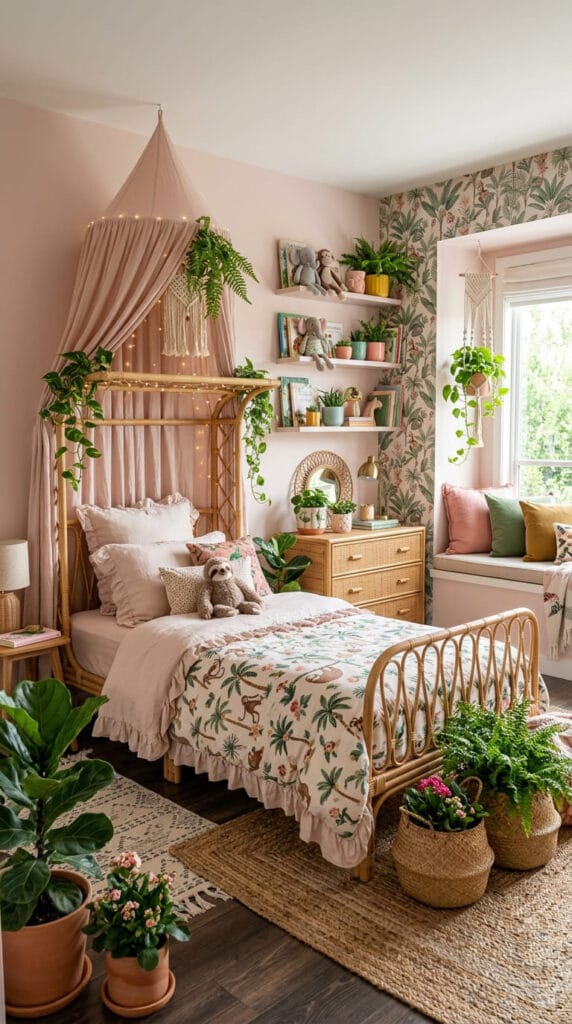
If you think Jungalow is strictly limited to dark emerald tones, a child’s bedroom will easily prove you wrong. Jungles can be soft, warm, and whimsical. A gentle, dusty-rose wall color, light rattan canopy frames, and playful wallpaper featuring monkeys and palms create a fairytale setting. It is a space where a child can feel cozy and safe, while live houseplants keep the room feeling fresh and airy.
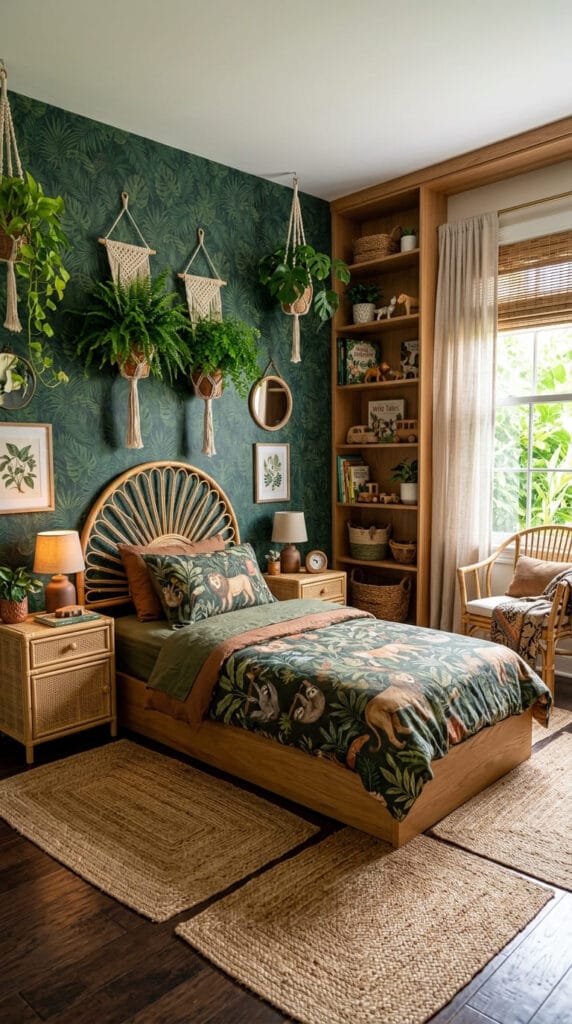
In a guest bedroom or a teenager’s room, you can opt for sleeker, yet highly characterful natural motifs. An accent wall adorned with dense tropical foliage wallpaper works brilliantly alongside honey-toned wooden furniture and textiles sporting playful wild animal prints. The space immediately feels incredibly warm and grounded, thanks to a rich layer of woven textures and jute underfoot.
Advice from Me: How to Help Your Houseplants Thrive in a Jungalow Interior
When people first discover this style, their very first question is almost always: “How on earth do you care for all of this without turning your apartment into an unmanageable swamp?” I absolutely adore greenery, and over years of working with interiors, I’ve gathered a few simple principles to help you grow your own indoor oasis without the constant headache:
- Start with an “indestructible” foundation. Don’t rush out to buy finicky ferns or high-maintenance orchids if you aren’t ready to spend an hour a day hovering over them. Lean heavily on monsteras, golden pothos (epipremnum), and snake plants (sansevieria). They are highly forgiving of a missed watering, handle partial shade gracefully, and grow rapidly to deliver that wild jungle aesthetic.
- Utilize vertical space and varying heights. Jungalow thrives on layers. Avoid lining up all your pots in a single, predictable row on the windowsill—it quickly looks flat. Instead, hang macramé planters from the walls, let trailing ivy cascade down from the top shelves of your bookcases, and place large statement plants, like a fiddle-leaf fig, directly on the floor in oversized woven baskets.
- Disguise plastic nursery pots. The secret to making plants look high-end and deeply integrated is in the staging. Cheap plastic nursery pots instantly break the design’s organic magic. Always slip them into clay cachepots, rustic terracotta, or woven straw and jute baskets. Mixing raw clay and varied woven textures at different heights instantly gives the room the charming character of a well-traveled southern villa.
- Transitional Coastal: How to Combine Elegant Classics and Seaside Freshness Throughout the Whole House
- Sleek Scandi: How to Create a Light, Clean, and Cozy Scandinavian Interior Throughout the Whole House
- Equestrian Chic: How to Create an Atmosphere of Noble Estate Elegance and Aristocratic Comfort Throughout the House
- Cabin Chic: How to Create an Alpine Chalet Atmosphere and Secluded Comfort Throughout the Whole House
- Soft Industrial: How to Create an Aesthetic, Warm, and Modern Loft Throughout the Whole House
- Bright Boho: How to Create a Light, Cozy, and Vibrant Interior Throughout the Whole House