We live in a world with too much noise. At home, we want more than just rest—we need to truly reset, shed our exhaustion, and return to something authentic and grounded. At this intersection, the Rustic Zen style was born: an organic union of natural ruggedness (Rustic) and the Eastern pursuit of harmony and openness (Zen). Here, the tactile texture of raw wood and wild stone meets clean lines and soft, natural light.
The Breath of Space: Living Room and Bedroom
When discussing Rustic Zen, the primary goal is to give the space room to breathe. No clutter of objects—only architecture, textures, and light.
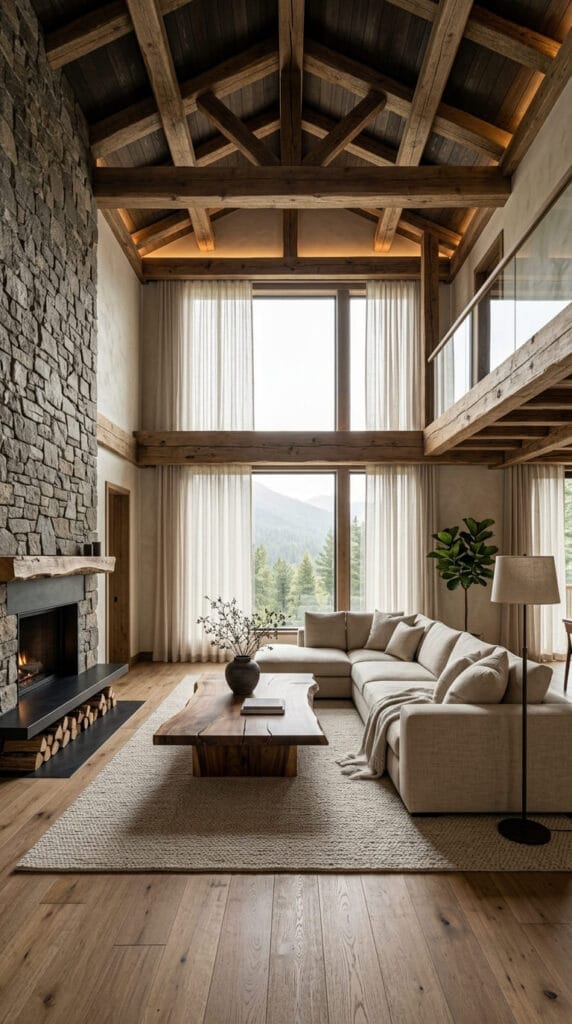
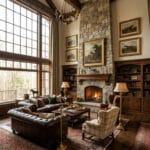
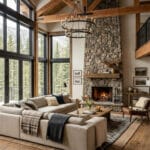
The main area of the house demonstrates a perfect balance of weight and weightlessness. The textured stone of the fireplace and the heavy ceiling beams create a feeling of strength and shelter. At the same time, floor-to-ceiling windows, soft linen-toned textiles, and simple greenery soften the raw materials, evoking a sense of quiet sanctuary.
Moving into the private quarters, this soothing effect grows even stronger, creating an intimate, grounding atmosphere.
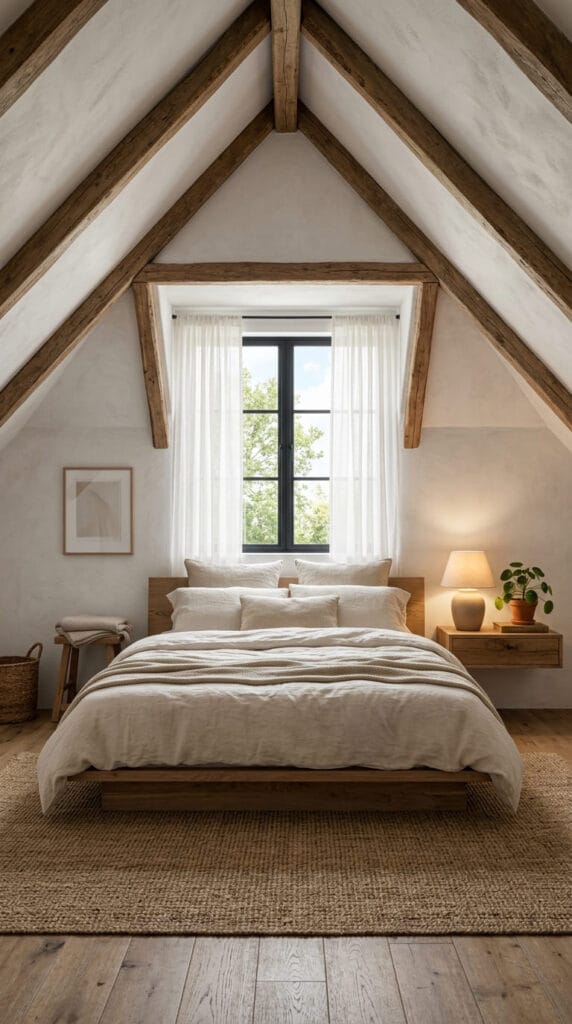
In the attic bedroom beneath the gables, simplicity transitions into pure meditation. A low platform bed crafted from light solid wood, unbleached natural linen, jute underfoot, and soft, warm light from a ceramic lamp. There are no excess items here—only what helps slow your thoughts before sleep.
Order and Harmony: Walk-in Closet and Pantry
Practical storage areas often fall outside a home’s aesthetic design, but Rustic Zen requires complete visual continuity. When order reigns over your belongings, order settles in your mind as well.
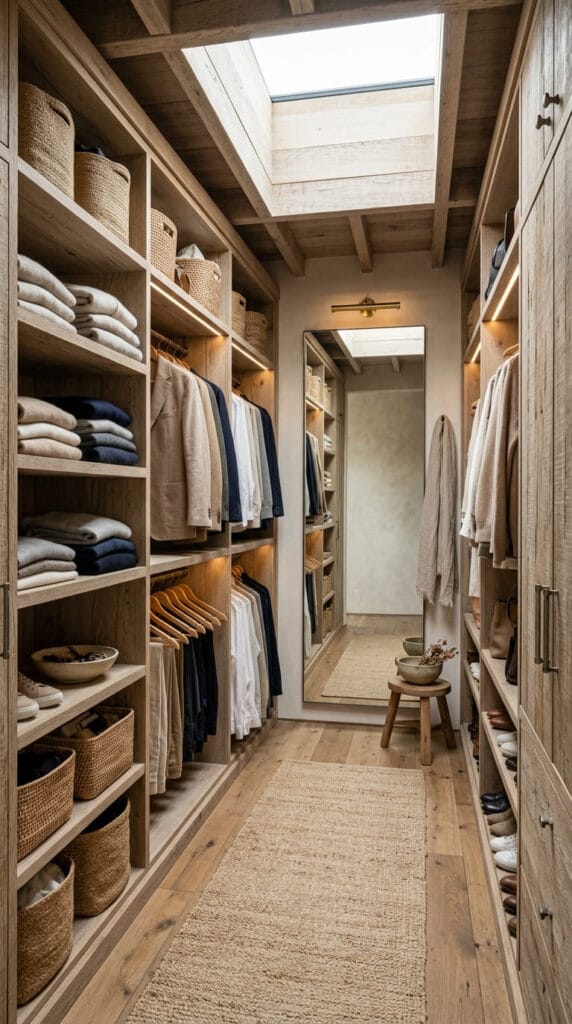
An open storage system made of textured solid wood with subtle built-in backlighting transforms the walk-in closet into a tranquil retreat. Woven baskets keep small items neatly hidden, maintaining visual clarity. The absence of harsh colors or plastic turns your daily dressing routine into a mindful, pleasant experience.
These same principles of calm organization flow effortlessly into the kitchen storage area.
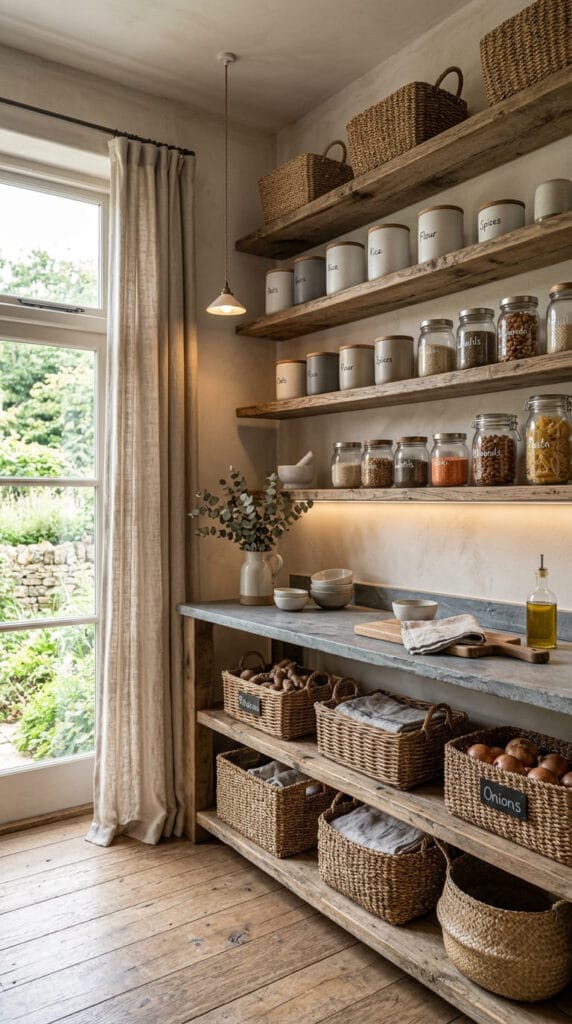
Even the kitchen pantry becomes a work of art in this style. A stone countertop, open shelves cut from raw planks, clay pitchers, and glass jars for dry goods create a cohesive feel. Free of loud commercial packaging, everything is unified under a palette of natural earth, oat, and clay tones.
Architecture of Movement: Hallway and Staircase
Transitional spaces—passages and corridors—act as pauses between states of mind in Zen philosophy, preparing us for a change in atmosphere.
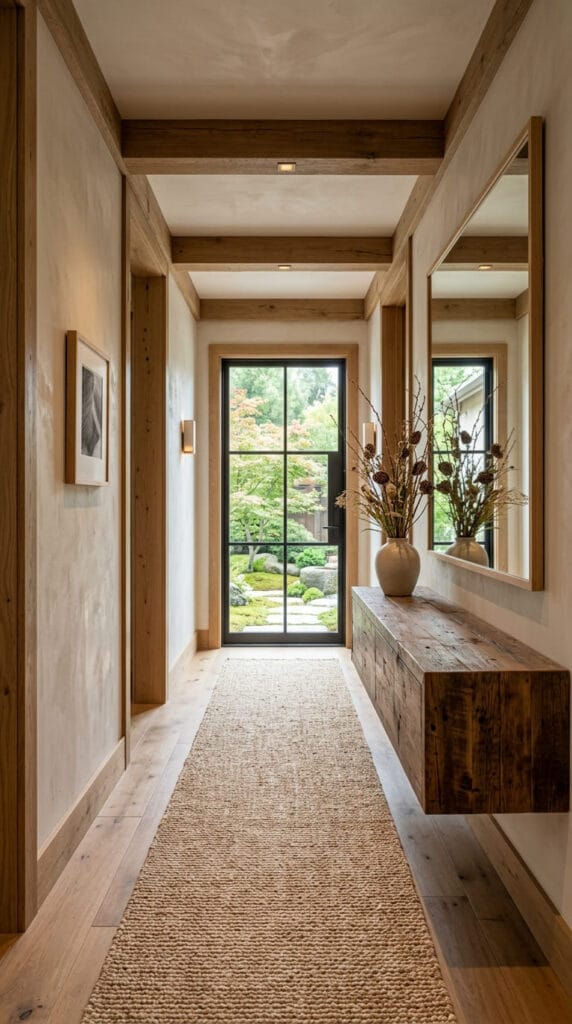
The long hallway welcomes you with the warmth of natural wood and a view of the garden framed through glass doors. A floating wooden console appears to weightlessly hover, while a vase with dried branches adds a subtle Eastern touch. Uncluttered and airy, this space invites you to take a deep breath as you pass through.
The stairwell continues this theme of vertical movement and architectural clarity.
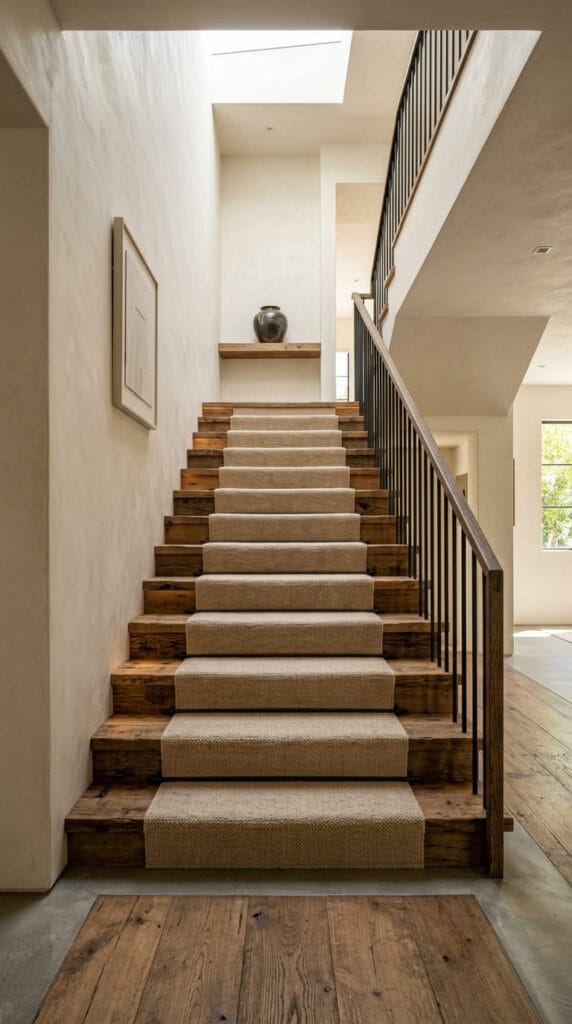
Solid wooden treads lined with a thick jute runner, soft step lighting, and a minimal metal railing create a clean, grounded ascent. Nothing feels extraneous—just graphic lines, a interplay of light and shadow, and the tactile texture of natural materials underfoot.
Everyday Aesthetics: Laundry Room
Concluding our exploration of the home is a space typically treated with purely utilitarian simplicity.
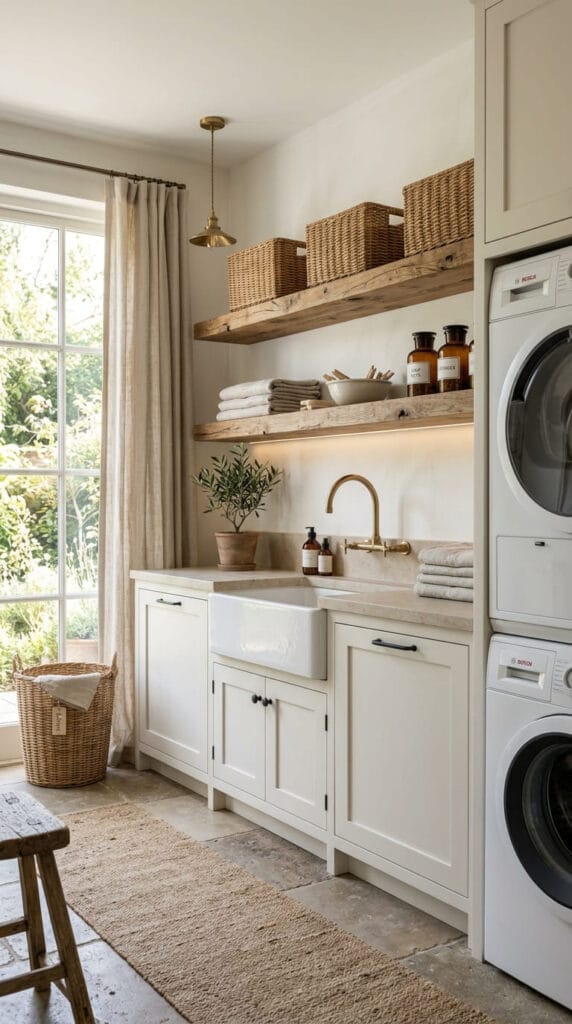
A laundry room in the Rustic Zen style proves that daily chores can bring aesthetic pleasure. Combining clean light cabinets, a deep porcelain apron sink, a warm brass faucet, and open wooden shelves with woven baskets builds a crisp, almost spa-like ambiance.
3 Tips from Me: How to Keep the Rustic Zen Style Pure
- Avoid high gloss and synthetic textures. This style relies on tactile authenticity: choose matte wood with a prominent grain, raw stone, natural linen, and hand-molded ceramics. Any glossy plastic or bright chrome hardware will instantly break the organic connection to nature.
- Balance the “rustic” with the “zen.” Heavy timber beams and raw stone (Rustic) without enough open air and minimalist furniture can make a home feel like a dark cabin. Keep walls light, uncluttered, and spacious to preserve the airy Zen balance.
- Conceal visual noise. Bright product packaging, loose cables, and scattered knick-knacks disrupt the calm, meditative atmosphere. Use integrated storage, uniform glass or ceramic canisters, and woven baskets to keep everyday clutter out of sight.
- Transitional Coastal: How to Combine Elegant Classics and Seaside Freshness Throughout the Whole House
- Sleek Scandi: How to Create a Light, Clean, and Cozy Scandinavian Interior Throughout the Whole House
- Equestrian Chic: How to Create an Atmosphere of Noble Estate Elegance and Aristocratic Comfort Throughout the House
- Cabin Chic: How to Create an Alpine Chalet Atmosphere and Secluded Comfort Throughout the Whole House
- Soft Industrial: How to Create an Aesthetic, Warm, and Modern Loft Throughout the Whole House
- Bright Boho: How to Create a Light, Cozy, and Vibrant Interior Throughout the Whole House