The Japanese Zen interior style in modern design is not merely an aesthetic direction, but a complete philosophy of mindfulness, simplicity, and deep connection with nature. Unlike interiors overloaded with details, a Zen space is built on the principles of wabi-sabi (the beauty of imperfection and naturalness), minimalism, clean lines, and absolute freedom from visual clutter. Here, soft light, light natural wood, textured plaster, living plants, and natural stone create an atmosphere of meditative peace. It is the ideal choice for those seeking a refuge from the hustle of the big world and valuing silence, order, and inner harmony.
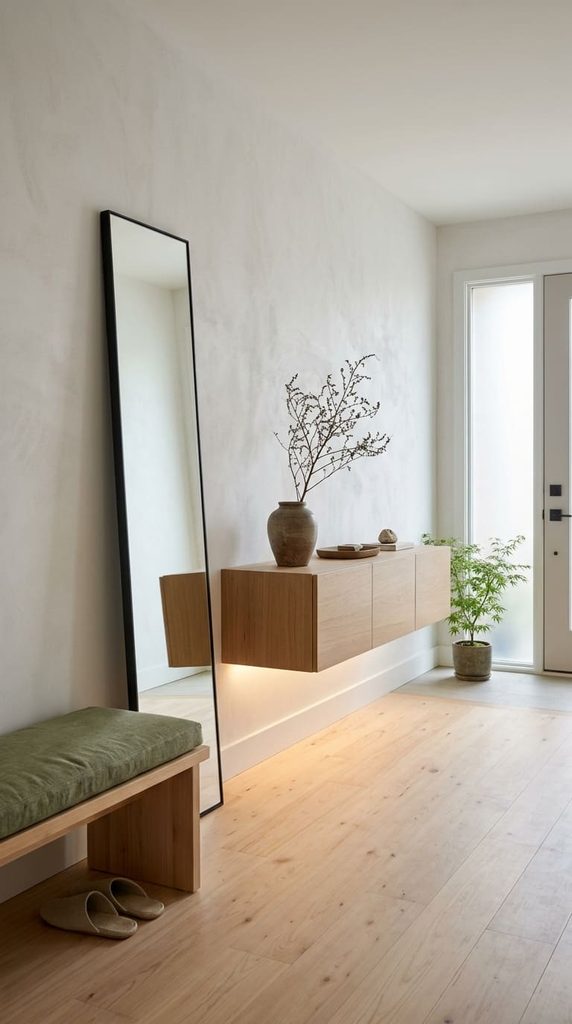
The introduction to this meditative space begins in the entryway, where immaculate order and soft light reign. Set on the light parquet flooring is a floating wooden console cabinet featuring under-cabinet illumination, accompanied by a tall mirror in a black frame and a neat bench with an olive-colored seat, while a potted living bamboo plant completes the composition.
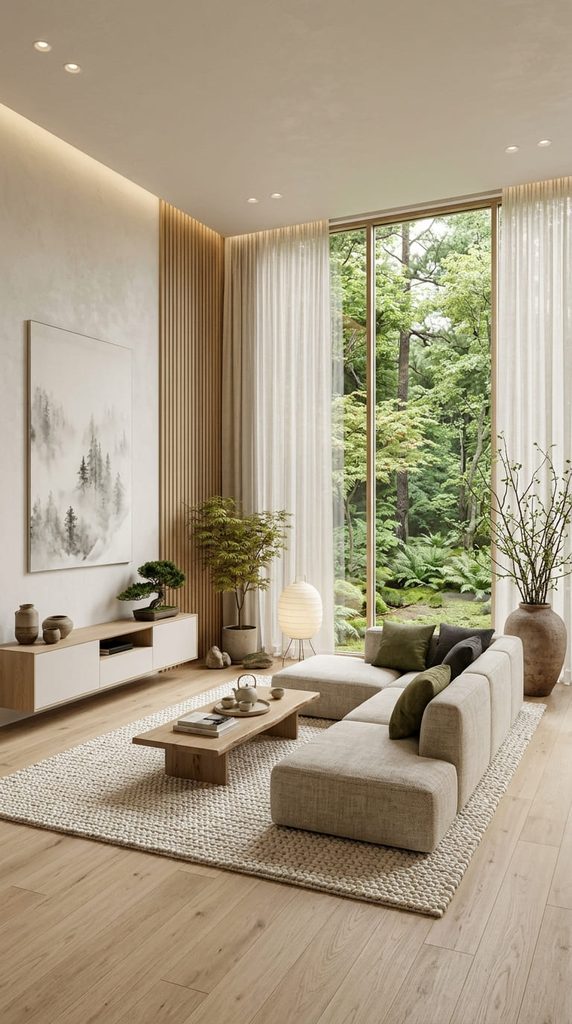
Serving as the heart of the home is a spacious living room with panoramic windows opening up to a view of a green garden. The walls are finished in light textured plaster and wooden slat panels, while the center of the room features a low beige sofa, a wooden coffee table, and a minimalist media console showcasing a decorative bonsai tree. The soft glow of a Japanese paper floor lamp fills the room with warmth.
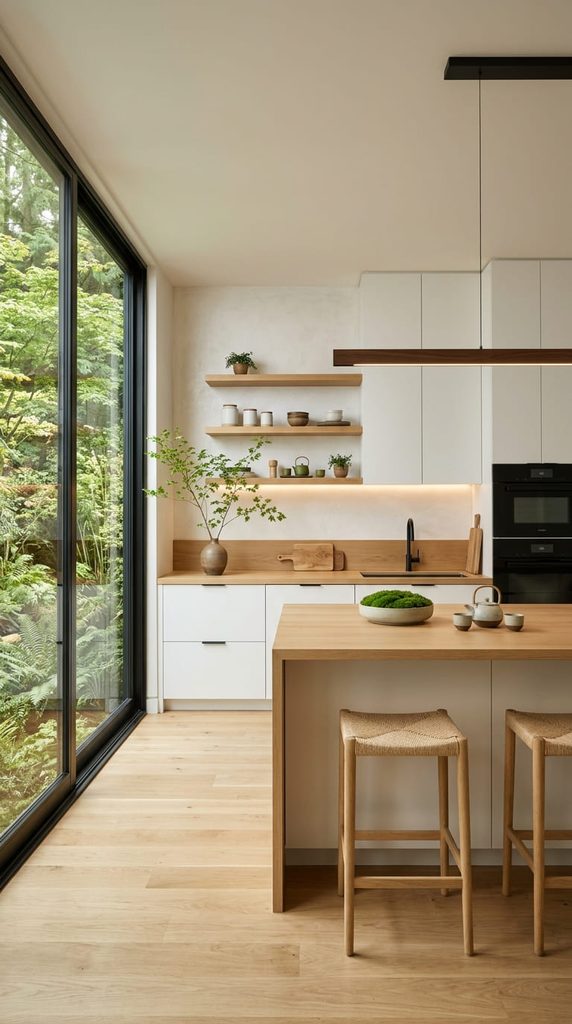
Continuing the concept of unity with nature is the kitchen, where light cabinet fronts harmonize seamlessly with a wooden countertop and open shelving. Ceramic dishware and delicate sprigs are arranged on the shelves, while large sliding windows offer a view of a dense green landscape, blurring the boundary between indoor and outdoor spaces.
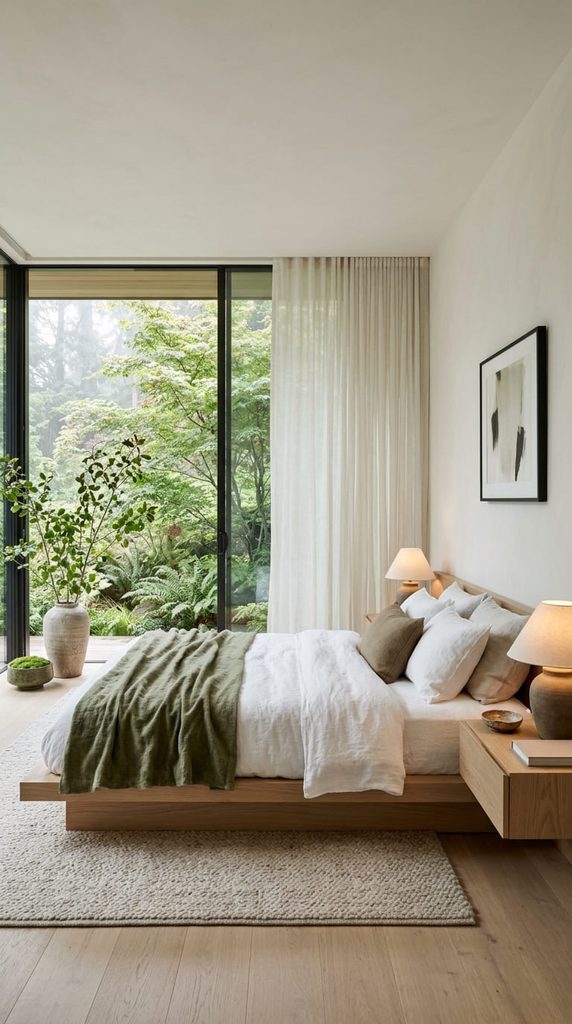
In the primary bedroom, an atmosphere of absolute peace and rest prevails. A low wooden bed is dressed in crisp white linens and an olive throw blanket, flanked by neat floating nightstands with lamps, while a panoramic window opens up to a view of sprawling trees outside.
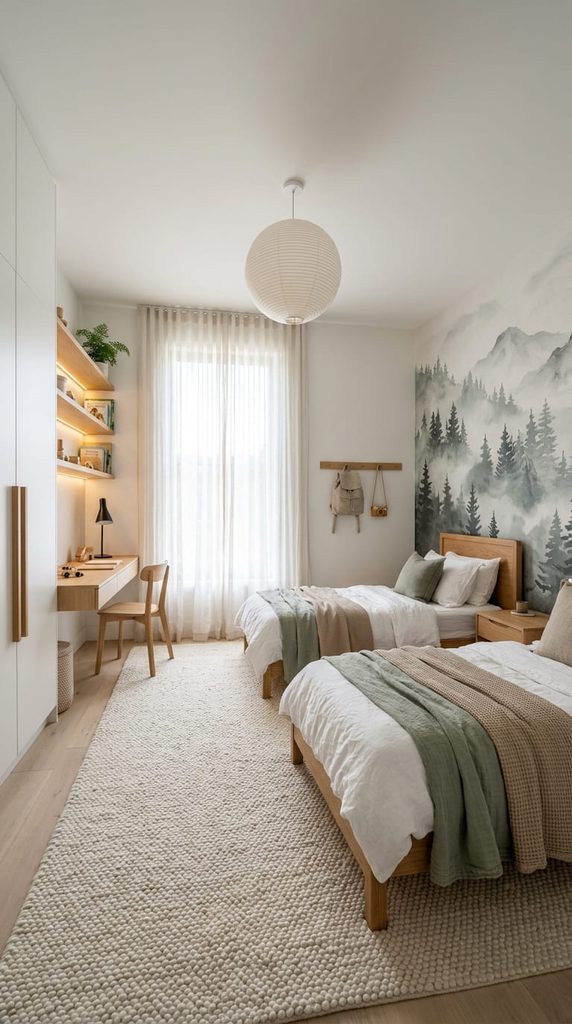
The children’s room is styled in light tones with an emphasis on natural materials and calm aesthetics. Two wooden twin beds are dressed in light textiles featuring olive accents, a convenient workstation with built-in shelving is set up by the window, and a picturesque wall mural depicting a misty mountain landscape adorns the wall.
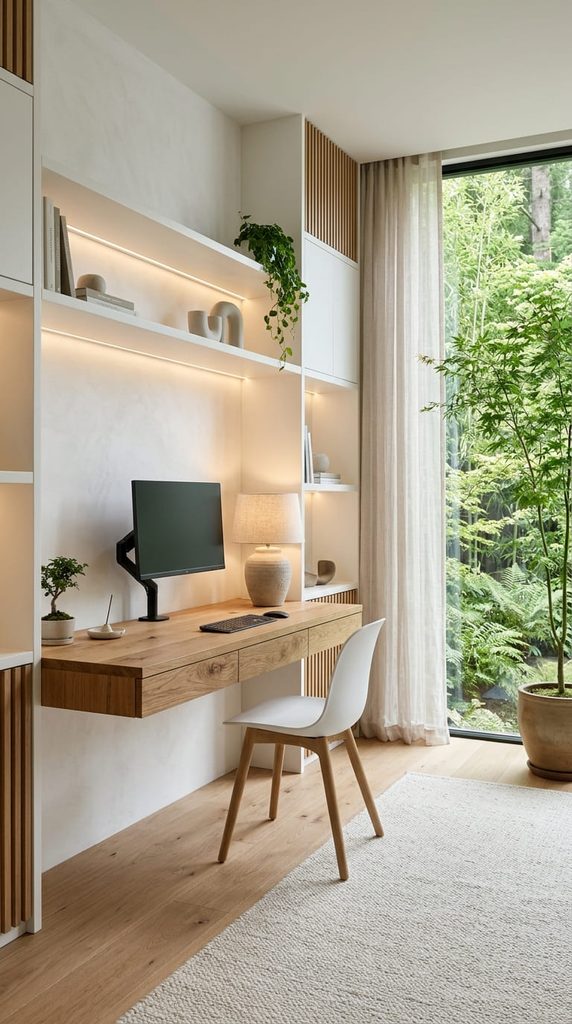
The home office inspires productive work within an atmosphere of silence and focus. A floating wooden desk with pull-out drawers is complemented by a white minimalist chair and built-in illuminated light shelving holding books and decor, set against a backdrop of green bamboo visible through the window.
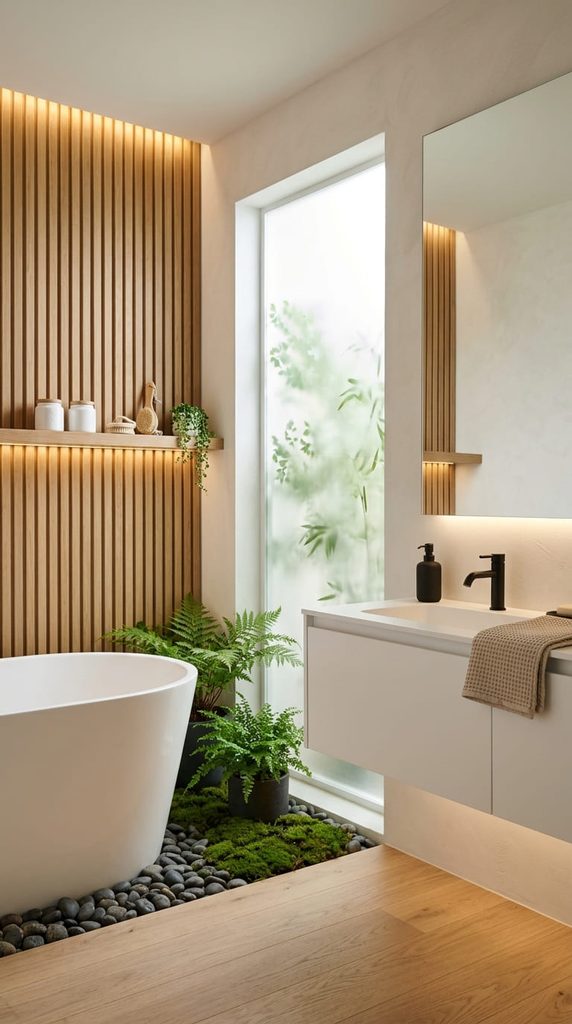
Completing the home tour is a bathroom transformed into a true Zen garden. Arranged near the freestanding white bathtub are decorative stones and living moss with ferns, complemented by an illuminated wooden slat wall panel, while a floating vanity with a sink and black faucet underscores the modern minimalism of the space.
3 tips from me on creating the Japanese Zen style
- Minimize the amount of furniture and decor. Zen style is built on spatial freedom and the absence of visual clutter. Retain only the most essential functional items featuring clean, minimalist forms.
- Use exclusively natural materials. Prioritize light wood species (such as oak and ash), stone, textured plaster, linen, cotton, washi paper, and living plants like bonsai, bamboo, and ferns.
- Plan for soft, diffused lighting. Avoid harsh and cold lighting sources. Utilize concealed LED backlighting, shoji-style paper fixtures, and warm illumination that casts gentle shadows and fosters a cozy, meditative ambiance.
- Sun, Air, and Effortless Chic: How to Design an Interior in the California Cool Style
- The Magic of Old Libraries: How to Recreate the Mysterious and Cozy Dark Academia Style in Your Interior
- The Warmth of Minimalism: How to Create a Harmonious and Cozy Space in the Warm Minimalist Style
- The Breath of the Ocean and Modern Trends: How to Transform Your Home in the Modern Coastal Style
- The Charm of Coastal Grandmother: How to Create an Atmosphere of Serene Coastal Coziness and Elegance in Your Home
- The Cozy World of Cottagecore: How to Turn a Country House into a Romantic Sanctuary filled with Soul and History