Postmodernism in interior design is all about freedom from dull rules and bland beige walls. This style emerged as an ironic response to strict minimalism: instead of sterile order, it brings dynamism, rich colors, contrasting geometric shapes, and a bold mix of textures. In such a space, classic lines coexist with architectural avant-garde, and practicality becomes an expressive design tool.
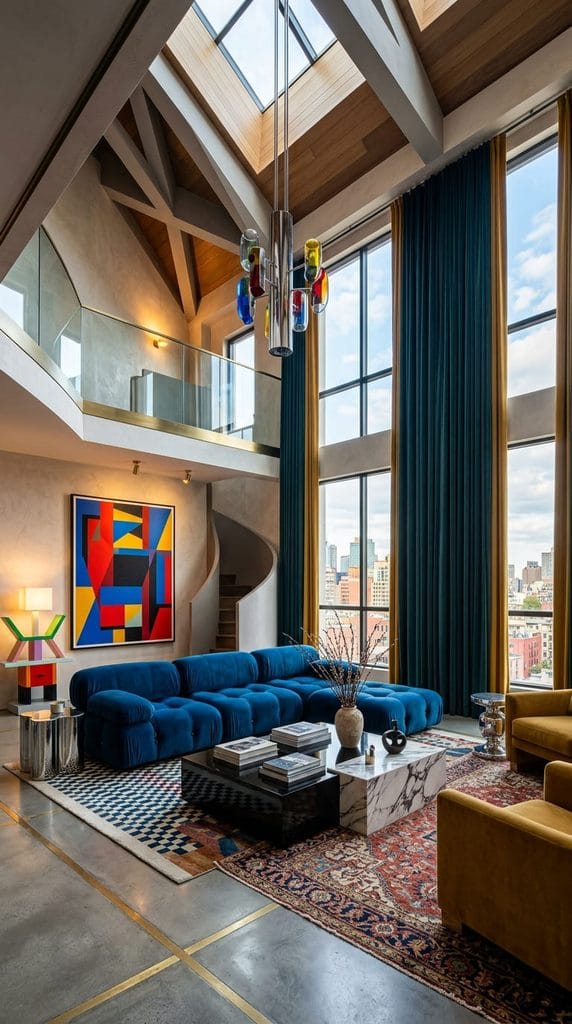
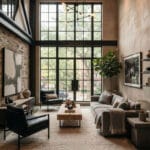
The double-height living room becomes the center of the entire home. Tall panoramic windows flood the space with light, while the double-height architecture with an open staircase creates a sense of air and volume. A rich blue modular sofa combined with a cubist-inspired abstract painting sets the emotional tone. Rugs of varying textures, golden-yellow armchairs, and a striking chandelier with colorful lampshades transform the lounge area into a contemporary art gallery.
The postmodern style unfolds not only in open spaces but also in intimate relaxation zones. Each room gains its own distinct character through the interplay of proportions and materials.
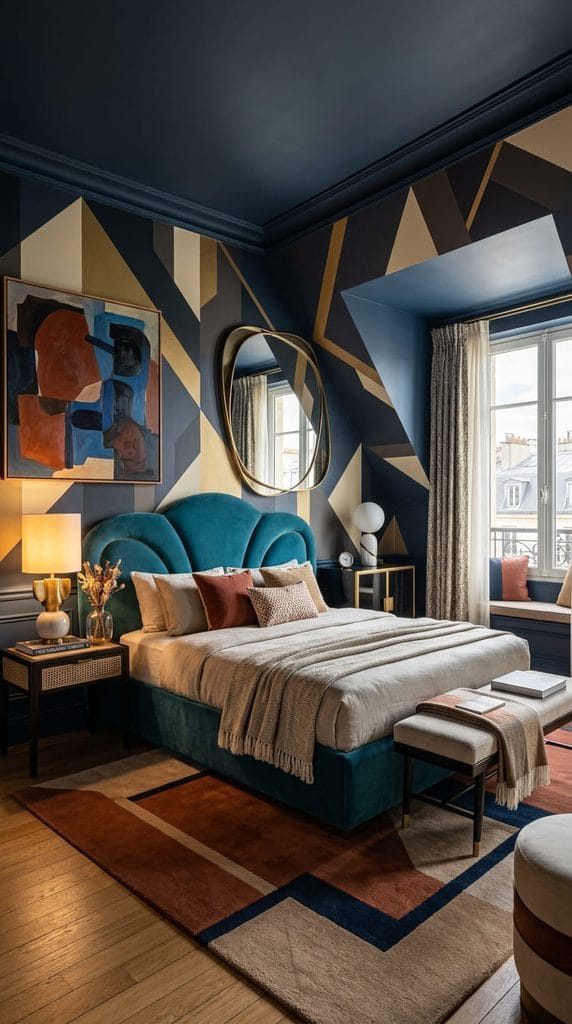
The bedroom transforms into a cozy retreat thanks to deep shadowed tones and walls with a clear geometric pattern. The shaped headboard of the velvet turquoise bed contrasts with warm terracotta accents in the textiles and rug. An irregularly shaped streamlined mirror and understated lighting bring smoothness to the interior, balancing the strict graphic lines.
Continuing the conversation on ergonomics and private spaces, it is worth looking at storage areas. Even utility areas become an aesthetic anchor of the house when designed with the right approach.
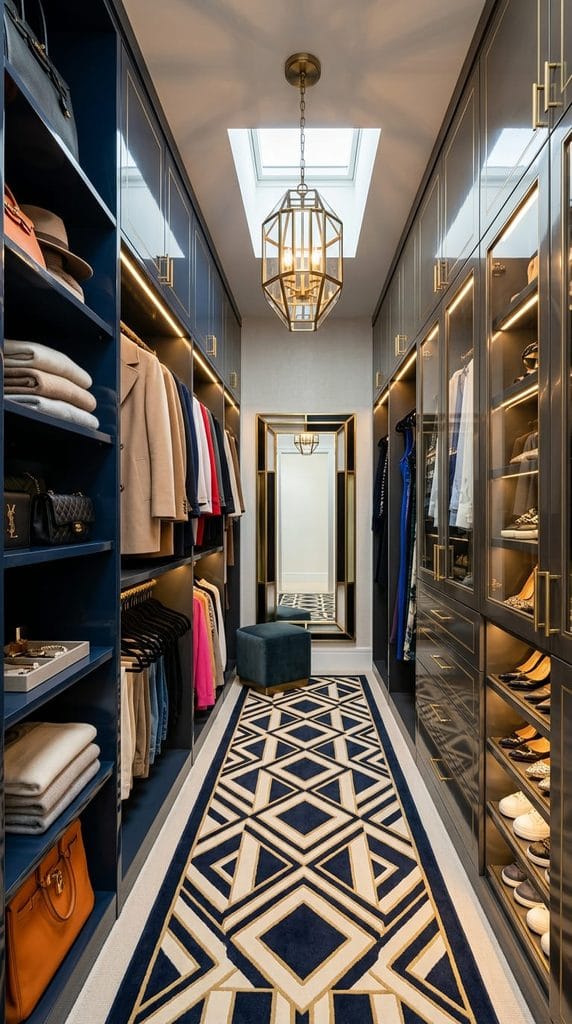
The spacious walk-in closet is designed with a focus on geometry and illuminated details. Dark blue cabinets with gold hardware, built-in shelf lighting, and glass fronts keep storage organized. The atmosphere is complemented by a floor rug featuring a bold pattern, a tall mirror in a shaped frame, and a ceiling lantern with a geometric light fixture.
Kitchen and pantry zones also demand attention to detail. Postmodernism allows functionality to merge with the visual joy of cooking.
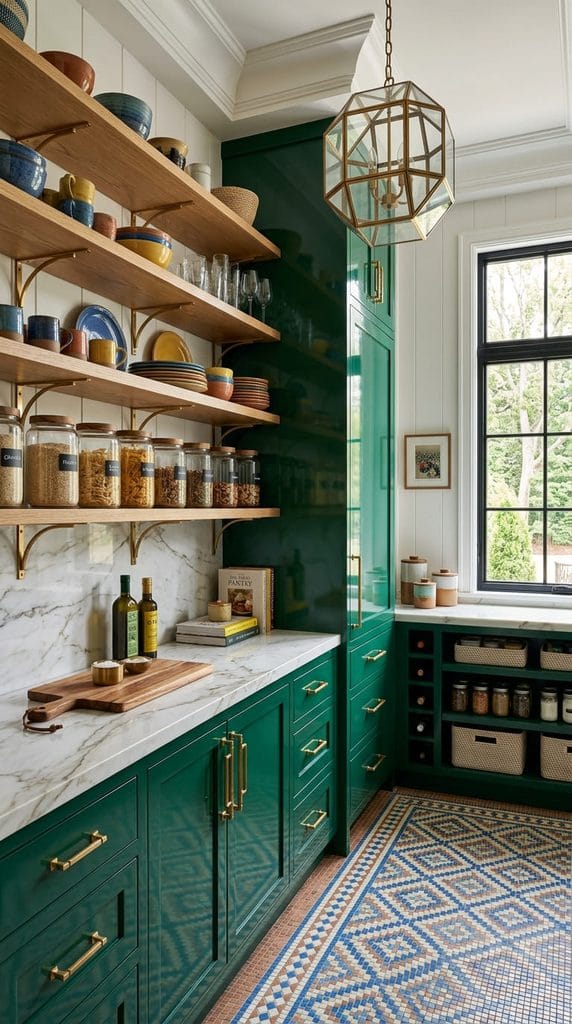
In the kitchen and pantry area, the emphasis is placed on the contrast between deep malachite green and natural wood. Open solid wooden shelves on brass brackets create the cozy feel of a boutique grocery shop, where spices and tableware serve as decorative elements. The composition is completed by blue-and-white patterned mosaic floor tiles and a hanging glass light fixture.
Transitional spaces, such as hallways and corridors, tie all rooms into a cohesive storyline. They carry the function of smoothly bridging one design concept to another.
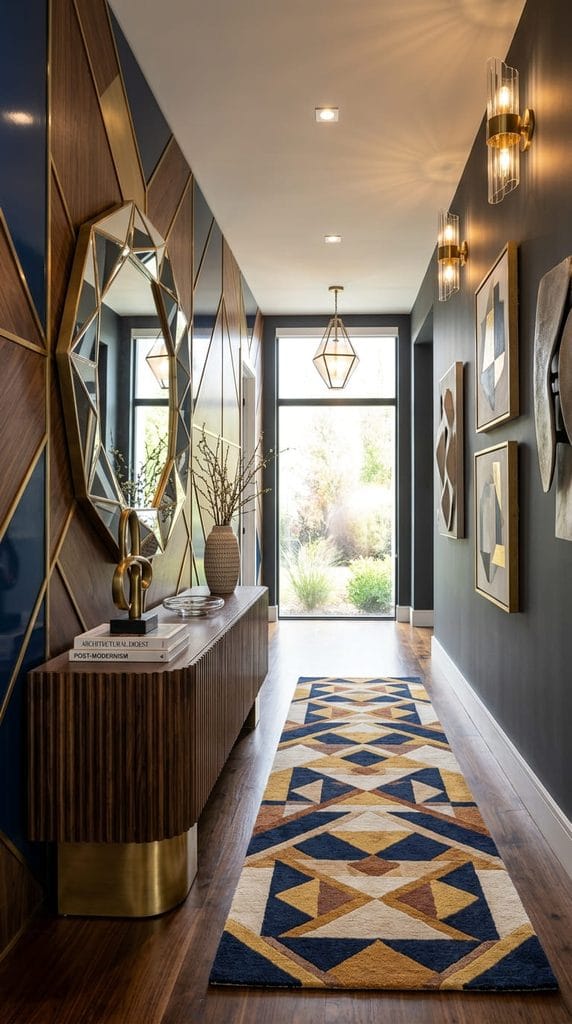
The long corridor looks dynamic due to wooden wall paneling with diagonal layouts and brass inlays. A multifaceted mirror of complex shape reflects light from elegant sconces, while a narrow geometric runner visually pulls the space toward the bright window.
Staircases play a distinct role in multi-level interiors. A staircase can become a full-fledged sculptural element, drawing attention to the architecture of the house.
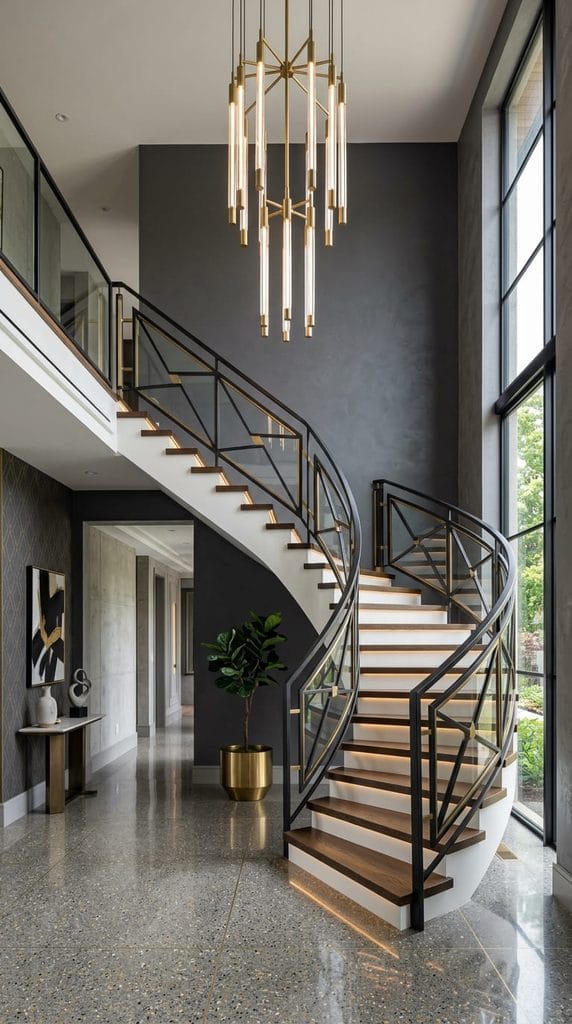
The grand foyer impresses with the curves of a spiral staircase featuring a sleek metal railing. The graphite shade of the walls highlights the crisp white steps and glass inserts. A cascading chandelier with vertical glowing cylinders and a terrazzo-style poured floor add a sense of grandeur to the space.
Even utility spaces, such as the laundry room, become a stylish extension of the interior in postmodern design.
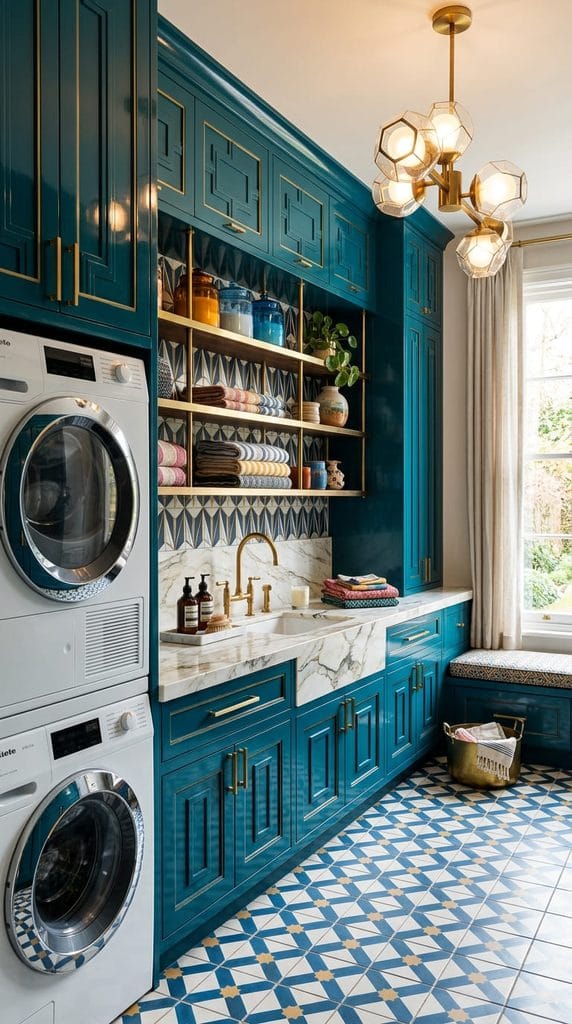
The laundry room is styled in a rich turquoise palette featuring brass profiles on the cabinet fronts. A geometric tile backsplash, built-in appliances, a marble countertop, and a patterned tile floor turn everyday household routines into an aesthetic experience.
3 Tips for Creating a Postmodern Interior
- Play with contrasting colors and geometry. Don’t be afraid to pair deep base shades (dark blue, graphite, forest green) with vivid color accents and bold geometric rugs or tiles.
- Use statement lighting and mirrors. Let your lighting fixtures and mirrors act as standalone art objects: choose unconventional, multifaceted shapes, cascading structures, and colored glass.
- Mix different textures within a single zone. Boldly combine natural wood, glossy surfaces, velvet, marble, and brass to create a rich visual and tactile depth.
- Transitional Coastal: How to Combine Elegant Classics and Seaside Freshness Throughout the Whole House
- Sleek Scandi: How to Create a Light, Clean, and Cozy Scandinavian Interior Throughout the Whole House
- Equestrian Chic: How to Create an Atmosphere of Noble Estate Elegance and Aristocratic Comfort Throughout the House
- Cabin Chic: How to Create an Alpine Chalet Atmosphere and Secluded Comfort Throughout the Whole House
- Soft Industrial: How to Create an Aesthetic, Warm, and Modern Loft Throughout the Whole House
- Bright Boho: How to Create a Light, Cozy, and Vibrant Interior Throughout the Whole House