When people think of an industrial loft, they often picture vast abandoned factories: cold concrete, gloomy dark tones, drafts, and a feeling that you are standing on a movie set rather than in a cozy home. In practice, however, a well-designed loft is about something entirely different. It is a harmonious balance between rugged architectural history and home comfort—a space where metal beams do not feel oppressive and exposed brick provides a rich, tactile foundation.
When you carefully select your materials, lighting, and textiles, an industrial loft becomes one of the most comfortable and relaxing environments to live in. Let us walk through every area of the home to see how this style functions in real-life spaces.
Entryway: The Boundary Between Outside and Home
The entryway sets the tone for the entire house. In an industrial style, it is essential to highlight the raw authenticity of the materials right from the threshold—celebrating the natural wall textures rather than hiding them.
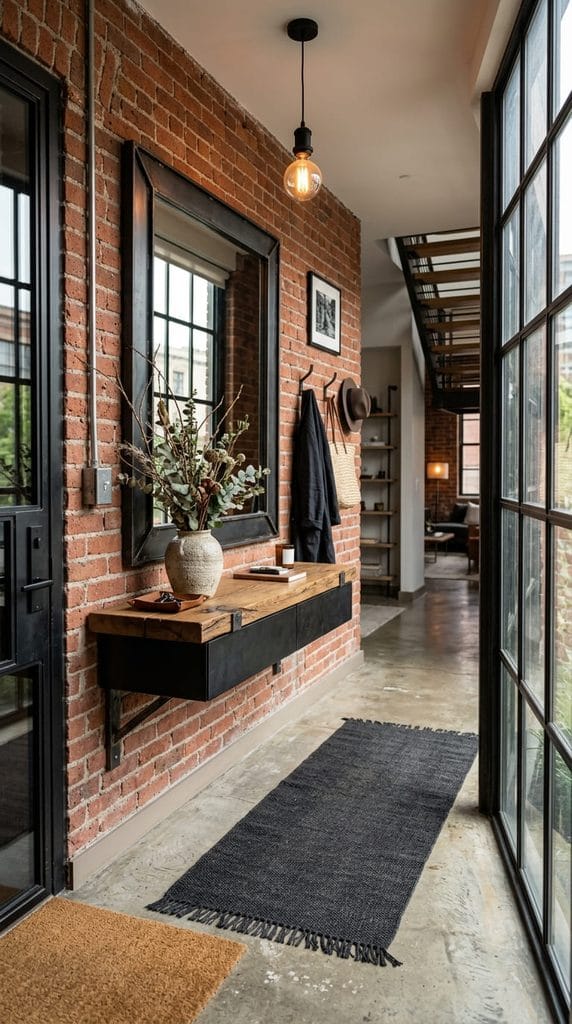
Notice how seamlessly the materials interact in this area. The warm, terracotta hue of the natural brick balances the cool, smooth surface of the polished concrete floor. A floating console keeps the floor space open, while the combination of black metal and solid timber creates an immediate sense of craftsmanship. To keep the space from feeling overly dry, simply introduce ceramic accents, dried florals, or a low-profile woven runner.
Living Room: Double-Height Spaces and Soft Accents
The living room is the true heart of any loft. Ideally, this room features soaring ceilings where structural steel beams, trusses, and exposed ductwork can be proudly displayed.
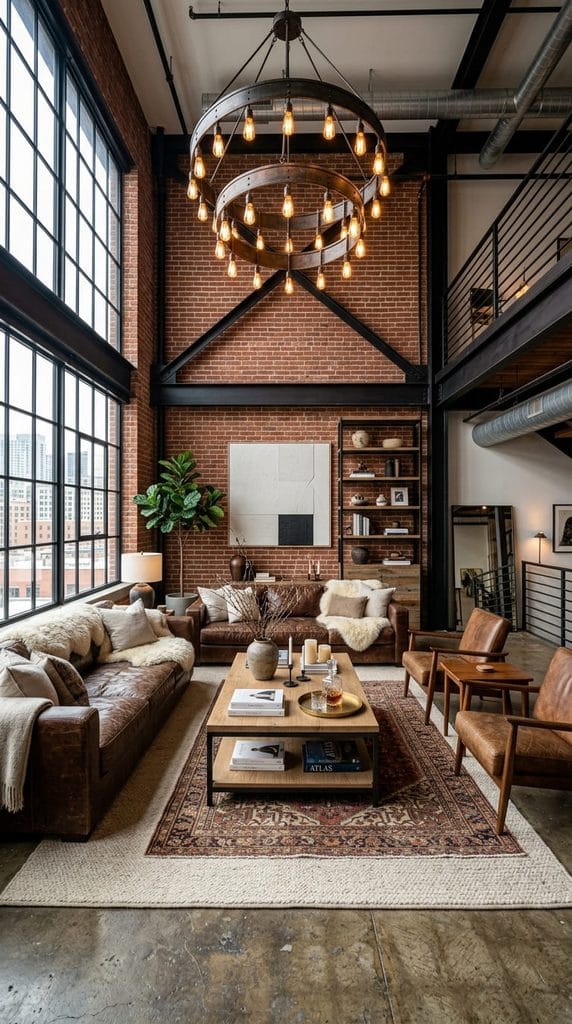
The key to making a grand living room with floor-to-ceiling industrial windows feel inviting lies in the furniture choices. Supple brown leather sofas with a subtle patina only gain character over time, anchoring the room with a sense of lived-in warmth. Lighting is equally crucial: rather than relying on uniform recessed fixtures, a dramatic tiered chandelier with warm Edison bulbs visually bridges the high ceiling to the seating group below. Tactile textiles and layered rugs instantly soften the factory aesthetic.
Kitchen: Functional Ergonomics and Open Textures
An industrial loft kitchen must be as functional as it is stylish. Glossy, high-maintenance finishes that show every fingerprint have no place here; matte surfaces, heavily grained wood, and durable metals take center stage instead.
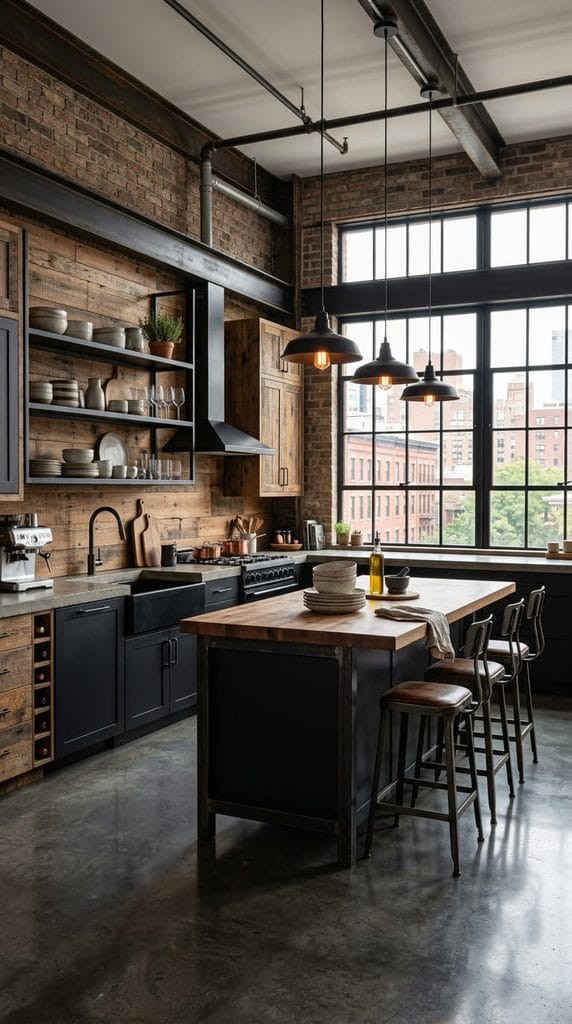
Reclaimed barn wood siding serves as a character-rich alternative to standard tile backsplashes. A generous kitchen island topped with a thick butcher block naturally becomes the gathering spot for both meal prep and casual breakfasts. Pay attention to the range hood and utility pipes: in a loft, exposed ductwork and black structural elements are celebrated as integral design features rather than boxed in.
Bedroom: Muted Light and Raw Aesthetics
People sometimes hesitate to use an industrial style in the bedroom, worrying that exposed brick and concrete might feel too harsh for rest. However, thoughtful layering of soft textiles and warm localized lighting completely transforms the atmosphere.
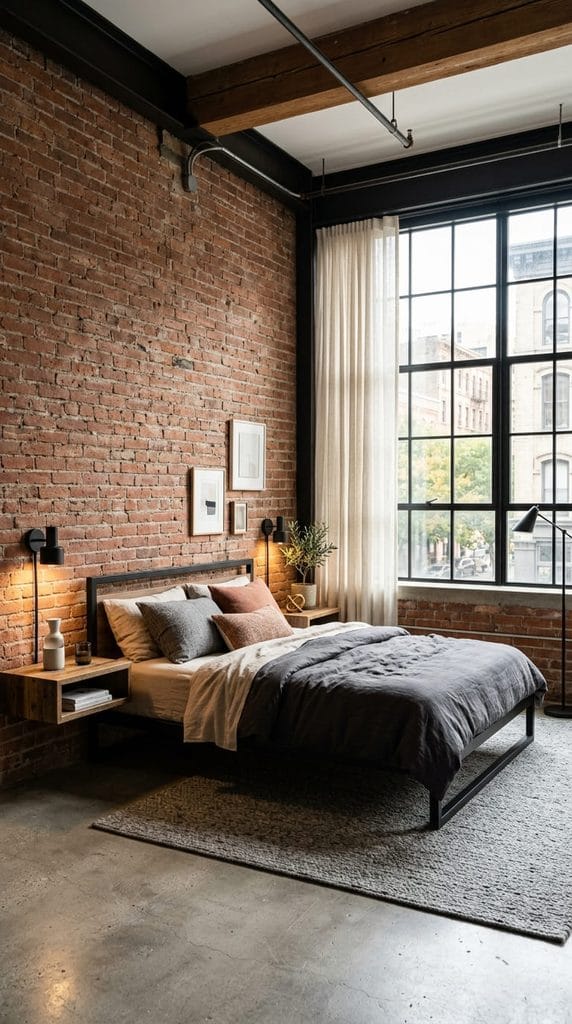
Here, the exposed brick wall serves as a rich textural backdrop for a minimalist bed frame. To ensure the bedroom remains a peaceful sanctuary, layer soft materials: crushed linen bedding, a wool throw, and a plush area rug underfoot. Wall-mounted sconces casting a gentle glow provide ideal reading light without overpowering the room, while sheer drapes soften the clean geometric grid of the industrial windows.
Kids’ Bedroom: Industrial Style for the Younger Generation
Adapting an industrial loft aesthetic for a child’s bedroom is an engaging design challenge. The goal is to maintain the cohesive design language of the house while ensuring the room feels bright, safe, and cheerful.
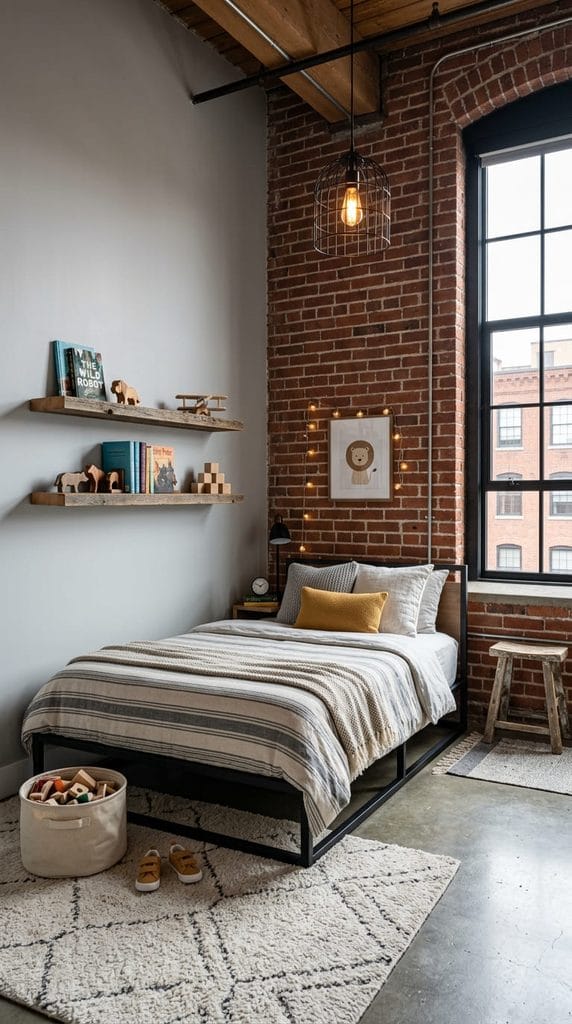
In a child’s room, exposed brick is best used selectively—such as an accent wall surrounding a window. Smooth, light-toned painted walls balance the remaining surfaces. Reclaimed wood wall shelves, a woven toy bin, a safe wire-cage pendant light, and warm string lights effortlessly convert industrial elements into a cozy, magical retreat.
Home Office: A Focused and Productive Environment
A home office should be free of visual clutter while offering a comfortable, inspiring setup for long hours at the desk.
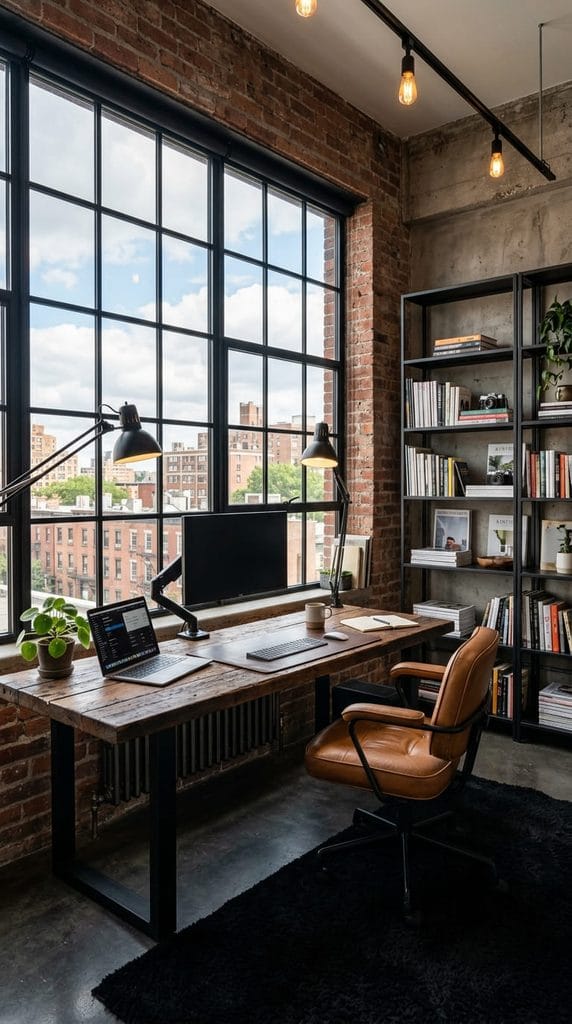
Positioning the desk directly in front of a tall window maximizes natural daylight throughout the workday. A solid live-edge wood desk on a heavy metal frame, paired with an ergonomic leather armchair, creates a grounded and professional atmosphere. Floor-to-ceiling open steel shelving neatly organizes books and materials, while matte black task lamps provide focused illumination for evening work.
Bathroom: Graphic Lines, Concrete, and Warm Wood
An industrial bathroom is an exercise in dynamic contrasts—blending moisture-resistant, rugged textures with the refined luxury of modern plumbing fixtures.
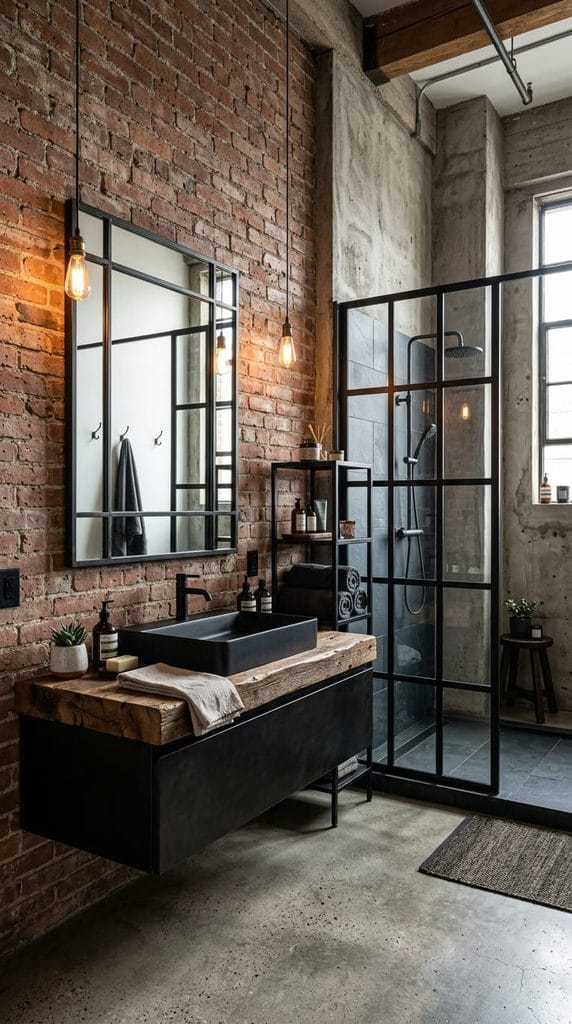
A walk-in shower enclosed in a black-framed glass partition structures the space cleanly without blocking natural light. A floating vanity crafted from a thick timber slab supporting a matte black vessel sink adds warmth while keeping the floor plane unobstructed. Edison-style bulbs flanking the mirror emit a soft, flattering glow that is easy on the eyes during morning routines.
3 Personal Tips for Creating an Authentic Industrial Loft:
- Prioritize authentic textures over cheap imitations. If you do not have genuine exposed brick walls, opt for high-quality clay brick veneers or smooth architectural concrete rather than thin “brick-patterned” wallpaper. Industrial design relies on authentic depth and tactile materials.
- Soften metal and concrete with rich textiles. To prevent your home from feeling cold or echoing, introduce natural fabrics generously: linen, wool, heavyweight cotton, plush rugs, and distressed leather. Soft furnishings absorb sound reflection and make the room’s acoustics feel warm and homey.
- Build layered lighting scenarios. Avoid relying on a single overhead light fixture in the center of the room. An industrial loft thrives on multi-tiered lighting: low-level accent lighting (floor lamps, sconces), mid-level task lighting (pendant lights over tables and islands), and high-level ambient lighting (track systems). Always choose warm light bulbs with a color temperature between 2700K and 3000K.
- Transitional Coastal: How to Combine Elegant Classics and Seaside Freshness Throughout the Whole House
- Sleek Scandi: How to Create a Light, Clean, and Cozy Scandinavian Interior Throughout the Whole House
- Equestrian Chic: How to Create an Atmosphere of Noble Estate Elegance and Aristocratic Comfort Throughout the House
- Cabin Chic: How to Create an Alpine Chalet Atmosphere and Secluded Comfort Throughout the Whole House
- Soft Industrial: How to Create an Aesthetic, Warm, and Modern Loft Throughout the Whole House
- Bright Boho: How to Create a Light, Cozy, and Vibrant Interior Throughout the Whole House