When you want to escape the hectic pace of city life, you instinctively look for places where it feels easy to breathe. Contemporary Coastal style is built on that exact feeling. This isn’t the beachy decor with seashells on shelves and blue-and-white stripes that many are used to. There are no intrusive nautical props here. Instead, this direction blends the clean architectural lines of modern design, a soft neutral palette, and organic textures: unvarnished wood, woven jute, textured linen, and cool ceramics.
Creating such an interior means filling your home with air and light, making the natural scenery outside the main ornament of every room. Let’s explore how this concept unfolds across different areas of a modern home.
Entryway and Staircase Hall: Stepping into Lightness
First impressions always set the tone for the entire home. In coastal styling, the entryway is never overloaded with bulky wardrobes. Here, preserving a sense of open space and allowing light to flow freely from one zone to another is essential.
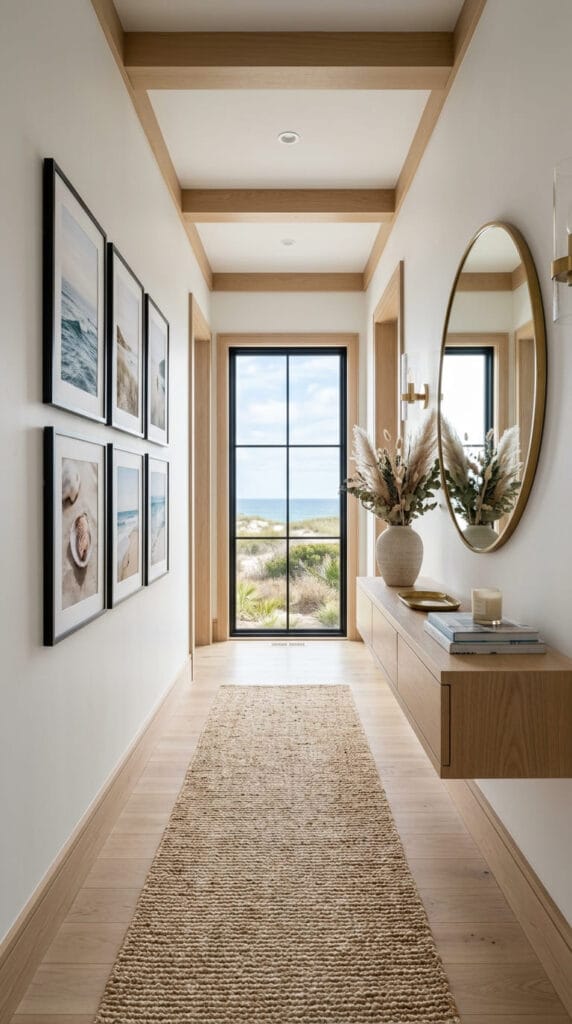
Panoramic windows at the end of the hallway instantly connect the interior with the landscape. A floating wooden console table hovers gracefully above the floor without weighing down the room, while a jute runner adds a touch of welcoming texture. Opposite the oval mirror, a minimalist gallery wall of ocean photography in sleek frames feels completely natural.
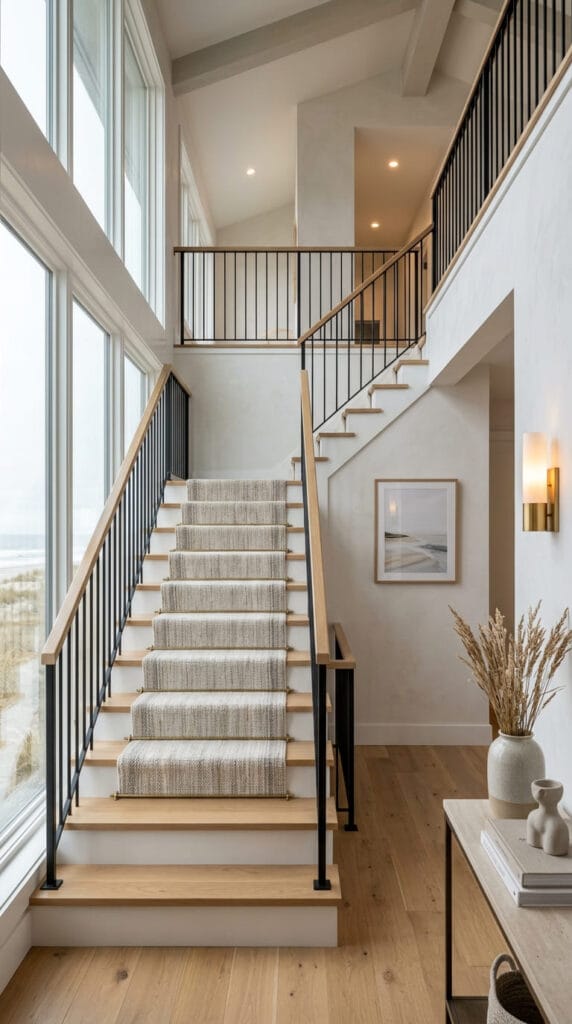
A double-height stairwell thrives on contrast: pale wooden steps pair beautifully with slender black metal balusters. A woven flatweave runner muffles footsteps and brings homey warmth to the staircase, while a tall vase with dried botanicals at the landing highlights the organic nature of the whole composition.
Living Room and Bedroom: Sanctuaries for Deep Rest
In spaces dedicated to relaxation, textiles and proportions take center stage. Low-profile furniture with deep, soft seating is chosen intentionally so nothing obstructs the view outside.
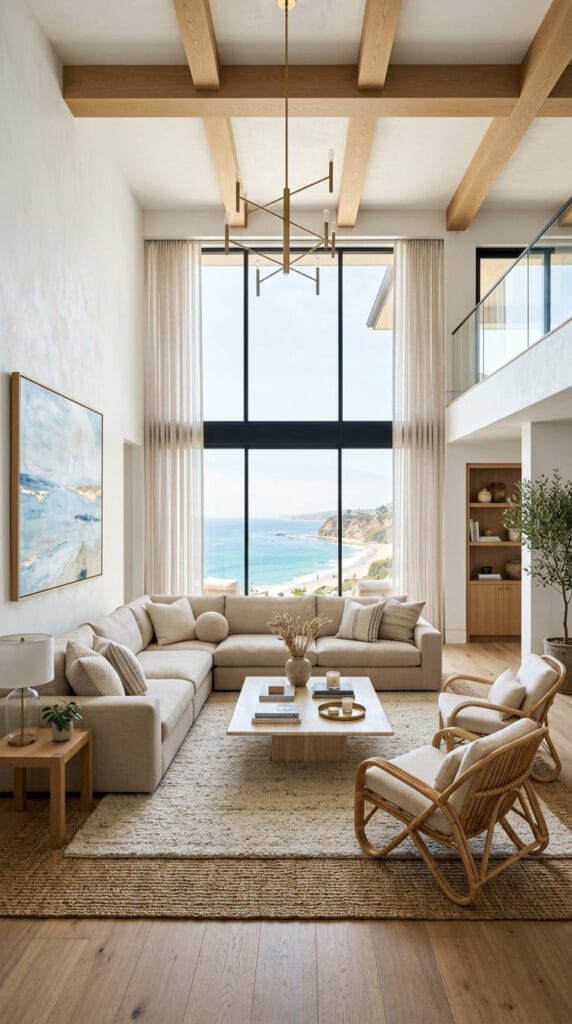
A high-ceilinged living room with exposed timber beams floods with sunlight thanks to a massive floor-to-ceiling window. A large sand-toned sectional creates the ultimate gathering spot for the family, while light rattan armchairs and layered jute rugs introduce warm, natural hues.
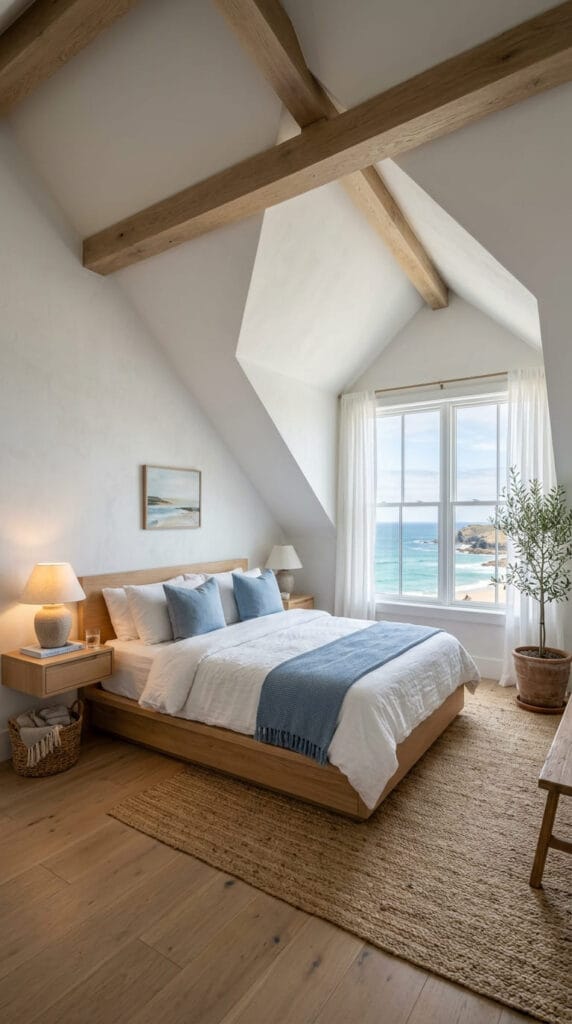
A top-floor loft bedroom under pitched ceilings feels like a private sanctuary. Crisp white walls combined with pale oak beams create a sense of airy volume. The textiles—crisp white linen paired with a seafoam throw blanket and soft blue accent pillows—delicately echo the coastal view outside without stealing the spotlight.
Storage Systems, Pantry, and Laundry Room: The Art of Order
Contemporary Coastal design demands effortless organization, as clutter quickly disrupts the sense of tranquility. Because of this, utility and functional spaces are designed with extra care.
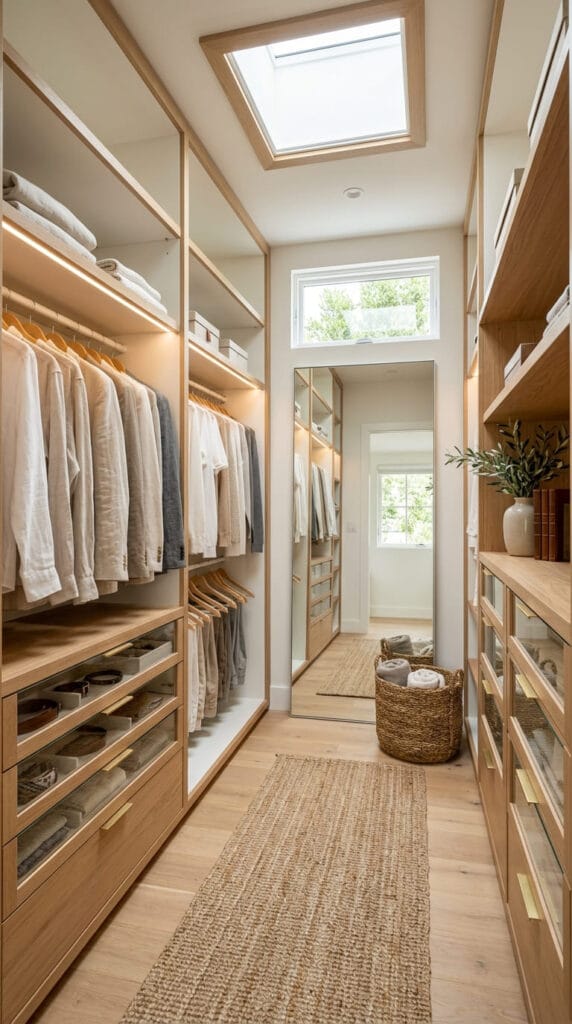
A spacious walk-in closet made of light wood stays pristine thanks to subtle built-in lighting. Glass-fronted drawers make organizing accessories effortless, while linen and cotton garments in natural tones look like an intentional part of the home’s overall design.
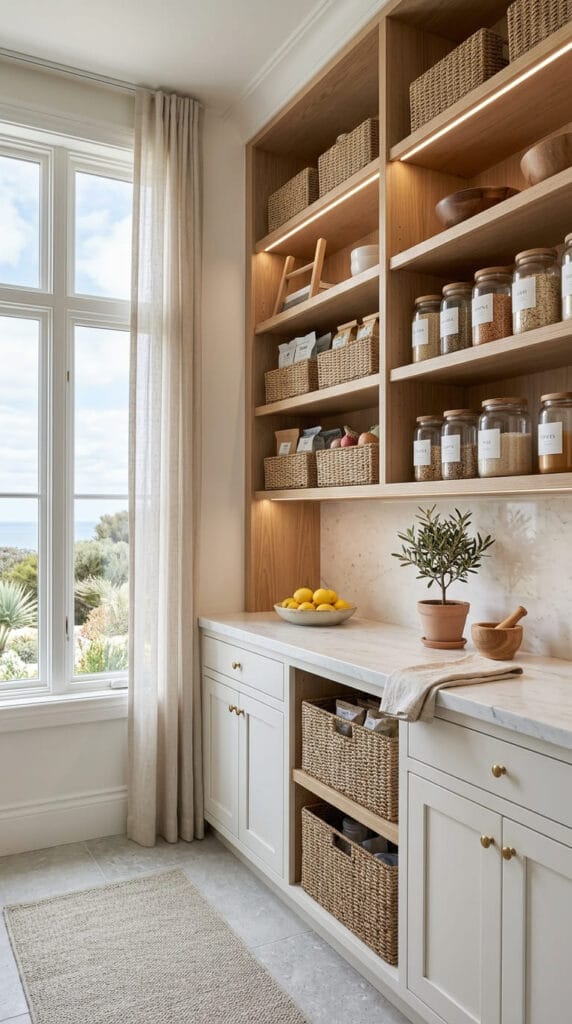
Even a pantry can look like a page from a design magazine. Open wooden shelving, neat glass jars with uniform minimalist labels, and woven wicker baskets turn everyday food storage into an aesthetically pleasing detail.
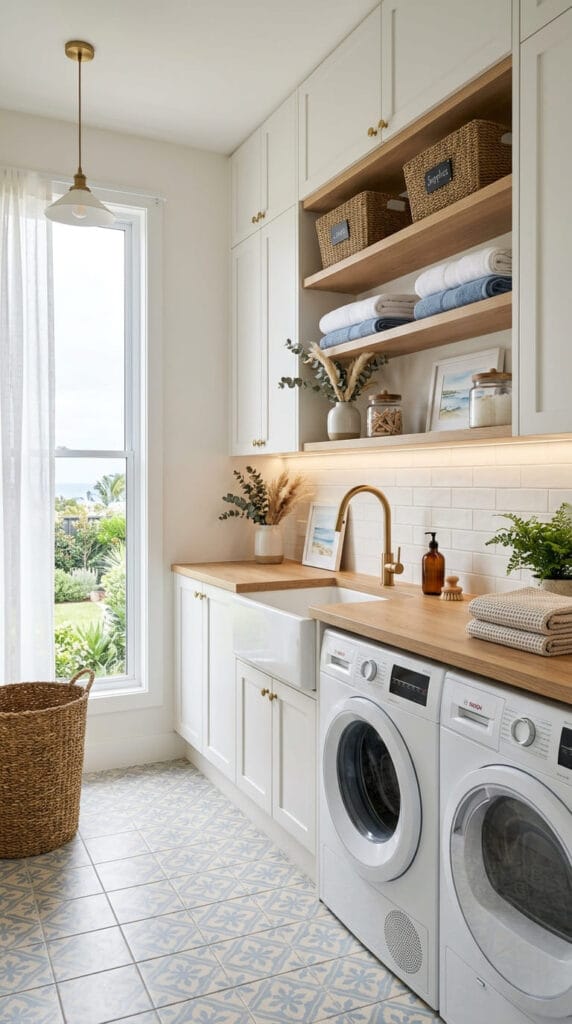
In the laundry room, practicality meets cozy design. White cabinetry and a warm wood countertop above the washer and dryer are paired with patterned floor tiles in a soft slate-blue tone. Woven laundry hampers and sprigs of dried eucalyptus fill the space with a feeling of freshness and calm.
3 Tips for Styling Contemporary Coastal Interiors from Me
- Focus on tactile textures rather than bright colors. To keep a neutral beige-and-white space from feeling flat, layer multiple textures together: unrefined wood, woven jute, smooth ceramics, crisp linen, and rattan.
- Invite natural light and skip heavy drapery. The true luxury of this style is natural illumination. Opt for sheer, weightless window treatments, or leave windows unadorned if privacy allows.
- Maintain a unified palette across every room. For the house to feel cohesive, repeat foundational materials (like light oak flooring and exposed ceiling beams) seamlessly throughout the living areas, entryways, closets, and utility spaces.
- Transitional Coastal: How to Combine Elegant Classics and Seaside Freshness Throughout the Whole House
- Sleek Scandi: How to Create a Light, Clean, and Cozy Scandinavian Interior Throughout the Whole House
- Equestrian Chic: How to Create an Atmosphere of Noble Estate Elegance and Aristocratic Comfort Throughout the House
- Cabin Chic: How to Create an Alpine Chalet Atmosphere and Secluded Comfort Throughout the Whole House
- Soft Industrial: How to Create an Aesthetic, Warm, and Modern Loft Throughout the Whole House
- Bright Boho: How to Create a Light, Cozy, and Vibrant Interior Throughout the Whole House