When we hear the word “neoclassicism,” our minds often conjure images of museum halls: cold marble and rigid symmetry that feel almost too intimidating to touch. But a true, lived-in Neo-Classical style in an interior is about something completely different. It is the art of taking the noble monumentality of the past, stripping away its excessive palace pomposity, and blending it seamlessly with the practicality of our daily lives. People choose this style not to flaunt luxury, but to cultivate a sense of stability, order, and that timeless elegance that won’t go out of fashion in ten, or even thirty years.
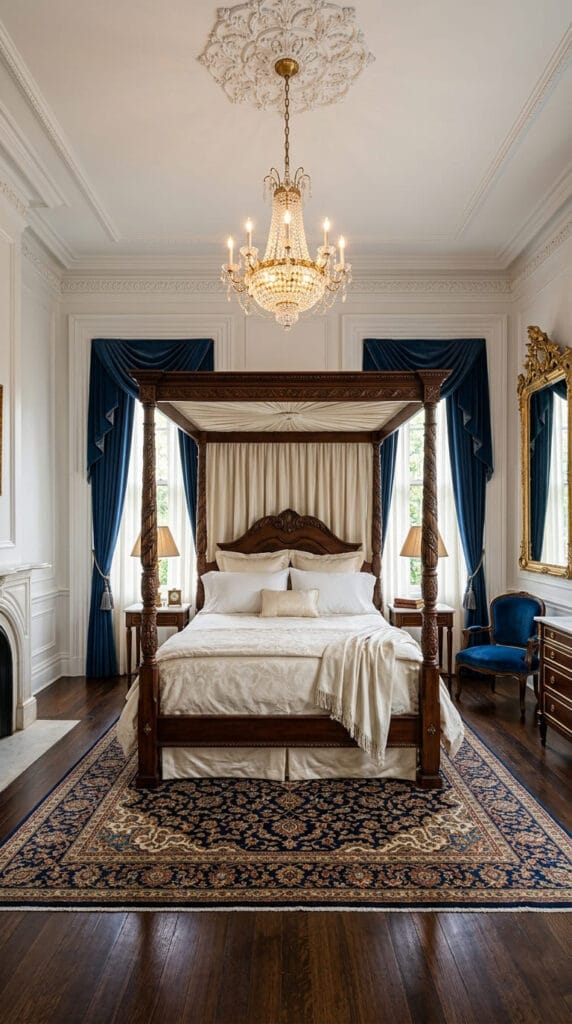
The foundation of neoclassicism relies on a flawless architectural baseline: high ceilings, exquisite plaster moldings, wall paneling, and strict arched forms. However, the secret to domestic comfort lies in how these grand elements are balanced with privacy. In a spacious main bedroom, for example, the symmetry of the window openings and a classic fireplace mantel can serve as a rigid framework, while soft textiles and deep, noble colors instantly transform the room into a peaceful sanctuary.
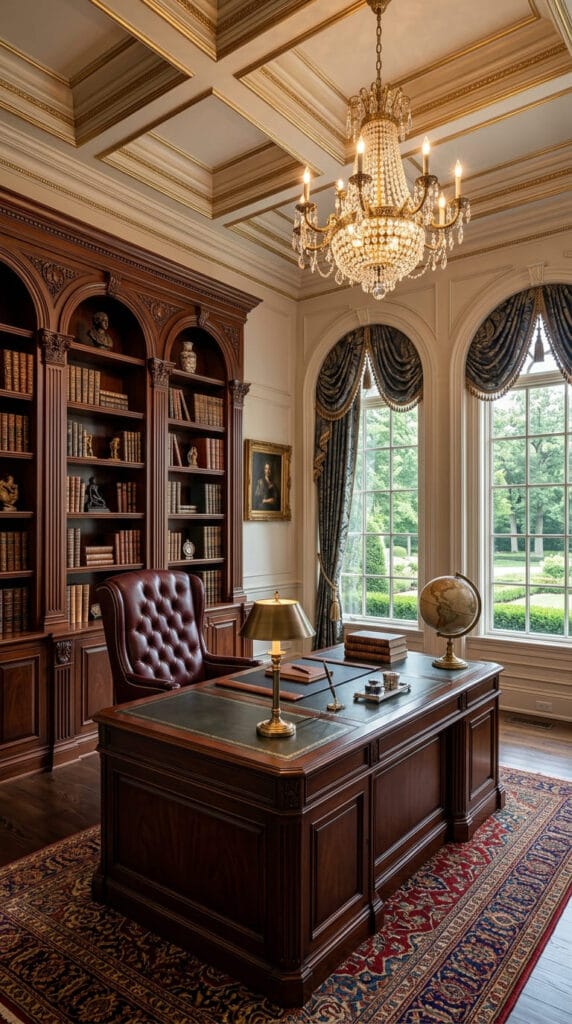
A neoclassical approach demands attention to every single zone of the house, including those hidden from guests’ eyes. Even the workspace of a home office or library layout complies with the strict laws of ergonomics and aesthetics here. Massive furniture made of fine wood, deep leather chairs, and built-in floor-to-ceiling bookshelves create an atmosphere of continuity and intellectual tranquility. Meanwhile, an abundance of natural light streaming through the arched windows keeps the interior from looking too gloomy or heavy.
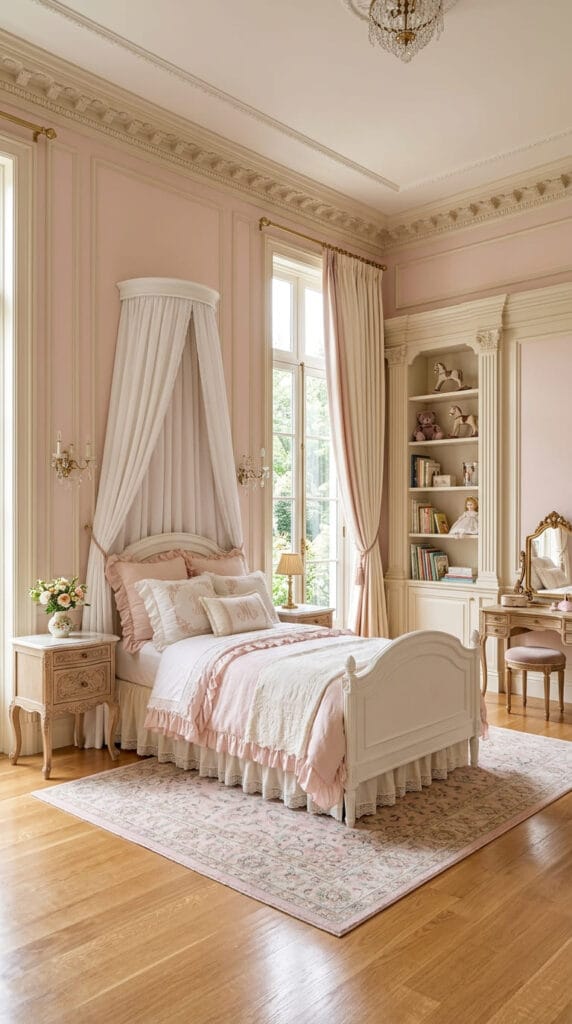
Surprisingly, neoclassicism can be not only austere or dark, but also incredibly delicate and airy. When the strict rules of symmetry are brought into a child’s bedroom or a young girl’s room, heavy accents give way to a pastel palette. Powdery pink wall shades combined with light furniture, delicate carved legs, and light textile drapes show just how flexible and soft this style can be once you strip away the unnecessary pretense.
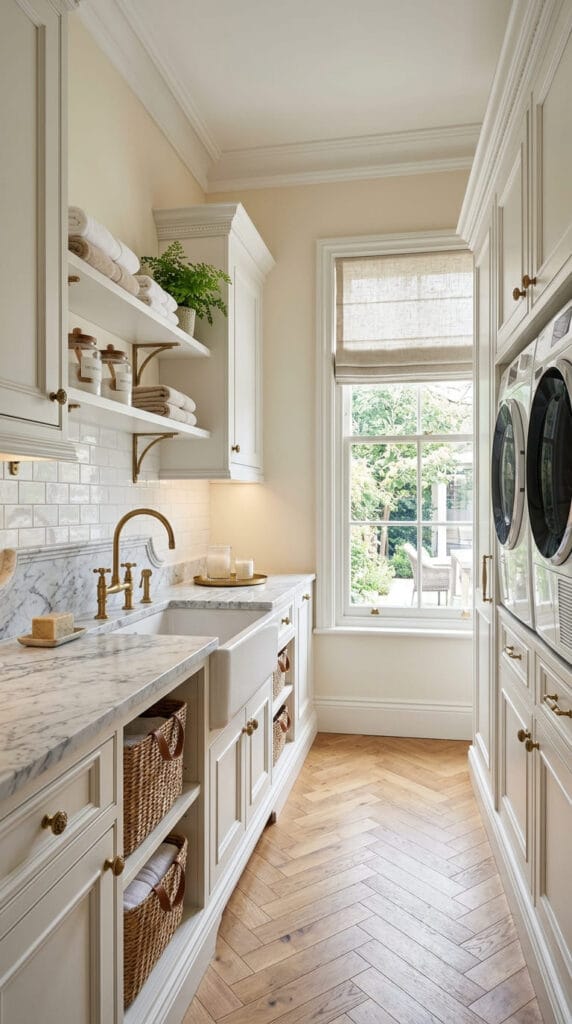
The primary advantage of neoclassicism over historical styles like Baroque or Rococo is its ability to easily absorb modern lifestyle scenarios. It is no stranger to technological progress. Modern appliances, touchless faucets, and functional storage systems integrate perfectly into a clean neoclassical framework, provided they are concealed behind sleek, routed cabinet fronts. The noble marble of countertops and hardwood flooring laid in a French herringbone pattern naturally mingle with chrome and glass elements.
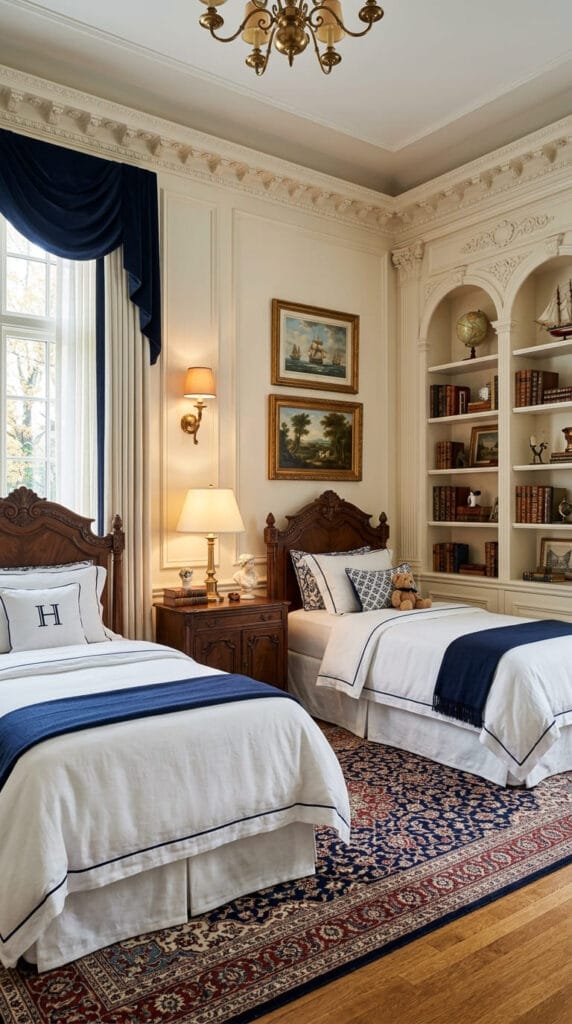
In guest bedrooms or spaces meant for close relatives, the neoclassical style unlocks its welcoming potential through paired elements. Symmetry works here on a subconscious level, providing a person with a reassuring sense of order and safety. Two identical beds with high wooden headboards arranged along the room’s central axis, classic framed landscapes, and deep blue textile accents combine to create a disciplined, yet highly comfortable and understandable interior layout.
Advice from Me: How to Marry the Modern and the Antique in One Space
The biggest mistake when creating a neoclassical interior is sliding into pure historical reconstruction. We live in the 21st century, and our home should reflect that reality. To ensure the space feels relevant and the classic features do not look out of place, I highly recommend using a few select design approaches:
- Treat the classics as a frame and modernity as the canvas. Let the architectural envelope of the room (walls, ceilings with plaster moldings, doors, parquet floors) follow the strict canons of the classics. But the furniture within that frame can—and absolutely should—be modern. A sleek sofa with clean lines or a minimalist coffee table set against walls decorated with moldings looks far more striking and fresh than “antique style” furniture sets.
- Integrate hidden technologies. Neoclassicism despises the visual clutter of exposed wires and gadgets. Hide TV panels inside special wall recesses or behind sliding decorative art panels, use concealed outlets, and fully integrate large appliances into the kitchen or utility cabinetry. Technology should work for your absolute comfort without stealing attention away from the clean lines of the interior.
- Mix art from different eras. Do not be afraid to hang pieces of modern abstract painting or graphic prints right alongside classic architectural features. Set against the backdrop of a strict ceiling rosette and a crystal chandelier, a striking piece of contemporary art or a conceptual sculpture functions as an ideal contrast. It rids the interior of stiff museum formality and injects a welcome sense of personality.
- Transitional Coastal: How to Combine Elegant Classics and Seaside Freshness Throughout the Whole House
- Sleek Scandi: How to Create a Light, Clean, and Cozy Scandinavian Interior Throughout the Whole House
- Equestrian Chic: How to Create an Atmosphere of Noble Estate Elegance and Aristocratic Comfort Throughout the House
- Cabin Chic: How to Create an Alpine Chalet Atmosphere and Secluded Comfort Throughout the Whole House
- Soft Industrial: How to Create an Aesthetic, Warm, and Modern Loft Throughout the Whole House
- Bright Boho: How to Create a Light, Cozy, and Vibrant Interior Throughout the Whole House