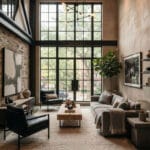
Desert Modernism has long ceased to be a local story of Californian villas and has turned into an international trend for those seeking warmth, privacy, and quiet. This style captivates because it doesn’t try to look perfect or sterile. On the contrary, it celebrates the natural beauty of a landscape baked under the scorching sun and teaches us a core rule: the interior should be an organic extension of the scenery outside the window, even if you live within city limits. The concept rests on three pillars: soft earthy tones, honest tactile materials (wood, leather, jute), and clean architectural lines.
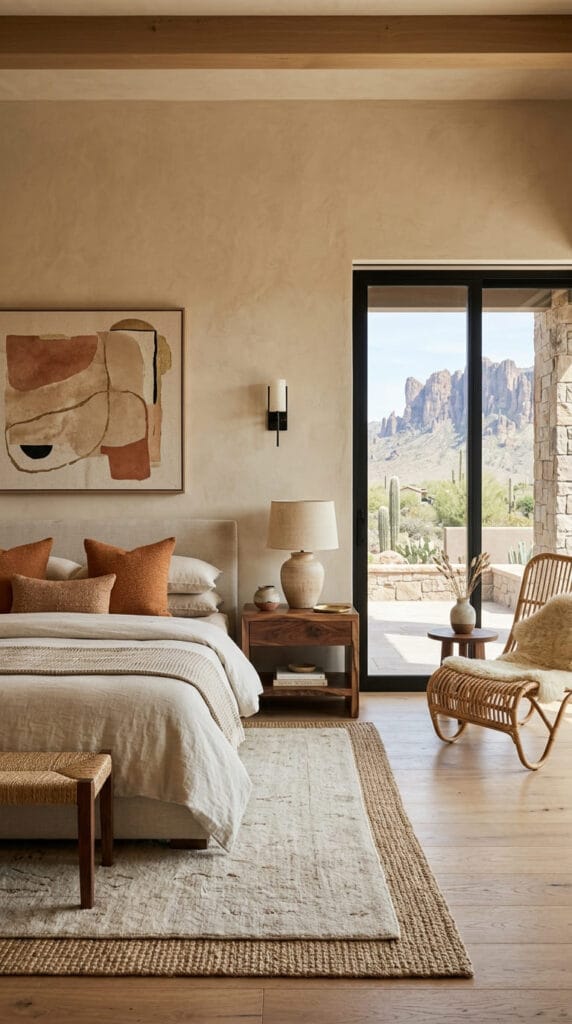
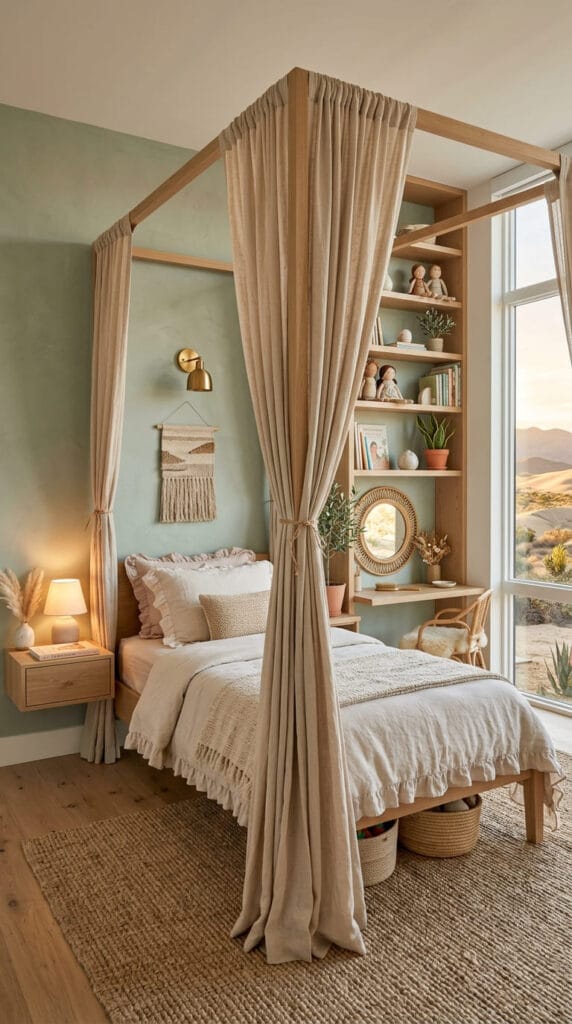
Any room in the desert modernist style is built around a sense of space and air. Architects achieve this through massive panoramic windows that literally erase the boundary between the cozy inner world of the home and the wild nature outside. In such a bedroom, a minimal amount of decor is compensated for by a powerful play of natural light and deep textures.
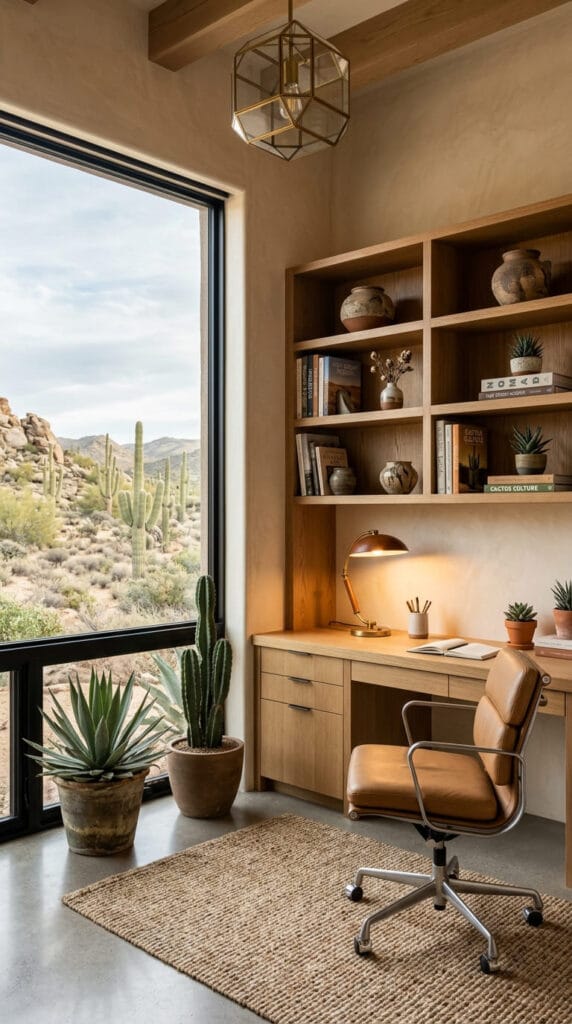
When a space is designed correctly, a work area or home office ceases to be associated with strict office routines. In the Desert Modern aesthetic, the study turns into a place for deep concentration and creativity. Instead of plastic and chromed metal, noble wood species, cognac-toned natural leather, and the vibrant green of succulents rule the roost here.
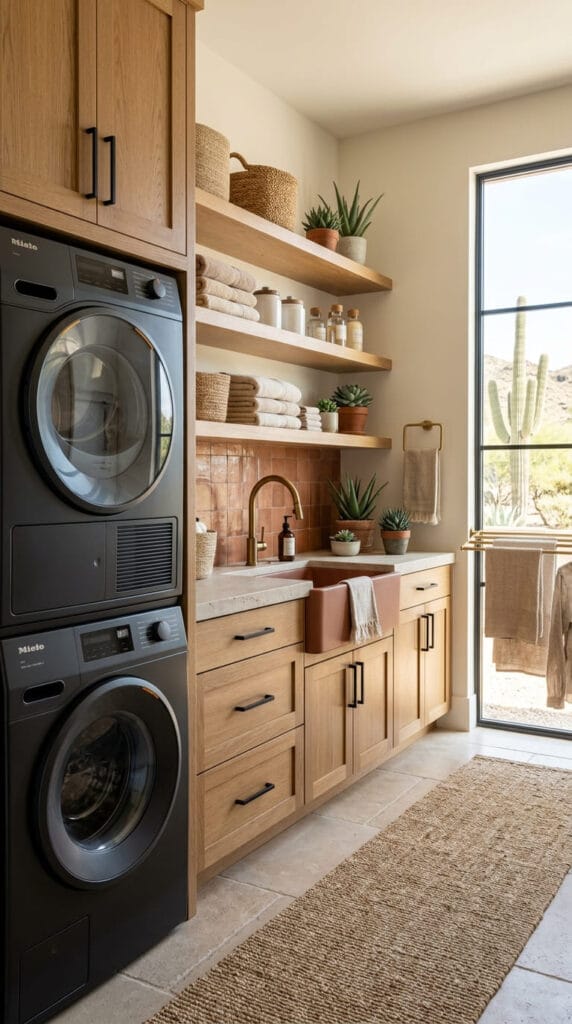
Surprisingly, this style works equally well in living rooms and deeply utilitarian areas of the house, where we are used to seeing cold tiles and white glossy plastic. Desert Modernism offers a fresh look at everyday chores, like laundry or cleaning, through the prism of aesthetics. Natural wood cabinets, warm handmade tiles, and brass details can transform even a small laundry room into a stylish corner where it is a pleasure to spend time.
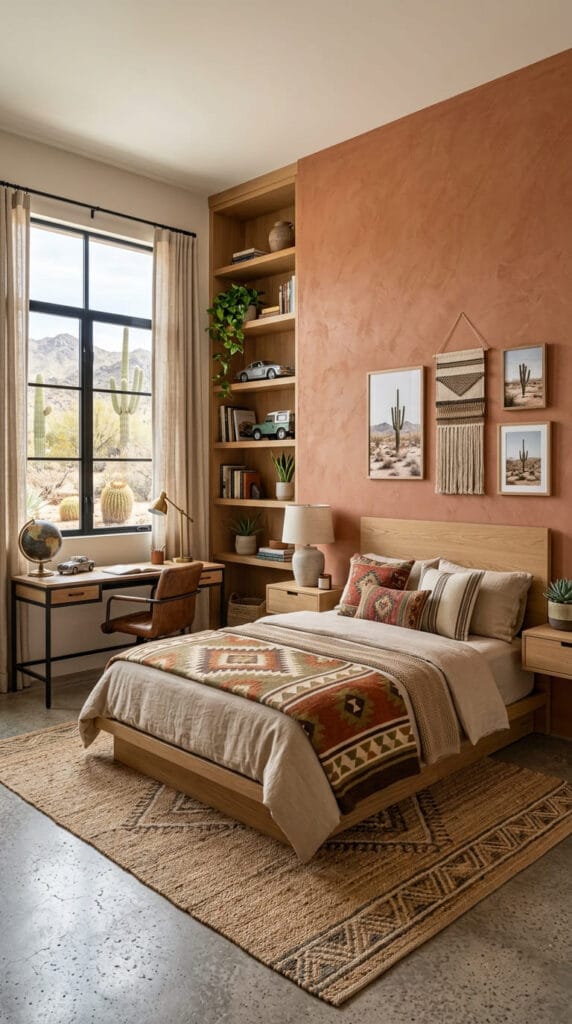
If a completely neutral sandy palette feels too quiet for you, the style boldly allows for experimentation with accent walls. But instead of artificial wallpaper or loud colors, designers draw from the palette of canyons at sunset—deep terracotta, caramel, or rust colors. Combined with ethnic patterns on textiles and woven decor, this adds the right amount of character and density to the room.
However, Desert Modern knows how to be not only sultry but also surprisingly refreshing. If the room’s windows face south and there is an excess of warmth, a muted shade of fading sage or dry grass makes an excellent alternative to terracotta. This cool yet soft color unfolds beautifully when paired with light textiles and creates the feeling of an oasis amidst sand dunes.
Advice from Me: How to Choose Wall Colors for an Authentic Desert Interior
The color and, more importantly, the texture of the walls form the very visual framework that the Desert Modern style hinges upon. To recreate this aesthetic in your home without turning your interior into a mundane beige builder-grade renovation, I recommend following three simple rules:
- Forget about perfectly smooth matte walls. Desert Modernism demands tangibility. Instead of regular painting, use decorative plaster, microcement, or limewash paint. The walls should feature slight streaks, roughness, and an uneven depth of tone, as if they were plastered by hand or represent a natural cliff face.
- Opt for “dirty” natural undertones. Steer clear of pure white or classic gray. Your palette consists of unbleached linen, dry sand, warm clay, ochre, and pale sage. Even if you paint the walls in a basic light color, it must have a warm yellowish, pinkish, or greenish undertone. This is precisely what will beautifully “catch” the rays of the setting sun.
- Balance accents with dark graphics. If you decide on a dense terracotta or deep ochre wall, be sure to introduce contrasting graphic lines into the room. These can be thin black window frames, slim metal furniture legs, or dark track lighting. Without these sharp lines, the interior will become too blurry and “dusty,” whereas graphics pull it all together.
- Transitional Coastal: How to Combine Elegant Classics and Seaside Freshness Throughout the Whole House
- Sleek Scandi: How to Create a Light, Clean, and Cozy Scandinavian Interior Throughout the Whole House
- Equestrian Chic: How to Create an Atmosphere of Noble Estate Elegance and Aristocratic Comfort Throughout the House
- Cabin Chic: How to Create an Alpine Chalet Atmosphere and Secluded Comfort Throughout the Whole House
- Soft Industrial: How to Create an Aesthetic, Warm, and Modern Loft Throughout the Whole House
- Bright Boho: How to Create a Light, Cozy, and Vibrant Interior Throughout the Whole House